Detailed Explanation of Methods for Sourcing Material for Syzygium buxifolium Bonsai Creation
Syzygium buxifolium is a wild evergreen shrub of the mountainous regions of Jiangnan, rarely cultivated artificially. According to its ecological habits and biological characteristics, it can be propagated by sowing or cuttings. However, for making bonsai, wild plants or old stumps are mostly used. Collection from the wild: in the mountainous hills of Jiangnan, one can select old stumps that have sprouted repeatedly after years of cutting and have a gnarled, ancient, and rugged appearance.
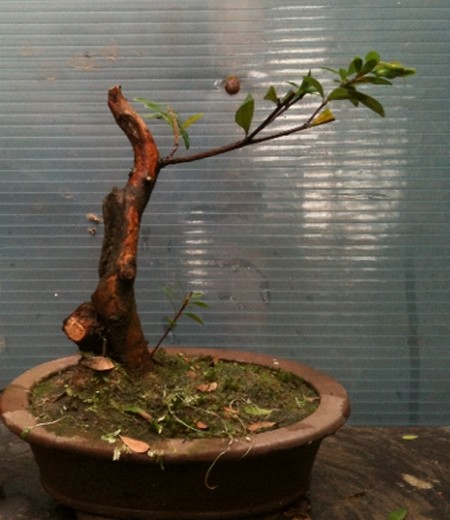
Carry out the digging between March and April in spring, taking care to retain as many lateral roots and fibrous roots as possible. Since the journey back from the mountains is rather long, coat the roots with mud slurry and wrap them in wet moss or rice straw to reduce water evaporation and improve the survival rate. After digging them out, plant them in loose, moist, well-drained sandy loam. Before planting, prune once, thinning out overly dense branches to aid survival. After planting, promptly set up a shade shed, water frequently, and keep the soil moist. In summer, also spray water on the leaves, 2-3 times a day. After October, the shade shed can be removed to give them light. After one year of ground cultivation, they can be potted and shaped.
The tree material for making Syzygium buxifolium bonsai is mainly obtained by the following three methods.
1. Propagation by sowing. When the seeds of Syzygium buxifolium are fully ripe in November-December, collect them and sow them in loose, fertile, well-drained sandy soil (silt soil) or leaf mold. After the seedlings emerge, begin transplanting them with soil into the nursery field in October of the third year. Generally, they can only be potted for cultivation after 6 years of sowing. If propagated by sowing, it takes at least more than 10 years to cultivate a vigorous and elegantly ancient Syzygium buxifolium stump bonsai.
2. Purchasing from the market. Choose Syzygium buxifolium stumps whose branches and trunks have fresh bark color, fresh cuts, bark that has not dehydrated and dried out, and relatively complete main roots, lateral roots, and fibrous roots, preferably with a small soil ball. For Syzygium buxifolium stumps without a soil ball, after buying them and bringing them home, immediately soak them in water for one day before planting, to improve the survival rate and germination rate.
3. Collection from the wild. Dig up gnarled, ancient, and beautifully rugged Syzygium buxifolium stumps from the mountains or riverbanks and process and cultivate them into bonsai. This method takes less time to take shape than propagation by sowing, and is easier to cultivate and keep alive than market-purchased ones.
① Digging time: in principle, it is best to dig during the dormant period of Syzygium buxifolium (October to December). However, considering climatic characteristics and environmental factors and management issues favorable to the survival of Syzygium buxifolium stumps, it is recommended to dig from late January to early May, avoiding the cold season and dry-wind weather as much as possible.
② Digging method: first, the Syzygium buxifolium stumps must be carefully selected, taking as digging targets those with thick, gnarled, and ancient-looking main trunks, unusually swollen root crowns protruding above the soil surface, or those hollowed and half-dead from termite damage. According to the shape of the Syzygium buxifolium stump and the requirements of the desired styling, make preliminary cuts on the main trunk and most branches, then, based on the direction and distribution of the root system, decide where to dig, first severing the main root, then the lateral roots, digging while shaking, and lifting it out after the roots are bare.
If possible, Syzygium buxifolium stumps should be dug with soil or removed over successive years. In the first year, dig open 1/2, cut the main root and part of the lateral roots, then fill the soil back to encourage fibrous roots to sprout; in the second year, dig open the remaining 1/2, cut the remaining lateral roots, and then lift the whole plant out. This method has an extremely high survival rate. After the stump is dug out, quickly trim the broken root ends smooth, then dip them in mud slurry, and wrap and tie them tightly with wet rice straw, moss, cattail bags, cloth, or other materials to ensure the roots do not lose water, and transport them back for planting as soon as possible.