A detailed guide to making stone bonsai, easy for beginners to learn too
Although green plant bonsai are merely an accent, they complement elegant stones so well, just as naturally as wildflowers and grasses growing at the foot of a mountain or beside a stream. They not only retain a natural feel but also add a touch of elegance and refinement; without the mess and disorder of wild growth, they are even more pleasing to the eye.
Stone bonsai is a form of bonsai that cleverly combines trees and landscape stones into one. In some, the tree is large and the stone small, with the emphasis on viewing the tree, placing them in the category of tree bonsai; in others, the tree is small and the stone large, with stone appreciation as the focus, placing them in the category of landscape bonsai. Rock-attached bonsai reflects the natural appearance of trees growing on stone; it is an exaggeration and close-up portrayal of the image of trees tenaciously growing in cliff crevices or on mountain peaks and rocky summits, rich in content and profound in artistic conception.
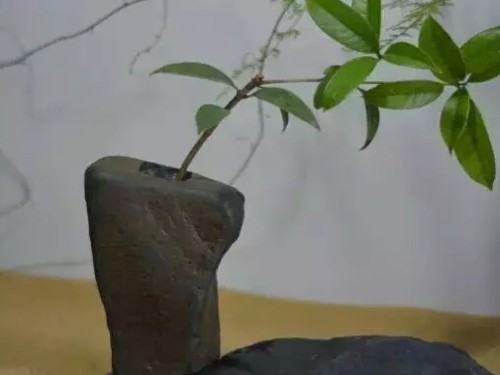
At the same time, it can also make up for some of the natural defects of tree bonsai (for example, bonsai material with an overly tall trunk), and it is also a form deeply loved by bonsai enthusiasts. Rock bonsai have graceful shapes, ingenious designs, diverse forms, are simple to make and easy to master, and have a short cultivation cycle, making them very popular with the public.
Chinese bonsai is an excellent traditional art of the Han ethnic group and a treasure of garden art. In earlier times it was mainly divided into two major categories: tree-stump bonsai and water-and-stone bonsai. Today, with the progress of the times and the development of the bonsai craft, the categories have become even more varied. Below, the editor will introduce the method for making stone bonsai.
Stone bonsai making method one:
In making stone bonsai, trees are planted attached among the stones, with their root systems extending into the stone crevices to grow, and their branches and trunks twisting into the stone holes or growing in clusters on the stone, or hanging down below the stone, or slanting sideways beside the stone, so that the curious stones and ancient trees set each other off beautifully.
Stone bonsai making method two:
Stone-style bonsai are divided into two types: water-attached stone and dry-attached stone. In making rock-attached bonsai, water-attached stone mostly uses porous stone materials, such as absorbent stone and sandstone, drilling holes where trees are to be planted, mostly using trees of initially formed shape. First guide the tree roots into the stone holes, fill the stone holes with crushed soil, press the soil and tree roots firmly with a bamboo stick, spray the soil and stone thoroughly wet with a spray bottle, then place it in a shallow water basin and set it in a cool place. Spray water on the stone and tree every day to maintain humidity; after the tree sprouts new buds, it can be allowed to receive morning sun and gradually adapt to sunlight.