Detailed Guide to the Methods and Steps for Making a Ginkgo Bonsai
Summer has arrived, and the ginkgo shows a lush green, offering high ornamental value, so people past and present, in China and abroad, often use ginkgo in courtyards, as street trees, or in landscaping. But what the editor wants to tell you today is that ginkgo leaves can actually be made into bonsai, which is majestic in presence, lush and dignified, and full of delightful charm, thus possessing unique artistic value.
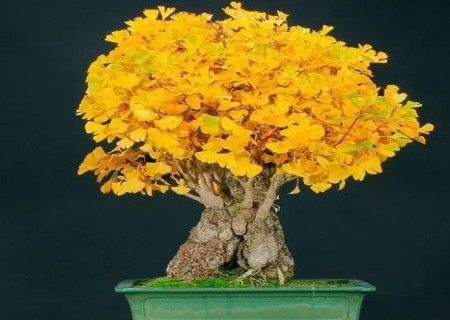
So, how do you make a ginkgo bonsai? Below, the editor will explain it for you, hoping it will be helpful to ginkgo enthusiasts.
1. Obtaining and Cultivating Materials
The materials for making a ginkgo bonsai can be obtained through artificial propagation or digging from the wild. Artificial propagation can use methods such as sowing and grafting to obtain material, but to make a bonsai with a peculiar shape that is ancient and vigorous, it is recommended to obtain it by digging up old stumps from the wild.
We can go into the wild to dig up root suckers from old ginkgo stumps, and after processing them, cultivate them. Because wild old ginkgo trees develop many protruding burls at the base, when digging we need to separate these burls from the mother plant before cultivating them. After the root system matures, new branches and leaves will sprout, and then we can process them.
2. Potting Method
Before making the bonsai, the first thing we need to consider is how to pot the previously cultivated old ginkgo stump. The specific steps are as follows:
1) Choosing the pot: For making a ginkgo bonsai, it is suitable to choose a glazed ceramic pot with a darker color. Based on the experience of some bonsai masters, pots in colors such as deep blue, dark green, black, and deep purple are usually chosen. As for the shape of the pot, it is generally best for the main body of the pot to be round or rectangular.
2) Preparing the soil: After choosing the pot, we need to consider how to prepare the soil for the bonsai. According to the growth habits of the ginkgo plant, it is recommended to choose sandy soil, because this type of soil is not only fertile but also loose and easy to drain. Then mix it with decomposed leaf mold and garden soil, and you may add a small amount of sand, mixing it evenly.
3) Planting the ginkgo: Next is planting the cultivated old ginkgo stump. Before planting, a layer of coarse sand should first be spread at the bottom of the pot, which not only helps drainage but also helps the plant survive and grow. After that, plant the tree into the pot, then add the previously prepared soil and firm the soil around the plant. After finishing, water once thoroughly. When planting, take care to avoid damaging the ginkgo's root system as much as possible.
3. Processing and Shaping
After the ginkgo is established, we can prune and shape it. The time is usually set in early spring, in March. The specific operation methods are as follows:
1) Processing the tree body: The processing of the ginkgo bonsai is mainly carried out on the trunk. We can combine pruning with wrapping and bending using palm fiber or metal wire. In summer, we need to wrap and bend the newly sprouted branches once again to promote their formation. Because the leaves of the ginkgo tree are relatively large, we need to prune some of the excess branches and leaves. Making a bonsai requires the branches and leaves to be relatively sparse.
2) After we finish pruning and processing the tree body, we then begin shaping it. Usually, the shaping types we can choose include slanting trunk style, lying trunk style, curved trunk style, and so on. Ginkgo bonsai made through these shaping methods will appear even more aged and antique. During the shaping process, we can refine the branches and leaves, either by tying them into layered pads or by pruning them, so that they look more natural.
4. Care and Management
After we finish making it, according to the growth requirements of the ginkgo, we should place the finished ginkgo bonsai in a place with abundant sunlight and good ventilation for care and management. During the care and management process, we should pay attention to the following points:
1) In summer, shade measures should be taken in time to avoid direct sunlight and scorching sun on the plant. This can prevent the plant's growth from being inhibited or the plant from being sunburned or dying from sun exposure.
2) During the plant's growing season, in addition to normal watering, we can also apply a small amount of cake fertilizer or farmyard manure once a week.
3) For the potting soil, to ensure the soil's nutrients, we can appropriately add some sand and bran ash to turn it into a high-quality nutrient soil.
4) Of course, during the care and management of a ginkgo bonsai, repotting is a necessary step. Usually, it can be repotted once every 2 years. When repotting, you may find that its root system is too long, so we can prune away the overly long roots, then keep half of the old soil and mix in half new soil. Of course, it is best to apply some base fertilizer at the bottom of the pot.