Illustrated Guide to Making a Money Tree Bonsai, Beginners Can Easily Learn It
The money tree (Pachira aquatica) is a foliage plant with broad, emerald-green leaves that are beautiful and elegant, offering extremely high ornamental value. As an evergreen tree, it has large flowers with lobed petals in red, white or pale yellow, with vivid coloring. A plant with green leaves is a delight to the eyes. When the money tree blooms, it is a wonderful choice for appreciation. Placing it at home undoubtedly adds a touch of charm to your living space.
Besides its ornamental value, home decoration and air purification functions, the money tree also has edible value! In fact, the seeds of the money tree are edible and taste similar to peanuts, though this is obviously not the main point of the money tree's value.
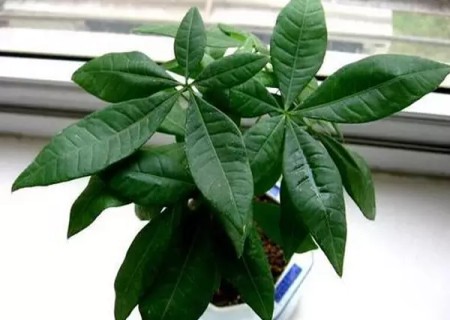
Finding a pot of money tree bonsai you love is actually not difficult, but if you grow it yourself, from sowing to shaping, wouldn't that be even better?!
1. Seed Treatment
Washing: Wash the soil off the seed coats of the seeds you bought until you can see the clear veins on the seed coats.
Soaking: Soak the seeds in warm water for 2 days. Within the two days the seeds will gradually crack open; once they crack, take them out. Remember the seeds can only be soaked for two days; if soaked too long, the seeds are prone to rotting.
2. Planting Process
Arranging the seeds: Money tree seeds are relatively large, so when planting, do not arrange them too densely; keep a spacing of 0.3 cm between seeds. Pay attention to the placement angle and try to fill the entire pot.
Misting: Place the seeds flat on the potting soil and spray water back and forth 4 rounds, so that the soil and seeds are completely soaked through.
Adding maifan stone: Money tree seeds are relatively large, so spread a layer of maifan stone on the surface of the seeds until the seeds are completely covered.
Light pressing: After spreading the maifan stone, gaps will remain between the seeds and the maifan stone, making it look loose and crumbly. At this point, press lightly with your palm to make them bond tightly.
3. Care and Management
Covering: When the seeds send out roots, they often exert considerable upward force, so after planting, wrap the entire container with plastic wrap to prevent the roots from detaching from the soil and scattering due to excessive force during the rooting period.
Leaf growth: Although the money tree is a large plant, when grown in a pot its growth space is limited, so it will not grow very tall. Indoors, just mist it once every 2 days.
Shaping: Once the leaves grow out, the plant's form is basically set. With a little pruning, a small and charming money tree bonsai is done!
4. Precautions
In daily care and management, pay attention to ventilation and avoid direct sun (bright indirect light is best); watering should be determined by your own pot, soil and dry-wet conditions, not by a fixed schedule; when fertilizing, use light fertilizer; control your hands, and do not casually move the money tree to a new spot or water it for no reason.
If you buy a money tree potted plant from the market, how should you choose a money tree?
With money trees, it is not just about how to care for them after buying them at home; you also need to pay attention when choosing them, because most money trees are propagated from cuttings. The money tree's root system is not well developed to begin with, so many potted money trees already show signs of root rot. In addition, most flower lovers are in the habit of watering newly bought plants thoroughly first, making the rot even worse. And because the money tree can temporarily rely on its trunk for nutrients, root rot will not show immediately. By the time you notice it, it is already too late.