How to make a bonsai from black bamboo? A full breakdown of the detailed method
Black bamboo (Phyllostachys nigra) is a very beautiful ornamental bamboo. It can be grown as a household potted plant, and can also be used in landscaping or scenery; its beautiful figure can often be seen in many gardens. Making black bamboo into a bonsai for viewing often reflects the owner's cultivation and taste, so it is also highly sought after by scholars and literati. So, how do you make a bonsai from black bamboo?
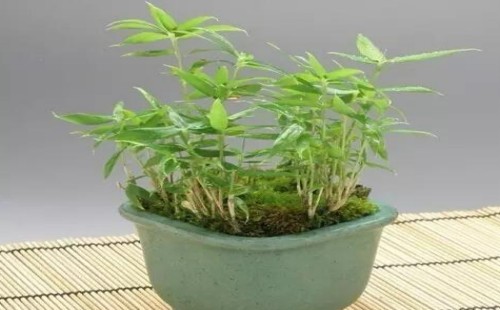
Growing bamboo has always symbolized a humble mindset and a noble, upright character. If you can place a few pots of black bamboo bonsai in your home, you can close your eyes and imagine and feel for yourself what an elegant and refined enjoyment it is. Today, the editor will share with you the method for making a black bamboo bonsai.
I. Choosing varieties
Because there are many bamboo varieties that can be used to make bonsai, and their forms differ greatly, such as large black bamboo, Buddha belly bamboo, Arhat bamboo, square bamboo, Guanyin bamboo, spotted bamboo, rice bamboo, diamond bamboo, and so on, there are a great many varieties to choose from, so everyone can choose according to their own needs. Here, the editor recommends growing black bamboo.
II. Choosing potting soil
Bamboo generally likes acidic, slightly acidic, or even neutral soil environments, but soil in the north is often too alkaline. If growing it in northern regions, when choosing potting soil you should appropriately add some ferrous sulfate to adjust the pH so the soil is more suitable for bamboo growth. Moreover, when mixing soil, as with most flowering plants, it is best to prepare a fertile, loose sandy loam with excellent drainage and aeration. Therefore, when choosing soil for black bamboo, slightly acidic soil is preferable.
III. Potting and transplanting
When potting and transplanting black bamboo seedlings, a shallow pot is preferable. At the same time, to succeed with potting and transplanting, the seedlings usually need to be placed in an ordinary soil pot for 1 month of acclimation before transplanting. Before transplanting, after making a drainage layer at the bottom of the pot, fill in an appropriate amount of potting soil, then plant the plant into it and water thoroughly once. Note that you must not fill in too much soil, because black bamboo grows rapidly; if there is too much potting soil and sufficient nutrients, it will be difficult to control the plant shape later, especially its growth height.
IV. Keeping new shoots
The period when potted bamboo sprouts new shoots is generally from April to September each year, and the same is true for black bamboo. July to August is often the season when bamboo grows most vigorously, so during this period a great number of new shoots sprout, with short and thick nodes and relatively high quality, so you should appropriately select and keep the relatively higher-quality new shoots.
V. Scientific watering
Because black bamboo prefers a moist growing environment, but its root system is rather afraid of being flooded, watering should generally follow "water thoroughly when dry." During the season when new shoots sprout and grow, watering needs to be appropriately controlled, and the potting soil is best kept on the dry side, while giving it plenty of light. To control the plant shape, you also need to properly control the top growth point at the right time, prompting the plant to grow both attractively and robustly, making it more ornamental.
Watering during this period also needs to avoid hot, scorching weather, and is generally done before 9 a.m. and after 4 p.m. At the same time, you can spray the plant with water on the leaves 2-3 times a day to prevent the sun from scorching and withering the leaf tips; on rainy days, drainage and waterlogging prevention measures should be taken promptly to prevent water accumulation in the pot from causing root rot.
VI. Reasonable topdressing
Black bamboo likes a fertile soil environment, and when nutrients are sufficient it often grows well and is more ornamental. Proper topdressing will help it maintain a good growing state even more, but fertilizing can generally only be done by applying dilute liquid fertilizer. During the spring and summer growing seasons, a small amount of urea and compound fertilizer can be taken in. At the same time, to prompt the plant to grow more thick and sturdy, a moderate amount of phosphorus and potassium fertilizer can also be taken in during the later growth stage, but likewise it is best kept dilute.
VII. Dwarfing new shoots
About 1 week after new shoots emerge from the ground, when they are around 10 cm in height, we can, according to the growth of the new shoots, keep peeling off 1-2 outer sheaths every 2 days, shortening the time for the new shoots to age while also inhibiting their growth height, thereby achieving the goal of dwarfing. This is very important for improving the ornamental value of the bonsai, and is often an indispensable step.
VIII. Shaping at the right time
Sometimes, because the old black bamboo plants have sprouted a large number of new shoots, in order to let the new shoots grow in a relatively concentrated way while also showing the dwarfing effect, we need to pull out some of the new shoots at the right opportunity, avoiding overcrowding that causes competition for nutrients and affects the growth of the whole plant. Pulling out shoots is usually done by keeping an odd number; for one pot of black bamboo, keep 3, 5, or 7 shoots.
Pulling out shoots mainly means removing new shoots whose growth position is inappropriate, whose nodes are uncoordinated, or which are too densely crowded. When the retained new shoots grow to the height we need, the top tips should also be cut off promptly to prompt the growth of side branches, and when the side branches grow to a suitable height, their top tips also need to be cut off, then prompting them to sprout other side branches. This is a cyclical process, and only after carrying it out many times can dwarfing be achieved, making black bamboo grow short, dwarfed, and sturdy, which is exactly what meets the ornamental requirements for bonsai plants.