What are the methods for making a Selaginella bonsai?
Selaginella, also known as the "nine-death resurrection grass," has extremely tenacious vitality, yet its branches and leaves stay evergreen and its plant form is low-growing, making it an excellent material for making bonsai. So how do you make a Selaginella bonsai? Today, the editor will share with you the methods for making a Selaginella bonsai, and hopes it will be helpful to everyone.
To make the finished Selaginella bonsai more exquisite, we first prepare a ceramic pot with a slanted opening. Then, before potting the Selaginella, use scissors to trim it slightly to make it a bit more attractive. The focus of pruning is to cut off poorly growing or rotted branches and leaves.
The next thing to do is pot the trimmed Selaginella plant into the ceramic pot and develop it as a bonsai. However, before potting, it is recommended to lay a layer of large granular expanded clay at the bottom of the pot to improve aeration inside the pot and avoid water accumulating at the bottom.
After that, we put some mixed substrate of river sand and garden soil into the pot, then plant the trimmed Selaginella plant into it. But since it is being developed as a bonsai, the styling effect is one aspect we have to consider, so when planting the Selaginella, we should make it appear slightly varied in height, so that the bonsai looks more layered.
After filling in the potting soil, we water it thoroughly once; you can simply use a spray bottle to rinse the plant with a gentle stream of water, which also cleans the plant and makes the leaf surface look cleaner and nicer. Afterward, you also need to use a spray bottle to rinse the pot surface clean, so that the pot surface also looks tidier.
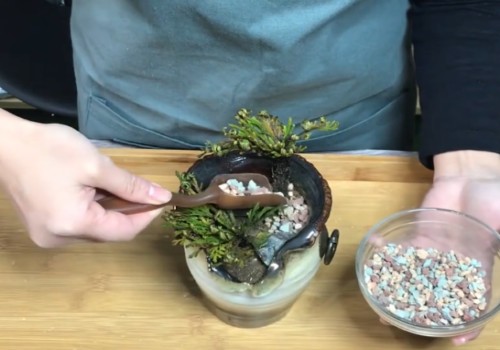
After watering, we also need to do a simple decorative treatment on the pot surface; after all, as a bonsai for viewing, the more beautiful the better. If the ceramic pot we choose already has a good styling effect, then we do not need to add too many complicated decorations for it; generally, it is enough to reasonably place several slightly larger top-dressing stones in the pot. But if the flower pot itself is rather ordinary, then it is recommended to spread a layer of small granular top-dressing stones on the pot surface.
After the above treatment, the Selaginella bonsai we made is basically largely complete, and the bonsai also has a certain decorative effect. After that, what we need to do well is the maintenance and care of the Selaginella bonsai; generally, just place it in a relatively warm, shaded, and ventilated place. Since Selaginella has tenacious vitality and is also tolerant of poor soil, during care you only need to water and mist appropriately every day to maintain humidity.