A Detailed Guide to Clivia Bonsai Cultivation Techniques and Care Methods
Many customers actually love keeping green plants at home, as they improve indoor air quality and beautify the indoor environment, but many are troubled because they do not know the correct care methods. Below is an introduction to Clivia bonsai cultivation techniques.
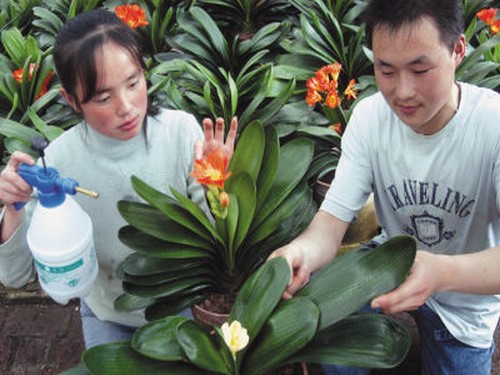
Propagation: Clivia is mainly propagated by sowing seeds, which has produced a wide variety of cultivars. Clivia cultivation is relatively simple. First, choose good potting soil, and it can be placed indoors near a window, with fertilizer and water managed according to the temperature characteristics of each region. During care, the pot should also be turned frequently to prevent the leaves from leaning to one side; if they do lean, they should be straightened promptly.
Temperature: When the temperature is 25 to 30 degrees, the leaves tend to grow excessively, making them long and narrow and affecting the ornamental effect, so when cultivating Clivia, be sure to regulate room temperature.
Light: Clivia is a plant that likes moisture and is suitable for growing in high-humidity environments, but it has low light requirements. As long as the temperature is suitable, it does not matter whether the light duration is a little longer or shorter. Although good light can ensure the Clivia flowers are brightly colored, it still prefers slightly weaker light, so strong light must be avoided.
Repotting: When Clivia grows larger, it needs a bigger pot, which is "repotting and changing the soil." The best time to change the soil is in spring and autumn, because Clivia grows vigorously then and will not have its growth affected by the soil change. The most critical point when changing the soil is to pack the soil firmly around the roots; otherwise, if there is no soil around the roots, water and nutrients will not reach the roots, easily causing root rot.
Watering: During the growing period, the potting soil must be kept moist. During the high-temperature semi-dormant period, the potting soil should be on the drier side, and water should often be sprayed on the leaves to achieve the purpose of cooling.
Fertilizing: Clivia likes fertilizer. Every 2 to 3 years, when repotting in spring or autumn, add decomposed cake fertilizer to the potting soil. Each year before the growing period, apply 5 to 40 grams of decomposed cake fertilizer under the soil surface of the pot, and apply liquid fertilizer once during growth.