A Complete Guide to Growing Money Tree (Pachira aquatica) in Pots
The money tree has become an increasingly popular choice for indoor greenery. The optimal growing temperature for potted money trees is 20-30°C, and indoor temperatures in winter should be kept above 10°C. They thrive in loose, fertile, well-drained, slightly acidic sandy loam soil. Common cultivated varieties include the leaf-bearing money tree and the large-flowered money tree.
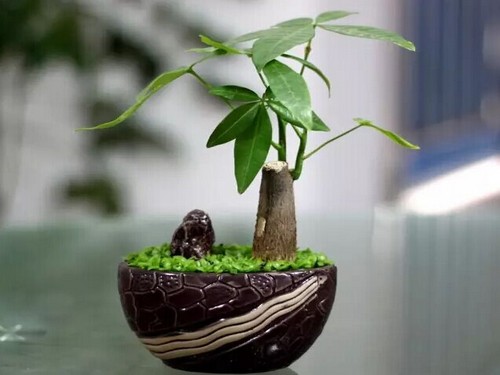
Daily cultivation tips:
When fertilizing money trees in spring and autumn, avoid excessive nitrogen fertilizer to prevent leggy growth. Generally, apply a nitrogen-phosphorus fertilizer once every 15-20 days to promote thickening at the base. During the growing season, watering should keep the potting soil moist while preventing water accumulation in the pot. Soil that is too wet or too dry is harmful to plant growth and can cause yellowing and leaf drop. Since the money tree has a pronounced apical dominance, you can pinch off the growing tip to encourage lateral branch development. In winter, place it in a sunny spot in a south-facing room.
Additionally, when planting, use seedlings, as the stems of young seedlings can be braided into any shape, causing the stems to twine around each other as they grow. Generally, repot once a year.
Many plant enthusiasts spend hundreds or even thousands on a money tree, only to have it die from root rot due to improper care, which is heartbreaking. Here we briefly introduce money tree cuttings propagation, so you can be prepared both ways.
For seedlings propagated by cuttings that have successfully rooted, when potting them up, use a potting mix of leaf mold, garden soil, and river sand in equal parts of 1/3 each, or a mix of peat moss and river sand in equal amounts, and apply fully decomposed pig manure as a base fertilizer. Place tiles at the bottom of the pot to aid drainage. Generally, plant 3 plants per pot. When potting up, do not plant too deep; it is best to let the swollen base of the stem be exposed above the soil surface. After potting, water thoroughly and place in a shaded, ventilated area. After 15-20 days, place in a ventilated area with partial sun and partial shade.
About cutting propagation techniques
Money trees can be propagated by seed or cuttings. Seeds should be sown immediately after collection. For cuttings, take semi-lignified branches in May-June as cuttings; insert them into sand or gravel, keeping them shaded and moist; roots will form in about one month. In spring, you can also use branches cut from the plant when topping it, and insert them into sand, gravel, or coarse sand, maintaining a certain humidity; roots will form in about 30 days. However, cuttings have difficulty forming a swollen basal stem, so their ornamental value is lower than that of seed-grown seedlings.
Technical points: For seedbed preparation, choose a plot of sandy loam soil with deep, fertile soil, sheltered from wind and facing the sun, with good drainage and irrigation, as the nursery site. Make a bed 1 m wide and 10 m long, preferably running north-south. Deeply plow the bed surface, remove the topsoil, and firm it. Lay a 3 cm thick layer of gravel at the bottom, then cover with 10 to 15 cm of fresh river sand mixed with furnace slag in a 2:1 ratio as the substrate. The moisture level should be such that it forms a ball when squeezed in the hand and crumbles when released. Spray the bed surface with a 400-fold dilution of 40% formalin, soaking to a depth of 3 to 5 cm, then cover with plastic film for 3 days to disinfect the soil and eliminate pests and diseases in the soil.
For cutting collection, select healthy, pest-free, vigorous semi-lignified branches of the current year. Cut them on an overcast day or a windless morning. Cut them to a length of 6 to 7 cm, with a horseshoe-shaped lower cut located below a leaf or axillary bud. The cut should be smooth to promote callus formation. Generally, each cutting should have 2 palmately compound leaves. Be careful not to damage the leaves, as they are needed for photosynthesis.
For timely cutting, perform cuttings from late June to early August, cutting and inserting in the morning or evening. Before cutting, soak half of the cutting in Biaodian 3721 rooting solution for 20 to 24 hours, then remove and rinse clean with water. Use a small wooden stick to make holes in the bed surface, then insert the cuttings along the holes and firm the holes closed. Shorter cuttings can be inserted vertically; longer cuttings can be inserted at an angle. The insertion depth should be such that the cutting does not fall over, generally 3 to 5 cm. After inserting, water thoroughly promptly, straighten any tilted cuttings, cover with plastic film, and firm the edges with soil.
For seedling stage management, after cutting, ensure environmental conditions suitable for rooting. Generally, soil temperature should be 3°C to 5°C higher than air temperature. The relative humidity of the air in the cutting bed should be maintained at 80% to 90%, with a light requirement of 30%. Ventilate once or twice a day. From June to August, when temperatures are high and water evaporates quickly, spray water with a fine spray bottle once in the morning and once in the evening, maintaining a temperature between 23°C and 25°C. After the seedlings survive, apply fertilizer promptly, mainly with quick-acting fertilizers. In the early stage, use mainly nitrogen and phosphorus fertilizers; in the middle stage, appropriately combine nitrogen, phosphorus, and potassium; in the later stage, to promote lignification of the seedlings, spray 0.2% potassium dihydrogen phosphate before the end of August and stop using nitrogen fertilizer. Generally, callus tissue forms in about 15 days, and rooting begins in about 30 days.
Money trees prefer high temperatures, humidity, and sunlight. Every 3 to 5 days, spray water on the leaves with a spray bottle, which not only benefits photosynthesis but also makes the branches and leaves more attractive. Generally, seedlings of the current year reach a height of 40 to 50 cm.
For transplanting seedlings, before potting up money tree seedlings, first prepare a nutrient soil. Use 3 parts leaf mold, 2 parts sand, 4 parts garden soil, and 1 part fully fermented organic fertilizer, mix well, and then plant. When transplanting, be careful not to damage the tender roots. The depth should be based on the original base of the stem. After planting, water thoroughly and place in a cool area to recover, avoiding direct sunlight. Thereafter, water daily according to the condition of the potting soil.
Additionally, we have other planting methods:
Sand culture method:
1. Seedbed preparation: Choose a nursery plot with deep, fertile soil. Make a bed 1 m wide; the length depends on the quantity. Preferably run north-south. Deeply plow the bed surface, remove the topsoil, and firm it. Lay a 3 cm thick layer of gravel at the bottom, then cover with 10 to 15 cm of fresh river sand and furnace slag. The moisture level should be such that it forms a ball when squeezed in the hand and crumbles when released. Spray the bed surface with a 100-fold dilution of Niso, soaking to a depth of 3 to 5 cm, then cover with plastic film for 3 days to disinfect the soil.
2. Cutting collection: Select healthy, vigorous semi-lignified branches of the current year. Cut them on an overcast day or a windless morning. Cut them to a length of 6 to 7 cm, with a slanted lower cut located below a leaf or axillary bud. The cut should be smooth to promote callus formation. Generally, each cutting should have two palmately compound leaves. Be careful not to damage the leaves, as they are needed for photosynthesis.
3. Fine cutting: Money trees are cut from late June to early August. Choose an overcast summer day or cut and insert in the morning or evening. When cutting, use Biaodian 3721 cutting rooting solution. Use a small wooden stick to make holes in the bed surface, then insert the cuttings along the holes and firm the holes closed. Shorter cuttings can be inserted vertically; longer cuttings can be inserted at an angle. The insertion depth should be such that the cutting does not fall over, generally 3 to 5 cm. After inserting, water thoroughly promptly, straighten any tilted cuttings, and cover with plastic film.
4. Seedling stage management: After cutting, ventilate once every 3 days. From June to August, when temperatures are high and water evaporates quickly, spray water once in the morning and once in the evening, maintaining a temperature between 23 and 25°C and a humidity of about 80% of field capacity. To promote lignification of the seedlings, spray 0.2% potassium dihydrogen phosphate before the end of August. To prevent fungal infection, spray the bed surface with thiophanate-methyl or carbendazim once every 7 days. Generally, callus tissue forms in about 15 days, and rooting begins in about 30 days.
5. Seedling transplanting: Before potting up the seedlings, first prepare a nutrient soil. Use 3 parts leaf mold, 1 part sand, and 2 parts garden soil, mix, and then plant. When transplanting, be careful not to damage the roots. The depth should be based on the original base of the stem. After planting, water thoroughly and place in a shaded area, avoiding direct sunlight. Thereafter, water daily according to the condition of the potting soil, following the principle of watering when dry and stopping when wet.
Seed sowing method:
Money trees are mostly propagated by seed. Use fresh seeds for sowing; harvest after they mature in autumn, remove the seed coat, and sow immediately. After sowing, cover with about 2 cm of fine soil, then place in partial shade, keeping moist. Sprouts appear about 7 days after sowing. The germination temperature is 22—26°C. When seedlings reach about 25 cm, thin them out to give each seedling even space to grow. Seedlings grow rapidly. During the seedling stage, apply dilute nitrogen fertilizer and 2—3 applications of phosphorus and potassium fertilizer to promote swelling of the stem base.
Timing: Any season, but spring is best. Seeds can be covered with soil or not, but if covering, do not cover too deep. Water regularly to keep the medium moist for easier germination. This method makes it easier to cultivate a beautiful tree shape. This method propagates relatively slowly. When collecting seeds, wait until the fruit skin turns yellow and withered or dry before harvesting; otherwise, immature fruits cannot germinate and grow successfully.
Water culture method:
Select a healthy, small soil-grown plant and convert it to water culture using the root-washing method. It is best to add ceramsite as a substrate, which both stabilizes the plant and aids rooting. In the initial 2-3 days of water culture, change the clean water once a day; new roots will grow after 2 weeks. When the plant has fully adapted to the environment, add foliage plant nutrient solution for maintenance, changing the nutrient solution every 2-3 weeks. During the growing period, if you frequently spray a 0.1% potassium dihydrogen phosphate solution on the leaves, it not only keeps them glossy and emerald green but also promotes swelling of the stem base.
1. Remove the plant from its pot, remove the substrate, rinse the roots clean with tap water, and cut off all the original soil-grown roots from the root collar;
2. Soak the base of the root stem in a 1500-fold dilution of carbendazim or thiophanate-methyl solution for 10-15 minutes to eliminate some disease-causing pathogens.
3. Soak the stem base in a 200 mg/L NAA solution for 20-40 minutes.
4. Remove and let dry, then place the money tree in a hydroponic planting basket and secure it with pebbles or stones, and cultivation can begin. Note that the water level for water culture should not be too high; it is best to just reach the base of the money tree's stem.