Detailed Guide to Cultivating Fruiting Golden Bullet (Diospyros cathayensis) Bonsai
Nature paints scene after scene of colorful pictures with its ever-changing magic brush, for us to enjoy to the fullest. Nature is the best bonsai master! Every time Sister Hua wanders into the wild and comes across a fine view, she snaps away with her camera, hoping that one day she can "move" that natural beauty back home. Trees planted on stone, stone placed in a pot. The Golden Bullet (Diospyros cathayensis) grows clinging to rock, binding the mountain stone tightly with its roots like ropes, never daring to slacken for a moment, striving to display the glory of life. If this is an instinct for survival, then how awe-inspiring that instinct is! In spare moments, invite a few close friends, sip a cup of clear tea, and enjoy natural beauty without stepping outside the door - what a delight!
1. Seed propagation: After the fifteenth day of the first lunar month, pick the ripe fruits, take out the seeds, wash them clean and dry them. In early April, soak them in hot water at about 30℃ for 48 hours, then take them out and place them in a container that drains water, cover with double-layer gauze, and just like growing bean sprouts, pour clear water over the seeds once a day until the seeds split open and sprout, then sow them in a prepared seedbed. After routine management, three years later the seedling plants can be used to make small bonsai.
2. Cuttings from female plant branches: whether new growth of the current year or old branches, both can root. The key to successful rooting is paying attention to the season, namely mid-April each year. Secondly, ensure the cutting bed environment is humid and the cuttings are fresh. If conditions allow, place the cutting bed in a spot with full sun, mist the cutting bed during the day and stop at night. If conditions do not allow, place the cutting bed in a bright, ventilated, half-shade half-sun location, and mist four times a day with a sprayer to ensure the Golden Bullet cuttings survive. Using cuttings to make small bonsai, they will bear fruit after three years.
3. Digging old stumps from the wild: from November of the current year to April of the following year is the time. On the premise of protecting the natural ecological environment, professionals may dig in the mountains in a planned way. Soak the collected old stumps in clear water for two hours first, then bury about 1/2 of the stump in sandy soil, water thoroughly to settle the roots, and afterward simply keep the environment moist; the branches can grow to one meter in the same year, and in March of the following year they can be dug up, potted, pruned and shaped, and in three to four years they can become a basically formed stump bonsai.
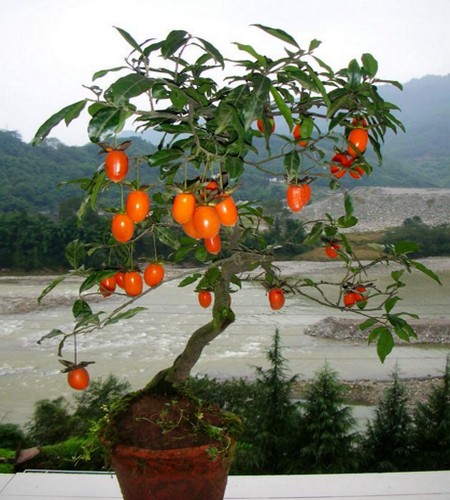
4. Fruit-bearing cultivation: because the Golden Bullet is dioecious, during its flowering period try to have a male plant blooming near the female plant, so as to allow natural pollination and raise the fruit-setting rate. If no male plant is blooming near the female plant, manual pollination can be carried out. When the female plant's flowers fall, the fruit is already attached to the flower base; at this time, spray twice at half-month intervals with 1:800 potassium dihydrogen phosphate to increase the fruit-setting rate. In the ninth lunar month, similarly spray twice with 1:600 urea water; this makes the fruit large and glossy. Golden Bullets cultivated and managed by this method have luxuriant branches and leaves and red fruits covering the branches from October of the current year to February of the following year, giving people a feeling of harvest, joy and peaceful beauty.
5. Routine care and management: for shaping the Golden Bullet, metal wire can be used to set the main trunk and main branches. Later management is mainly pruning, with hanging and tying as a supplement. For potting, use river sand, leaf mold and loess in a 4:4:2 ratio; after planting, water thoroughly once, place in a shady spot for half a month of care, then normal management can begin. After new buds emerge, apply decomposed fertilizer liquid once a month, with a fertilizer-to-water ratio of 1:10; apply more fertilizer in spring and autumn, less in summer, and none in winter. Watering should keep the potting soil on the moist side; in summer water thoroughly every night. In spring, autumn and winter, water only when the potting soil is dry, and water thoroughly when you do.