A Detailed Guide to the Correct Method of Planting Orchid Bonsai
"The orchid grows in a secluded valley unknown to all; a visitor planted it in the eastern pavilion and left its fragrance to me; I know its pure sweetness can dispel foulness, and I cherish all the more its slender leaves that so cleverly withstand the frost; its roots cling to dense rocks and its autumn bloom comes early, its clumps lean on tall bamboo for cool midday shade; I would have it share the hall below with the wild herbs, for before my eyes the verses of Chu appear so often." Chinese orchids have been called the "king's fragrance" since ancient times, their scent pure and refined, floating and drifting, as if present yet not, refreshing to the heart. When a waft of delicate fragrance comes now and then, it can make one feel relaxed and joyful, refresh the mind, and suddenly open one's understanding, so in ancient times there was a legend that orchid fragrance could hasten childbirth and cure illness. The wondrous fragrance of Chinese orchids cannot be compared with any floral scent in the world.
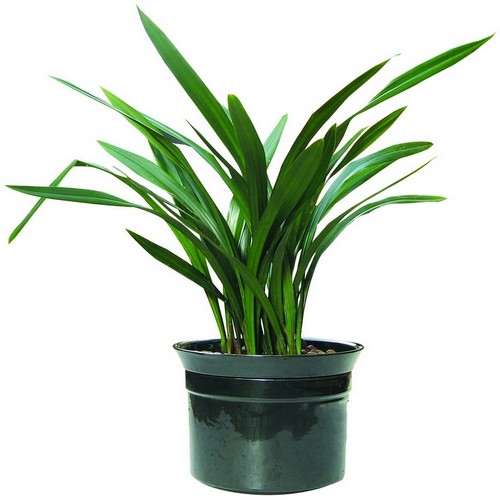
The leaves of orchids are elegant and unrestrained in posture and have always been a source of inspiration for poets and painters. Those with soft, drooping leaves have a delicate, graceful charm; those with slanted, spreading leaves are free and easy; those with slanted, upright leaves combine hardness and softness; those with upright leaves are vigorous and strong. The many-colored leaf-variety orchids are even more gorgeous and varied, especially enchanting, no wonder a poem praises them saying: "Weeping dew scatters the light in confusion, shadow slants of itself in the wind; how can ordinary people understand this, watching leaves surpasses watching flowers." Orchid flowers vary endlessly in form and have countless postures; some resemble lotus flowers, some resemble plum blossoms, some resemble chrysanthemums, some resemble peonies, and some resemble pine and bamboo... truly all-encompassing and too numerous to count, as if they had gathered the very souls of flowers, and from orchids one can find the miniature of a hundred flowers.
Orchids newly purchased from a flower shop or dug from the mountains should first be cultivated in clay pots for 1 to 2 years, so the plants can adapt to the new environment, and only after they grow strong can they be put into fine pots to make bonsai. For bonsai pots, rectangular, oval, round, long octagonal, and fan-shaped pots are best. Medium-depth Yixing clay pots are commonly used; if the pot is too deep, the artistic conception of the finished bonsai is not beautiful; if the pot is too shallow, maintenance becomes more difficult.
Orchids are generally planted in March to April. After knocking the orchid out of the pot, first cut off the old roots and rotten roots, then divide the clumps while planting. Choose several plants of differing heights and leaf lengths and plant them at one end of the pot, and the line connecting their roots should form a scalene triangle; do not plant them in a straight line, otherwise it will look rigid.
For planting orchids, soil rich in humus, loose, and well-draining, neutral or slightly acidic (pH 5.5 to 7.0), is best. You can use three parts peat soil mixed evenly with one part sandy soil, or use humus soil mixed evenly with an appropriate amount of fermented sawdust and cow manure, or you can buy special orchid soil. Generally, no base fertilizer is applied when planting.