How to grow a winged euonymus bonsai? Detailed cultivation techniques
In late autumn, the leaves of winged euonymus turn fiery red; in the other seasons the leaves stand upright and are green. It is a very beautiful autumn and winter colorful-leaf ornamental plant. Thanks to its outstanding bright red leaves in autumn, which last for several months, it is rated in the landscaping industry as one of the high-grade nursery stock. The densely crowned euonymus has a full and neat plant shape and tolerates pruning, making it very suitable for colorful hedges.
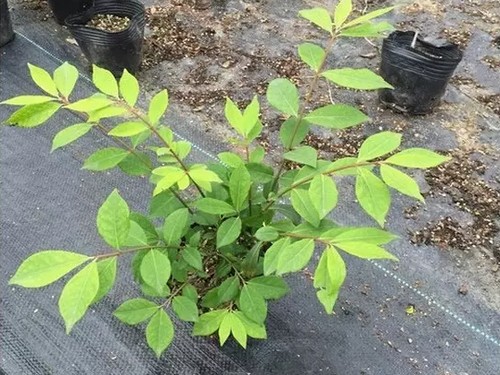
Winged euonymus (Euonymus alatus) is a cultivated variety, and the top of its crown is relatively flat. The leaves range from elliptical to ovate, with serrated edges, and are simple and opposite; in spring they are dark green, and in early autumn they begin to turn blood red or fiery red. If the weather is dry, the leaves turn red earlier. It blooms yellow flowers in May-June, with light red or pale yellow flowers, in cymes. The flowering period is from May to early June. It is a very beautiful autumn colorful-leaf variety, and its color is better in acidic soil. Its maintenance and management are relatively easy, and it has strong adaptability and cold resistance.
Placement: Euonymus likes light, so it should be placed in a spot with plenty of sunlight and good air circulation. In summer it should be properly shaded to prevent exposure to the scorching sun. In autumn, light helps the leaves turn red earlier. In winter it can overwinter outdoors; simply bury the pot in soil in a sunny spot.
Watering: Keep the euonymus bonsai moist at ordinary times; do not water until the soil is dry, and it is better to keep it on the dry side than the wet side. During the spring and summer growth period, water appropriately to promote growth, flowering and fruiting. In autumn, when the leaves are red, water should be withheld, and it is best for the potting soil to be slightly dry. During the winter dormant period, watering once every 5-7 days is enough.
Fertilizing: Euonymus is fond of fertilizer. During the growth period, apply dilute, fully decomposed cake fertilizer water once every two weeks. Focus on phosphorus and potassium fertilizers and apply less nitrogen fertilizer to avoid excessive leggy growth. After autumn, it is best to apply less fertilizer or none at all. In winter, put some decomposed cake fertilizer crumbs in the pot as a base fertilizer.
Pruning: When new branches and leaves sprout in spring, they should be properly shortened to keep the crown dense rather than sprawling. After the leaves fall in autumn, carry out shaping and pruning. Cut off sprouting branches, leggy branches, and crossing or overlapping branches to maintain a certain shaped tree form.
Repotting: Repot once every 2-3 years, preferably in spring in February-March before buds sprout and leaves open; autumn is also acceptable. When repotting, prune overlong roots, remove 1B2 of the old soil, and replace it with fertile, loose cultivation soil mixed with an appropriate amount of cake fertilizer crumbs and rice husk ash. If cultivating a raised-root style, the plant can gradually be lifted to expose the main roots at the base.
Pest and disease control: Common pests include long scale insects, flat stinging nettle caterpillars and boxwood patch moths, which harm the leaves, and attention should be paid to their control. For scale insects, a 20-fold dilution of rosin mixture can be used for control; for flat stinging nettle caterpillars and boxwood patch moths, use a 1000-fold dilution of 40% omethoate or isocarbophos during the larval stage. Euonymus is harmed by leaf-eating insects such as boxwood looper moths and boxwood patch moths; for control, spray with a 1500-fold dilution of trichlorfon or dichlorvos during the larval activity period in April-May.