How to cultivate Orange Jessamine bonsai? Detailed technical key points
Orange Jessamine (Murraya paniculata) has a graceful tree shape, vigorous and powerful branches, stays evergreen all year round, and bears pure white flowers with a rich fragrance, making it an excellent bonsai material. Orange Jessamine bonsai has an elegant posture and can be enjoyed in all four seasons. In South China, Orange Jessamine can be planted in the ground or in pots, and is also a great material for making bonsai. In the Yangtze River basin and areas to its north, it can only be grown in pots and moved indoors to overwinter. It is not very particular about soil, and grows best in deep, fertile, loose, neutral sandy loam.
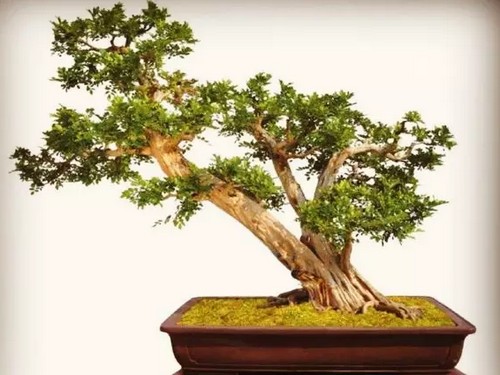
Orange Jessamine is a shrub or small tree of the genus Murraya in the family Rutaceae. It is native to the subtropics and is distributed in South China and Southwest China. It stays evergreen all year round, with a neat tree shape. The leaves are alternate, odd-pinnate, with 3 to 9 leaflets, and the leaf shape varies considerably, being ovate, spoon-shaped obovate to prismatic, with entire margins, and the leaf surface is dark green and glossy. The corymb is terminal, lateral, or borne in the leaf axils of the upper branches, with several white, extremely fragrant flowers. The flowering period is from May to August. After flowering, it bears ovate or spherical fruits that ripen in winter and are red.
In South China, Orange Jessamine can be planted in the ground or in pots, and is also a great material for making bonsai. In the Yangtze River basin and areas to its north, it can only be grown in pots and moved indoors to overwinter. It is not very particular about soil, and grows best in deep, fertile, loose, neutral sandy loam. For pot cultivation, choose a slightly deeper and larger pot with good air permeability. If using a plastic tube pot, it is advisable to place a layer of broken hard plastic foam blocks at the bottom of the pot to enhance air permeability and drainage. Repot and change the soil once a year around Qingming (early April), and cut off dead branches and pest- and disease-damaged branches, shorten leggy branches and overly long branches, and thin out overly dense branches.
Orange Jessamine is a sun-loving species. It should be placed in a location with ample sunlight and good air circulation (at least five to six hours of direct light per day) to achieve lush leaves, abundant flowers, and fragrance. When in bloom, it can be moved to a windowsill, filling the room with fragrance. After the flowers fade, it still needs to be placed in a spot with ample sunlight. Grown in semi-shade, it is less robust than in a sunny spot, and the fragrance of the flowers is also weaker. In overly shaded conditions, the branches become thin and soft, the leaf color is pale, and there are few or no flowers. When brought indoors in winter, it should also be placed in a spot with ample sunlight.
Orange Jessamine likes warmth, and the most suitable temperature for growth is 20°C to 32°C. It is not cold-tolerant. In winter, when the minimum temperature drops to around 5°C, move it indoors to overwinter at a low temperature (5°C to 10°C). Moving it in too early is not conducive to hardening its cold tolerance. If the room temperature is too low, it easily drops leaves, affecting growth the following year. Below 0°C, it may freeze to death. If the room temperature is too high, the plant cannot go into proper dormancy, and may even sprout indoors. When it is moved outside, a cold wind may cause the buds to retract, and when new buds emerge again, it affects that year's growth.
When cultivating Orange Jessamine, watering should be moderate. Before bud formation, control water appropriately to promote flower bud differentiation. After bud formation and during the flowering and fruiting period, the potting soil is best kept slightly moist but not waterlogged. Orange Jessamine likes fertilizer. When potting or repotting and changing soil, it is advisable to mix some bone meal or nitrogen-phosphorus-potassium compound fertilizer into the growing medium. During the growing season, apply a nitrogen-phosphorus-potassium compound fertilizer once about every half month. Do not apply nitrogen fertilizer alone, otherwise the branches and leaves will grow leggy without forming buds. From April to June, to promote flower bud differentiation, spray a 0.2% potassium dihydrogen phosphate solution on the leaves once a month; the leftover spray can be used to water the roots.
Household potted Orange Jessamine rarely sets seed, so propagation generally uses the air layering method. In May and June, select vigorously growing branches, make a cut in the bark at an appropriate spot with a sharp knife, use a mixture of moss and leaf mold as the moisture-retaining medium, wrap it well with plastic film, and spray water frequently to keep it moist. After about 2 months, the wound heals and new roots grow. In September and October, cut it off and unwrap the film. Do not break apart the wrapped moss and leaf mold; plant it in a pot, move it indoors for care in late October, and move it outside around Qingming the following spring. With routine care, it can bloom in 2 to 3 years. In addition, the division method can also be used. In spring, use a sharp knife to cut off a rooted sucker shoot growing from the base of the old plant, plant it separately in a pot, first place it in a shaded spot for 10 to 15 days, and then move it to a sunny spot for care.