How to plant potted saffron crocus? Detailed planting methods
Saffron crocus is also known as zanghonghua, xihonghua, etc. Many farmers, because they did not grasp the key technical points, ended up with corms growing smaller and smaller, fewer and fewer flowers blooming, and lower and lower yield per mu, and gave up planting due to lack of profit. As the saffron crocus blooms, spring draws ever closer to us. It is expected that in mid-to-late this month, early spring flowers such as winter jasmine, mountain peach, mountain apricot, and Yulan magnolia will bloom one after another, and people will welcome the season of warm spring and blooming flowers. Some key planting points are introduced below:
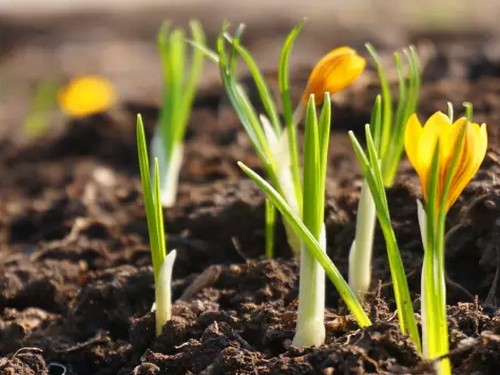
Saffron crocus is generally planted in August to September. A mature corm has multiple main and lateral buds. After flowering, a new corm forms from the swollen base of the leaf cluster. After the aboveground part withers in summer, dig out the corms, grade them, dry them in the shade, and store them. Planting earlier helps to form strong seedlings. Each mature corm has several main buds and lateral buds. When planting, large corms above 8 grams should be planted separately from small ones. Small corms weighing less than 8 grams cannot bloom that same year and need to be grown on for another 1 year. For pot cultivation, it is best to select spring-flowering types with corms weighing about 20 grams in October, and use a flowerpot with an inner diameter of 15 cm, planting 5 to 6 corms per pot.
Saffron crocus prefers a mild and cool climate, fears heat, and is relatively cold-tolerant. It likes fertile sandy loam and avoids waterlogging. In China, it is mostly propagated by corms. Saffron crocus is a fibrous-rooted shallow-rooted plant. Choose a plot with sufficient light and loose, fertile soil, and avoid continuous cropping. In northern winters, where temperatures are low, spray the soil surface with a 600--800 times dilution of Xin Gaozhi Mo, which can preserve moisture, prevent water evaporation, protect against sun and drought, keep warm and prevent freezing, prevent soil compaction, and suffocate and isolate sources of pests and diseases.
Corm treatment: Saffron crocus corms have main buds and lateral buds. The main buds bloom, while the lateral buds do not, so the lateral buds must be completely removed. Spray Huaduo Zhuangdiling at the bud stage to promote strong buds and plump petals, thereby achieving high yield.
Chemical treatment can prevent pests and diseases. The main disease of saffron crocus is rot disease. Using a fungicide mixed with Xin Gaozhi Mo to make a liquid medicine and soaking the corms before planting can greatly improve the utilization rate of the active ingredients of pesticides and fertilizers, resist evaporation under strong sunlight, regulate water absorption, and prevent drought and rain damage.
PS: The original species of saffron crocus has medicinal value, but experts at the botanical garden specifically remind everyone that the saffron crocus planted in the botanical garden are all artificially bred horticultural varieties that are only for ornamental purposes and have no medicinal value. We hope everyone will enjoy the flowers and love them even more, so that more people can appreciate the beauty of saffron crocus.