Detailed Guide to Tulip Planting Methods and Techniques
Many friends have asked me how exactly to plant tulips. Now I have put together the tulip planting method so everyone can better care for their beloved tulips and let them bloom beautifully next year.
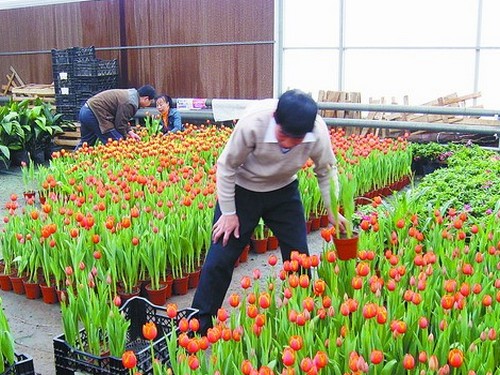
1. Prepare the pot and soil: the pot does not need to be too large, with an ideal depth of 20 cm , and the pot diameter depends on how many bulbs you are planting. Generally, any normal household flower pot will do, and the soil requirements are not high either, as long as it is loose and breathable. You can refer to the picture below.
2. First place no less than 10 cm of soil in the pot, then put in the bulbs (note that the pointed part should face upward, do not plant them upside down), and covering with about 8-10 cm of soil on top is enough. After planting, be sure to remember to water thoroughly in time.
3. After tulips are planted, place them in a shaded and ventilated spot. Before blooming, they go through two processes: a rooting period and a growing period. The first is the rooting period, which takes about 3 weeks, with an ideal temperature of 5°C-9°C. Generally, placing them indoors in a shaded, cool, dark place is enough to let them root and go dormant.
4. Next comes the growing period, which is the period from sprouting to blooming, taking about 4-5 weeks, with an ideal growing temperature of 10°C-20°C. But note that if the temperature is too high, it will cause blind buds! (Flower buds can form but cannot bloom.)
PS: I specifically asked an experienced horticulturist, and below are some tips to make your flowers bloom better.
1. Whether during the rooting period or the growing period, maintaining the ideal temperature can make tulips stronger.
2. During the growing period, the higher the temperature, the faster the flowers bloom, but this affects flower quality to a certain extent.
The above are the tulip planting methods. I hope everyone can grow their own beautiful flowers. If you have any other questions, you are welcome to interact with me through WeChat.
I. Things to Know Before Planting
1. Storage method: tulip bulbs need to be stored in a cool, ventilated place before planting
2. Planting temperature: begin planting in October-December when the temperature drops below 10 degrees Celsius, and make sure planting is completed 2 weeks before freezing
3. Bulb treatment: peel off the outer skin of the bulb, especially near the basal plate, which helps rooting. Then soak in 1000 times diluted carbendazim for 30 minutes and let dry naturally
4. Soil selection: new soil is best, requiring breathability, looseness and good drainage, with a pH of 6.0-7.0 and an EC value below 1.54 ms. You can buy the soil we have prepared for you
5. Flower pot selection: choose a pot with holes at the bottom for breathability and drainage. Generally, a pot with a diameter of about 15 cm can plant 3-5 bulbs
II. Planting Tutorial
Step 1: Tulip bulbs have a grayish-brown outer skin. Generally, peeling off the skin before planting can increase the speed of sprouting and rooting, which is good for growth
Step 2: Tear open half of the carbendazim packet, dilute it with the amount of two bottles of purified water, place the peeled tulip bulbs in the carbendazim solution and soak for 30-40 minutes, then take them out and let them dry naturally. (Do not pour out the diluted carbendazim; it can be used to water flowers.)
Step 3: Before planting, first place some of this shop's special medium in the flower pot, then put in the bulbs. Place the bulbs in the center, upright. The planting depth is generally 1.5 times the size of the bulb. Decide how many to plant per pot according to the pot size. Generally, a 15 cm pot can plant 3 in a triangular arrangement. When filling with soil, press appropriately around the edge of the pot with your fingers to better secure the bulbs. Do not press on the bulb area in the center, otherwise it is easy to damage them. After pressing, loosely fill and level the soil. Generally, water thoroughly once immediately after planting, and afterward keep the soil moist until sprouting.
III. Leaf-growing Period
At this time, they need 2 hours of sunlight every day to promote leaf growth. During this period, the tulip roots have already grown very long, so when changing the water each time, special care is needed not to damage the roots. Tulips are relatively cold-tolerant, and during the day they must have sufficient direct sunlight, otherwise the plants will become leggy, and in severe cases they will not bloom.
IV. Growth and Blooming Period
During the shading period, after low temperatures promote root growth, slightly higher temperatures promote leaf growth. It is best to have high temperatures and sufficient sunlight, so the stems and leaves can be full and the flowers abundant.
Tulips are relatively cold-tolerant, and during the day they must have sufficient direct sunlight, otherwise the plants will become leggy, and in severe cases they will not bloom. During the flowering period, place them in a bright spot for 4 hours a day, and the rest of the time they can be placed indoors for enjoyment. From planting to blooming takes about 50-60 days.
Tulips are bulbous flowers planted in autumn and blooming in spring. They like coolness and fear heat. Under natural conditions, planting in autumn when the temperature about 15 cm underground is around 10°C is most suitable, because this temperature is suitable for root growth. In North China this temperature is around the "National Day", while in the middle and lower reaches of the Yangtze River it is from late October to early November. Before the cold winter arrives, good root development is extremely important for good growth the following spring. In winter, the planted bulbs undergo further development at low temperatures. Through the long winter cold, dormancy is broken, and they sprout in early spring. As the temperature rises, they unfold leaves and bloom.