How to Grow Water Lily from Seeds? A Step-by-Step Guide to the Planting Method
Growing water lilies in home pots not only gives a refreshing feeling but also adds charm. The miniature varieties of water lilies can be used to decorate living spaces; plant them in an elegant small pot, pair it with a refined and tasteful pot stand, and place it in a suitable spot. Then this little life, with its lush green leaves, delicate flower buds, and a faint, elusive fragrance, bathed in indoor lamplight and complementing the other decorations in the room, delights the eye and adds more charm and character to the home.
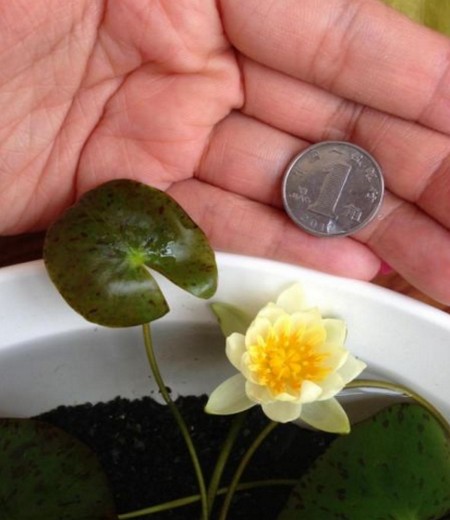
The two most important factors for growing water lilies from seeds:
1. Light
Water lilies love sunlight and good ventilation, which is why tropical and hardy water lilies that bloom during the day close their flowers at night and open them again in the morning. In a pond with shade from trees on the bank, they may still bloom, but growth will be weaker. Whether the light is sufficient determines whether water lilies can survive and thrive; the more light and the warmer the climate, the better water lilies grow and the shorter their dormancy period. So if you want to grow water lilies, you first need to assess whether you can provide a spot with plenty of light.
2. Temperature
Around the Cold Dew solar term, pour out the water in the water lily pot and place it in a cold room at around 3°C to overwinter, keeping the potting soil moist but not frozen.
Now let's start planting the water lilies:
Sowing time: Lotus seeds have no dormancy period; as long as the water temperature can be kept above 16°C, they can be sown in all four seasons. Under suitable temperature and light conditions, lotus seeds take 50-60 days from sowing to flowering in spring and 60-80 days in autumn.
1. Flower pot
Choose pots with an outward-flaring opening as much as possible; leaves grow better with an outward-flaring opening than with an inward one. The wider the pot opening, the larger the flowers (the size of the pot bottom matters little). The depth of the pot affects the flowering interval: the deeper it is, the longer the interval. Before planting, the container must be disinfected and washed clean.
2. Soil
Choose soil with relatively high clay content as much as possible. Prepare some clay; pond mud is best, such as: clay, Yangmingshan soil.
3. Next, place a small amount of slow-release fertilizer or root fertilizer at the bottom of the pot (too much will cause root rot).
Put about 1/4 to 1/3 soil in the flower pot and press it firm, then bury the tuber in the soil with the growth bud pointing up. If the tuber is buried deep, the flowering interval will be longer but the flowers larger; if buried shallow, the interval will be shorter but the flowers smaller. After planting, move it to a spot with plenty of light, fill it with water, and wait for leaves to grow and flowers to bloom (if there are too many leaves, some can be trimmed).
4. If you want to plant two or more tubers together
Unlike planting other flowers, the two tubers should be planted close together. If planted separately, when the leaves of the stronger one shade the growth bud of the weaker one, the weaker one cannot get light and will die. Also, when planting them together, it is best to use the same variety or the same color group, because dark colors (such as purple and blue) are more vigorous than light colors (white and yellow). Keep this in mind!! Pour the seeds into a container filled with water and mud; germinating them in warm water at 25-30°C is best. Change the water every day, and they will generally sprout in about 2 weeks. The planting site needs plenty of light and good ventilation.
5. After flowering
You can cut the flowers and put them in a vase (except for Zishi lotus). The lifespan of a flower is about 3-6 days; on the first day the flower is relatively straight, then it bends more and more until it bends into the water. If you cut flowers for arranging, the flowering interval will be shortened; if you let them wither on the plant, the interval will be longer.
6. Fertilizing
About every one and a half to two and a half months, apply slow-release fertilizer or root fertilizer about 3-5 cm away from the tuber, but do not apply any more after the end of September, because autumn is gradually approaching and the water lilies will enter dormancy; fertilizing at that time will instead cause root rot.
7. After entering autumn and winter
Water lilies will also enter dormancy as the temperature drops. At this time it is best not to disturb them; just top up the water when it gets low. For fragrant water lilies, varieties with spotted leaves have a longer dormancy period than those without spots, and light-colored varieties have a longer one than dark-colored varieties.
8. Transplanting and dividing buds:
This can be done every year after Qingming and before Mid-Autumn. When dividing buds, be careful not to damage the growth buds; the size of the tuber matters little. It is recommended not to have too many bud hearts in one pot, as it will be too crowded, the leaves will become smaller, and they will not bloom. Therefore, buds should be divided once or twice every two years on average (so I give away the extras every year).
9. Some varieties carry out another kind of asexual reproduction at the center of the leaf. If you find a bud heart growing at the center of a leaf, leave it alone for now and let it grow. When that leaf begins to turn yellow, cut off the leaf stalk together with the bud heart and place it in a water basin or flower pot, likewise in a spot with plenty of light. After about two weeks, when the growth bud has grown larger and roots have formed, it can be planted like a normal plant, and it will also bloom that same year.