How to grow potted carnations? A detailed guide to planting methods
Carnation, also known as clove pink, is a perennial herbaceous plant of the genus Dianthus in the family Caryophyllaceae. Its flowers are delicate and fragrant, with a long blooming period, making it an important cut flower plant worldwide, widely cultivated in many countries. Today the editor recommends the following growing techniques:
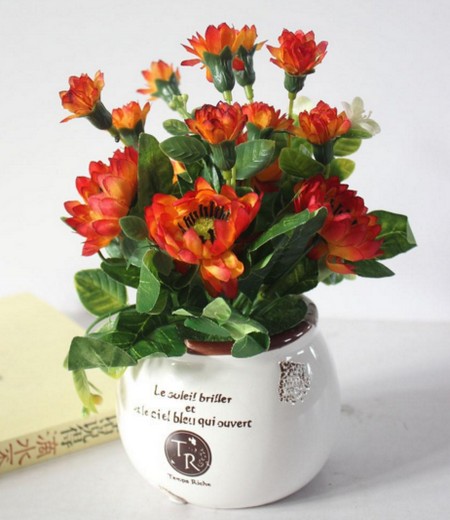
1. Soil: requires well-drained, humus-rich, clayey soil with good fertilizer retention that is slightly alkaline. Carnations prefer soil with good fertilizer retention, aeration and drainage, with heavy loam being the best. The suitable soil pH for their growth is 5.6-6.4. Some soil analysis experiments show that within a pH range of 5.95-7.9, the soil organic matter content has no obvious effect on flowering; it mainly depends on soil texture.
2. Light: Carnations are intermediate-day plants that prefer ample sunlight. Apart from the seedling stage and full-bloom stage, there is no need to worry about damage from strong light, and supplemental light can increase flower diameter and color intensity. Light intensity has a clear positive correlation with cut flower yield per unit area. A preference for strong light is an important characteristic of carnations. Whether overwintering indoors, summering in pots, or forcing cultivation in a greenhouse, they all need sufficient light and should be placed in a sunny position with direct sunlight.
3. Temperature: Carnations prefer cool conditions and are not tolerant of heat, though they can endure a certain degree of low temperature. If summer temperatures exceed 35°C or winter temperatures fall below 9°C, growth becomes very slow or even stops. During high-temperature summer periods, corresponding cooling measures should be taken, while in winter plastic film covering or a greenhouse is needed to maintain a suitable temperature.
2. Watering: The carnation root system is fibrous. Long-term waterlogging or excessively high humidity in the soil or medium, or prolonged high temperatures on leaf surfaces, are all unfavorable to their normal growth and development. Therefore, drip irrigation is recommended, and attention should also be paid to water quality and water salinity. Carnations grow vigorously and are relatively drought-tolerant. In rainy and overly wet areas, the soil tends to become compacted, and the roots develop abnormally due to poor aeration, so loosening the soil and draining water should be noted during the rainy season. Apart from timely watering during the peak growing and flowering seasons, watering can be reduced at other times, as long as the soil is kept moist. Air humidity is best maintained at around 75%; appropriately spraying water before flowering to adjust humidity can prevent buds from splitting open prematurely.
3. Fertilizing: Carnations like fertilizer. Before planting, apply a sufficient amount of baked fertilizer and bone meal, and during the growing period continue to apply liquid fertilizer. Generally, apply a dilute, well-rotted fertilizer solution about once every 10 days, and apply a top dressing once after harvesting flowers. For potted carnations, choose a tall pot with a larger inner diameter, and first apply sufficient base fertilizer containing potassium, calcium, nitrogen and phosphorus at the bottom of the pot. During the growing period, alternately apply once every half month a dilute urea solution, bone meal or sauce residue fertilizer. It is worth noting that carnations should not be given concentrated fertilizer.
4. Pinching: To encourage carnations to branch more and bloom more, repeated pinching should be carried out starting from the seedling stage: when the seedlings grow 8 to 9 pairs of leaves, perform the first pinching, keeping 4-6 pairs of leaves; when the side branches grow more than 4 pairs of leaves, perform the second pinching, keeping 3-4 pairs of leaves per side branch, ultimately giving the whole plant 12-15 side branches. At the bud stage, keep only one flower bud at the tip of each side branch, and promptly remove all small flower buds and side branches sprouting from leaf axils below the top. After the first flowering, promptly cut off the flowering stems, keeping only two buds at the base of each branch. Through such repeated pinching, the plant shape can be made graceful, with abundant and brightly colored flowers.