How to grow a Chinese swamp cypress bonsai? A full breakdown of the cultivation essentials
The Chinese swamp cypress is hailed as a "living plant fossil". It is a deciduous or semi-deciduous tree of the genus Glyptostrobus in the family Taxodiaceae. This genus contains only this 1 species, and it is a relict plant of the world, a tree species endemic to China, and a national first-class precious tree species, unique in the world. In 2006 it was selected by the State Post Bureau for the "Relict Plants" stamps, becoming a national calling card.
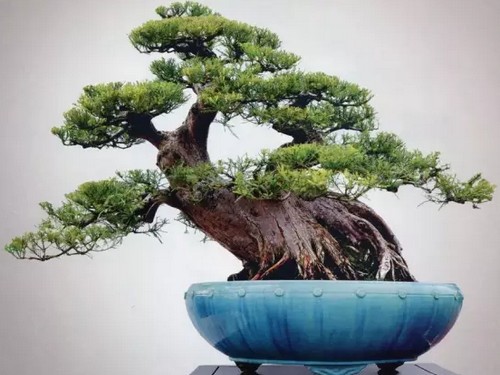
The Chinese swamp cypress is a light-loving tree species. It likes a warm, humid climate and waterlogged environments, tolerates waterlogging but not low temperatures, and has strong adaptability to soil. Except for saline-alkali soil, it can grow in all other types of soil, and grows best in alluvial soil with plenty of moisture.
The Chinese swamp cypress loves light, and requires full sunlight from the seedling stage onward. It likes warm, humid environments, with an average annual temperature of 15-22°C being the optimum, and it can withstand high temperatures of 40°C and low temperatures below 10°C. It requires an annual rainfall of 1500-2000 mm, and the more abundant the rainfall, the more favorable it is for its growth. It is extremely tolerant of waterlogging, mostly growing on riverbanks, embankments and field ridges, and grows best on sites 15-30 cm above the tide line.
Cultivation essentials:
For dry sowing, the Chinese swamp cypress blooms in February-March, and its cones mature in October-November. When the cones change from pinkish green to pale yellow and the scales begin to crack slightly, they should be collected promptly. Each kilogram contains about 85000 seeds, with a germination rate of 50-60%. For seedling raising, the "water culture method" is generally used, that is, enclosing a plot and making beds for sowing in winter; when the seedlings are 20-25 cm tall, they are transplanted to level beds in paddy fields, with a plant and row spacing of 20-25 cm, irrigated every morning with the water kept 3-5 cm deep, and drained in the evening. Never raise seedlings in stagnant water. When the seedlings are 1.5 m tall, they can be lifted and planted out. A plant and row spacing of 1.5×1.5 m to 1.5×2.0 m is suitable. Within 2-3 years of planting, attention should be paid to protecting the terminal bud of the young tree's trunk and to weeding and earthing up.
Propagate by seed. The cones can be harvested when they turn yellowish brown; after harvesting, dry the seeds in the sun and store them until February-March of the following year for sowing. They sprout in about 20 days. Keep the seedbed moist and provide appropriate shade. One-year-old Chinese swamp cypress seedlings average 40-60 cm tall, with the tallest reaching 1 m, and can be lifted for afforestation in the spring of the second year. Cuttage can also be used for propagation.
To make a large-tree bonsai, the trunk diameter should preferably be 10-15 cm. The first trunk truncation is best done in May. At 20-25 cm above the ground on the trunk, saw through the trunk, remove the bad roots, and plant it in a densely bottomed tile pot. Place the stump at an angle in the pot, fill it with soil and fill it with water. After new shoots emerge from the sawed surface, select one of the thick, strong ones to keep and prune away the rest. After 1-2 years, when the new shoot has grown to 2/3 the size of the lower stump, the cut surface has basically healed, and there is a 30-degree angle curve between the lower stump and the upper stump.
For the second time, dig up the entire tree and saw it off with a saw 20 cm above the surface of the first cut. If it was placed at an angle to the left in the pot the first time, place it in the pot in the opposite direction the second time; the third time can be done in the same way as the second. After three truncations, the Chinese swamp cypress stump forms a bamboo-shoot shape and rises in curves, and the trunk styling has achieved its goal.