Detailed Explanation of Cyclamen Planting Techniques and Methods
Cyclamen, a perennial bulbous flower of the genus Cyclamen in the family Primulaceae, is currently mostly grown as an annual in pot flower production. Because of its wide variety of cultivars, unique flower shape, brilliant colors, and long flowering period that coincides with Christmas, New Year's Day, and Spring Festival, it is deeply loved by people and has become an enduring Spring Festival pot flower. In terms of demand in the Japanese market, it is the second largest pot flower after orchids. In the Dutch flower market, cyclamen is listed as one of the top ten pot flowers. In recent years in China, cyclamen sales rankings in major provinces and cities have all been in the top ten. With economic development, the demand for cyclamen pot flowers will increase year by year. Below is an introduction to cyclamen planting techniques (methods):
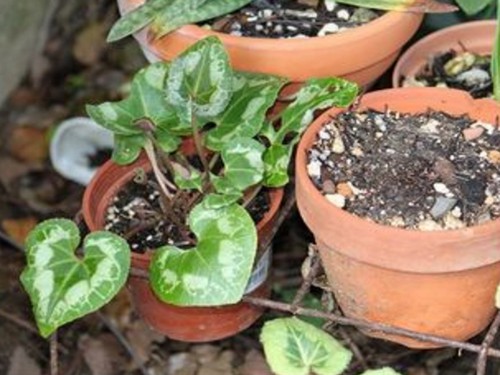
Soil:
For the growing medium of cyclamen, humus soil, forest leaf mold, furnace ash and slag, etc. can be used, with an appropriate amount of calcium carbonate and other chemical substances added for preparation. This kind of soil is relatively loose, which helps the growth of our cyclamen. When cultivating, pay attention to the size of the container, increase it gradually, and do not use a large pot to cultivate small seedlings. Use sandy loam soil with good permeability (formula: leaf mold, peat, river sand, mountain soil at 3:1:3:3).
Light:
Temperature and light have a certain effect on the growth and development of cyclamen. Throughout the process, it is necessary to start with temperature and consider prolonging the flowering period. After the number of flowers decreases in late April, it is necessary to move the plants out of the greenhouse and place them in a well-ventilated place for cultivation. Changes in climate, suitable temperature and light will cause cyclamen to grow a batch of flower scapes and continue to bloom. In the Yangtze River basin and areas to its south, the leaves gradually turn yellow after May, which reflects rising temperatures. At this time, watering needs to be controlled well. In summer, if conditions permit, cooling equipment should be used to lower the ambient temperature.
Temperature:
The suitable growth temperature for cyclamen is 10-22°C, and the daytime and nighttime temperatures should be maintained at 8-10°C. If the nighttime temperature is controlled at around 7-8°C, it can still bloom, but the flowering period will be slightly delayed; if it is below 6°C, it will not bloom normally. Room temperature should be maintained at 15°C to 18°C. Lower temperatures can prolong the flowering period, while excessively high temperatures will shorten the flowering period and make the flower colors fade. Keeping it above 5°C at minimum is sufficient.
Humidity: Maintain humidity at around 60%-70%. Too little humidity will make the flowers smaller. Too much humidity easily causes disease.
Watering:
Although cyclamen is drought-tolerant, it is still best to keep the soil moist during its growing season, and note that there must be no standing water in the pot. Water frequently and lightly, and do not overwater. If it does not go dormant in summer, normal watering can be carried out, and the potting soil needs to be kept pleasantly moist. After the Start of Autumn, it enters the reproductive growth period. At this time, phosphorus and potassium fertilizers should be applied to control vegetative growth, promote flower bud differentiation, and encourage bud formation and flowering.
Bottom watering and watering along the pot wall are recommended, with the former being suggested as it is simpler. Reason: cyclamen leaves are hairy leaves, and spraying on the leaf surface will cause the leaves to rot. The stems of cyclamen should also preferably not come into contact with water. Water by the principle of watering when dry and stopping when wet; it is better to be a bit dry than too wet. If unsure how to judge, water when the leaves are slightly wilted. The soaking time should not be too long, about 15 minutes.
Fertilizing:
Cyclamen likes fertile soil but does not like concentrated fertilizer. When repotting, some base fertilizer should be applied. Generally, fertilizer can be applied once every 1-2 weeks, with emphasis on light fertilizer applied frequently. After several months of vegetative growth, apply organic fertilizer to it and water the flowers with diluted liquid. When the temperature cannot be controlled in early summer, fertilization should be stopped.
Repotting: Generally in mid-September, dormant corms begin to sprout, and they should be repotted immediately. The potting soil should not cover the corm. When the newly repotted cyclamen corm sends out new roots, watering should not be excessive to prevent corm rot; the potting soil is better kept slightly dry.
Cultivation notes
1. Repot at the right time: Generally in mid-September, dormant corms begin to sprout, and they should be repotted immediately. The potting soil should not cover the corm. When the newly repotted cyclamen corm sends out new roots, watering should not be excessive to prevent corm rot; the potting soil is better kept slightly dry.
2. Pay attention to ventilation and shading: During the growing period, always pay attention to indoor ventilation and shading. When the leaves are dense, widen the spacing between pots to avoid yellowing and rotting of leaves caused by crowding. Around the Spring Festival, cyclamen enters its full flowering period. On sunny days, ventilation should be adjusted to prevent excessive indoor humidity, which can cause flowers to wither and pedicels to develop water-soaked rot. The fruiting period coincides with rising temperatures, and the amount of watering increases accordingly. Strictly prevent excessively high indoor temperature and humidity, and pay attention to ventilation adjustment to avoid flower stem rot and fruit mildew. In mid-June, the leaves begin to turn yellow and fall off, and the corm enters dormancy. Place dormant corms in a well-ventilated, cool place and maintain a certain humidity. Too wet and the corm easily rots; too dry and sprouting and flowering are delayed.
3. Strengthen fertilizer and water management: During the growth and development period of cyclamen, fertilize once every ten days, and gradually expose it to more sunlight so that the leaf stalks do not grow too long and affect appearance. When the peduncles emerge to the point of being about to bloom, apply an additional dose of bone meal or superphosphate. In the middle and lower reaches of the Yangtze River, it can bloom around New Year's Day. Stop applying nitrogen fertilizer during the flowering period and control watering. Especially on rainy and snowy days, water must not be poured on flower buds and tender leaves, otherwise they easily rot and affect normal flowering. After flowering, apply bone meal once more to promote fruit development and seed maturity. Around May, the fruit begins to mature. After harvesting, peel open the fruit skin, take out the seeds, dry them in a ventilated place, and store them. In the early growth stage of cyclamen, a 20-20-20 general fertilizer can be used, that is, nitrogen content (N) 20%, phosphorus content (P2O5) 20%, and potassium content (K2O) 20%. During the flowering period, a 15-15-20 water-soluble high-efficiency nutrient solution specially for pot flowers can be used.