How to Grow Wisteria: A Complete Guide to Wisteria Planting Methods
Wisteria is a large woody deciduous climbing vine in the genus Wisteria of the Fabaceae family. Its stems twine, its branches and leaves are dense, and in early summer its purple flower clusters hang down, abundant and fragrant; in the height of summer its thick foliage covers the trellis, laden with seed pods. It is an excellent flowering climbing plant. It can be propagated by seed, cuttings, grafting, layering, and division; in production, seed, cutting, and grafting propagation are mostly used.
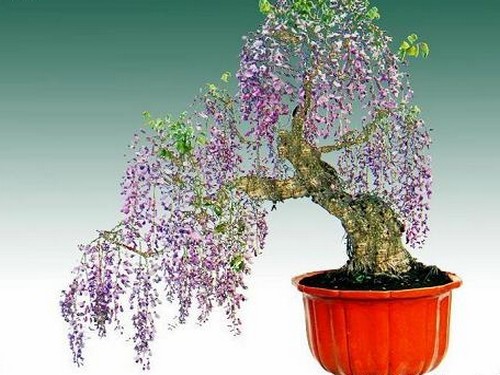
At the turn of spring and summer, the seedlings are in a period of vigorous growth and need a lot of water, so they should be irrigated 2 to 3 times. During the plum rain season, attention should be paid to drainage, and in summer drought the frequency of watering should be increased. In late autumn, to make the tissues firm and mature and help them survive the winter, watering is generally not done. No watering in winter. Fertilizer can be applied together with watering to improve fertilizer efficiency. From June to early August, apply 3 to 5 kg of urea per mu, watering while fertilizing. Apply once every 10 to 15 days, in small amounts and often, to prevent root damage and seedling burn. Stop fertilizing in late August to prevent excessive vegetative growth of the seedlings and help them survive the winter.
Weed by hand to prevent chemical herbicides from causing phytotoxicity. From April to September, weed at least once a month, clearing weeds thoroughly from the seedbeds, furrows, and surrounding ditches to promote healthy growth of the wisteria.
Wisteria has deep main roots and shallow lateral roots and does not tolerate transplanting, so when transplanting it must be moved with plenty of soil; after planting, a support must be set up so the branches and leaves can climb. Before buds break and leaves unfold in early spring, dig a trench around the roots and apply fertilizer to benefit stem and leaf growth. In summer, prune to remove overly vigorous branches and shorten weak branches to encourage flower bud formation; in autumn, thin out dense branches and diseased branches to benefit flowering the following year.
1. Watering. Wisteria consumes a lot of water, but it still prefers dry over wet. If the potting soil is only ever moist and never dries, it is not conducive to flowering. Watering should follow the principle of not watering until dry, and watering thoroughly when you do. Especially during the flower bud differentiation period in August, water should be withheld appropriately. Normal watering can be carried out in September. After leaf drop in late autumn, water less. During the spring and summer growing season, water fully and keep the potting soil moist regularly. After autumn, control watering to prevent the growth of autumn shoots, which helps the plant bloom more the following year.
2. Fertilizing. Applying light fertilizer frequently is an important measure for making wisteria bloom abundantly and grow lush foliage. During the growing season, apply a thin cake fertilizer once every half month together with watering, until fertilizing stops in July——August. Continue fertilizing in September, but both the frequency and concentration should be appropriately reduced. Before flowering, appropriately increase the application of phosphorus and potassium fertilizer. Wisteria should be given a thin cake fertilizer solution once every half month during the growing season, and phosphate fertilizer before flowering, which can make the flowers abundant and the leaves lush and enhance the ornamental effect.
Fertilizing and care of wisteria should be divided into 3 steps:
(1) In autumn, apply a base fertilizer around the base of the wisteria stems, preferably organic fertilizer, and water after applying.
(2) Before buds break in early spring, apply a concentrated nitrogen-phosphorus-potassium fertilizer once every half month, preferably 2 times; before flowering, apply one more fertilizer mainly of phosphorus and potassium. Do not use too much nitrogen fertilizer, otherwise it will only grow branches and leaves, with few or no flowers.
(3) After flowering, prune promptly, cut off the flower stalks, and apply one follow-up fertilizer of a mixed fertilizer mainly of nitrogen or a base fertilizer.
3. Pruning. When wisteria sprouts tender buds in spring, appropriately remove dense buds. When new branches grow to more than 20 cm long, the overly long parts can be cut off. Ordinarily, be sure to cut off water sprouts, diseased branches, and weak branches at any time. Pruning should also be done during the dormant period. In September, the old leaves of wisteria tend to age and droop, affecting its appearance. The old leaves can be removed to encourage new leaves to sprout. The new leaves that sprout are tender green and delicate, which can delay leaf drop and extend the ornamental period.
4. Pests and diseases. Wisteria has leaf-eating pests such as the lappet moth, aphids, and slug moths. The lappet moth can be controlled by spraying with trichlorfon or phoxim at 300 times dilution. Aphids and slug moths can be controlled by spraying with 80% thiophanate-methyl at 1200 times dilution (control is best carried out between May and June).
A friendly reminder:
If potted wisteria is not cared for and managed properly, it often fails to bloom. Potted wisteria: if overwintered indoors, the room temperature should not be too high, otherwise it will not get sufficient dormancy and will consume too much stored nutrients, affecting flowering the following year. Apply fertilizer in moderation: both a lack of fertilizer and excessive fertilizer will affect flowering in potted wisteria. Generally, apply diluted cake fertilizer solution before flowering and a slow-release phosphate fertilizer after flowering to promote flower bud differentiation. Do not fertilize in winter or summer. The branches and vines of potted wisteria will extend and twine, consuming nutrients; if this is found, cut them off immediately, otherwise the twining branches and vines will grow rapidly and the plant will not bloom.