Detailed Explanation of Daylily Planting Techniques and Management Key Points
Although daylily flowers originally originated mainly in China, they have not been much improved for a long time. After the 1930s, some botanical gardens and gardening enthusiasts in the United States collected Hemerocallis plants produced in China, Japan and other countries for cross-breeding. There are now more than 10,000 varieties, making them important ornamental and cut flowers, and also the class with the most varieties among Liliaceae flowers. At the same time, the daylily is also China's mother's flower.
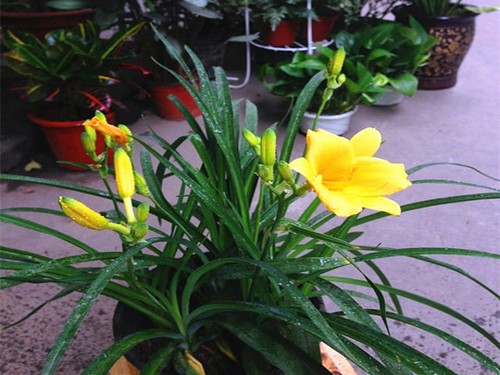
Daylilies prefer warm sunlight, tolerate partial shade, resist drought, have strong resistance to pests and diseases, and have wide adaptability. They prefer fertile, moist soil with a deep soil layer, and also tolerate poor and dry conditions, with extensive management. The rhizomes can safely overwinter in low-temperature frozen soil, and they also have a certain resistance to saline-alkali soil.
They prefer a warm and humid environment. Soil that is slightly clayey is better. They can be cultivated on field ridges, beside ditches, and near residences. Propagate by division. After the aboveground parts wither in October to November, or in spring before the plants sprout, dig up the whole plant and divide every 2 or 3 into one clump.
Water and fertilizer management for daylilies is simple. Because the flowering period is long, in addition to applying sufficient base fertilizer at planting, fertilizer should be top-dressed two or three times before and during the flowering period. Mainly supplement phosphorus and potassium fertilizer, and 0.2% potassium dihydrogen phosphate can also be sprayed to promote larger flowers and achieve the effect of extending the flowering period.
Before planting, open holes at a row spacing and plant spacing of 40 cm each, with holes 17 to 20 cm deep, and plant one clump per hole, spreading the roots flat in all directions and covering with soil and pressing firmly. Water or irrigate with human and livestock manure water. From the second year onward, cultivate and weed and top-dress 3 times each year: the first time in March when seedlings emerge, the second time in June before flowering, and the third time in October after the plants wither. After each cultivation and weeding, apply human and livestock manure water.
Daylilies have strong tillering ability, so when planting, the plant spacing and row spacing must be kept at 20 cm × 20 cm. After planting, remove weeds in the daylily field in time. If weeds grow densely, they can easily cause pests and diseases, affecting the growth and appearance of the daylilies. After flowering, cut off the residual stems, which can promote reblooming.
Cultivation and management are simple and extensive. The plant spacing and row spacing are about 0.5 × 1 m, and 3 to 5 plants are planted per hole. Apply sufficient base fertilizer before planting. Because daylilies have strong adaptability, they can be planted almost anywhere, and if left to grow, the clumps can expand year after year. However, when arranging them in gardens, they should be matched according to plant height and flower color to improve the ornamental effect.
Large-flowered daylily cultivation requires planting in well-drained soil that does not accumulate water in summer and is rich in organic matter. Because its tillering ability is relatively strong, the plant spacing and row spacing must be kept at 30 cm × 40 cm when planting. Cultivation and management of large-flowered daylilies are relatively simple. Because the flowering period is long, in addition to applying sufficient base fertilizer at planting (well-rotted cow manure or pig manure is suitable), fertilizer should be top-dressed 2 to 3 times before and during the flowering period, mainly supplementing phosphorus and potassium fertilizer, and 0.2% potassium dihydrogen phosphate can also be sprayed to promote larger flowers and achieve the effect of extending the flowering period. After flowering, cut off the flower stems from the ground and promptly remove dead and residual leaves at the base of the clumps.
Large-flowered daylilies can also be potted, but dwarf varieties must be selected when planting, such as “Jinjinwa”. The potting soil can be prepared with peat, pine needles, cow manure, and garden soil in a ratio of 4:3:2:1. After planting, pay attention to shaping to help the clump grow symmetrically.