What are the cultivation methods for growing Viola mandshurica (purple-flowered violet) at home?
In spring, there is an inconspicuous little flower on the ground called Viola mandshurica. It is not particular about soil, is extremely adaptable, and easy to propagate. Although it is not as prestigious as the rose, Viola mandshurica has great value.
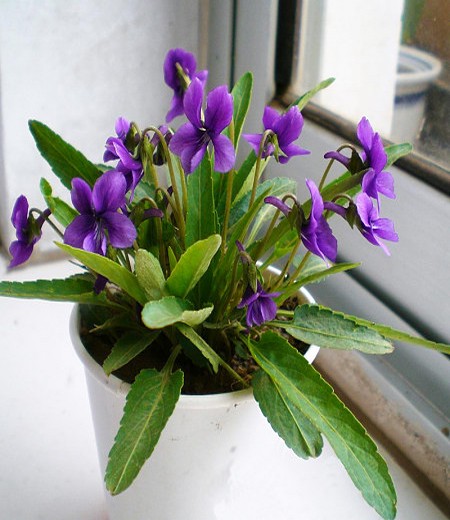
Viola mandshurica blooms early and in a concentrated period; the plant is low-growing, grows neatly, and the clumps are compact, making it easy to replace and transplant for arrangements, so it is suitable for use in flower beds or in the composition of early-spring carpet flower beds. Viola mandshurica greens up early, has high ornamental value, and is highly adaptable. It can be propagated by seed, and as a ground cover plant with moderate self-seeding ability, it can be planted in large groups. Viola mandshurica is suitable as a flower border or for forming flower clusters with other early-spring flowers. After potted mature plants go through a period of dormancy, you can control their flowering date to produce a pot full of delicate blooms, for indoor displays on windowsills, desks, and stands, and it can also be made into bonsai.
Some flower enthusiasts have asked the editor how to plant Viola mandshurica. Because Viola mandshurica is a wildflower, enthusiasts generally have two needs: one is transplanting from the wild, and the other is buying seeds to sow, so this article explains these two approaches separately.
How do you plant Viola mandshurica?
1. Transplanting from the wild
Viola mandshurica is very widely distributed and can often be seen in the wild. If you want to transplant it, first dig deep, as its root system is very long; try to keep it intact. After digging it out, immediately soak it in water, put it in a plastic bag, take it home, and plant it right away. Be sure to cut off all the flowers and leaves, leaving only the leaf stalks and base, then immediately water heavily, and finally provide shade.
Of course, if conditions allow transplanting with soil, you do not need to cut off the leaves and flowers, and you should keep as much soil as possible.
2. Sowing seeds
To simplify things, sowing is generally done in spring. Water the soil thoroughly, and after the water has seeped down, scatter the seeds on the ground, cover the seeds lightly with fine soil, and seedlings will emerge in one week. Once the seedlings have all emerged, control the temperature to prevent them from growing leggy; at this time, light should be sufficient and the soil kept slightly dry. When the seedlings grow their first true leaf, begin pricking out. When transplanting, the roots should be spread out and the bottom water should be watered thoroughly. When the seedlings have more than 5 leaves, they can be planted in their final position.
Viola mandshurica is a shade-loving plant, so after emergence it should be watered frequently. It grows vigorously and has strong resistance, and requires no special management during the growing period. During its peak growth season, apply organic fertilizer once every 7 to 10 days.
By now, flower enthusiasts should understand how to plant Viola mandshurica. In fact, Viola mandshurica is very easy to care for and can be maintained with minimal attention.