Detailed Explanation of the Planting Techniques and Management Methods of Scutellaria barbata
Scutellaria barbata is a plant of the Lamiaceae family. Its dried aerial parts have functions such as clearing heat and detoxifying, invigorating blood and removing stasis, reducing swelling and relieving pain, and fighting cancer. Jiang Yi's "Supplement to the Mirror of Materia Medica" records "Scutellaria barbata is the immortal herb for treating snake bites." In folk medicine, besides treating venomous snake bites, it is also used to treat tumors, with a certain short-term curative effect. The "Revised Compendium of Materia Medica" records "This herb bears purple-white flowers, the plant is purple-red, with opposite paired leaves, harvested in the seventh and eighth months." The described morphology is similar to this species.
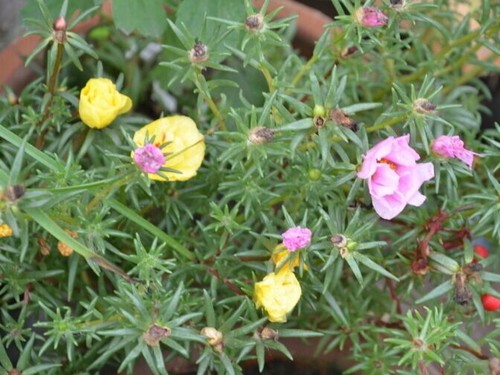
Scutellaria barbata originated in Brazil in South America, and is now cultivated throughout China. The Scutellaria barbata plant is short, with fleshy and glossy stems and leaves, abundant and brilliant flower colors, and a long flowering period. It not only plays a great role in decoration, but also has many uses in feng shui, and is therefore deeply loved by people.
After transplanting, Scutellaria barbata easily resumes growth, and large seedlings can also be transplanted bare-rooted. Because it is cross-pollinated, seed propagation makes it difficult to maintain uniform flower color of the variety. If single-color flowers are needed, seeds can be sown in a greenhouse in early spring for seedling cultivation, and then cuttings can be taken separately by color at the beginning of flowering, to meet the need. Seeds do not mature uniformly and easily fall off, so they should be collected frequently and in a timely manner.
Site selection and land preparation:
Loose, fertile sandy loam or loam is preferable. Plow the land, and at the same time apply 2000 kg of farmyard manure per mu as base fertilizer, then harrow fine and level, and make beds 1.3 m wide.
Propagation methods: mainly seed propagation, and division propagation can also be used.
1. Seed propagation is mostly by direct sowing, from late September to early October, in drills or holes. For drill sowing, open furrows at a row spacing of 25-30 cm, with a furrow depth of about 4 cm; for hole sowing, open holes at a hole spacing of about 27 cm.
2. When sowing, first put the seeds into plant ash mixed with livestock manure water, mix them into seed ash, then evenly scatter it into the furrows or holes, and cover with a layer of fine soil or plant ash, with a thickness not exceeding 0.5 cm. After sowing, the soil must be kept absolutely moist before emergence, and seedlings can emerge about 20 days after sowing. Use 1.5-2 kg of seeds per mu.
3. Division propagation is carried out in spring and summer. Dig up the old roots of the plants, select healthy plants free of pests and diseases for division, with 3-4 seedlings per plant, and plant them in holes at a hole spacing of about 27 cm, then water after planting.
Field management:
1. Thinning and replanting: for direct sowing, thin the seedlings at a plant spacing of 4-5 cm when the seedlings are 5-7 cm high, and replant missing seedlings at the same time. Replanted seedlings should be transplanted with soil, and watered after planting.
2. Cultivation and weeding: carry out cultivation and weeding as soon as seedlings emerge, and promptly carry them out after each harvest thereafter.
3. Topdressing: combined with cultivation and weeding, apply 2000 kg of human and livestock manure water per mu each time.
Pest and disease control:
During the growth process of Scutellaria barbata, there is almost no occurrence of disease. During the flowering period, aphids and cabbage black caterpillars are prone to cause damage. The former can be controlled with dimethoate, and the latter can be controlled by spraying with a 1000-fold dilution of 50% dichlorvos.
Seed retention technique: in May-June, when the seeds gradually mature, harvest the fruiting branches in batches, dry them in the sun or in the shade, rub out the seeds, winnow clean the stems and impurities, place them in cloth bags, and store in a dry place. Continuous cropping fields of Scutellaria barbata do not need seed retention; generally, the same crop can be grown for 3-4 consecutive years before renewing the root seedlings once.