How to plant lily of the valley? Detailed planting methods and care tips
The beauty of lily of the valley is favored by the naturally romantic French. Since the beginning of the 20th century, the favored lily of the valley has had its own festival, and May 1st every year is France's “Lily of the Valley Festival”. The British are also super fans of lily of the valley, and “lily of the valley” is the common British name for it; in addition, lily of the valley also has elegant names such as “lady's tears” in the UK. In China, “lily of the valley” is called “Junying grass”, which reminds people of the noble character praised by Confucius: “The iris grows in deep valleys, yet does not cease to be fragrant because no one is there; the gentleman cultivates the Way and establishes virtue, and does not change his integrity because of poverty.”
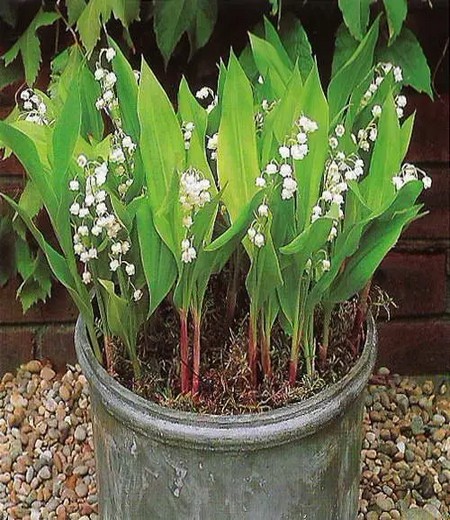
Lily of the valley, also called Junying grass or valley lily, is the only species in the genus Convallaria. The lily of the valley plant is short, with delicate flowers, and all the flowers bloom downward like little bells, giving it high ornamental value. Many people like lily of the valley, so do you know how to plant lily of the valley? Below, the editor will introduce the planting methods of lily of the valley.
Lily of the valley prefers semi-shade, moist, and cool environments, and dislikes heat. As long as there is a suitable shady environment, lily of the valley will rapidly propagate by spreading rhizomes. Lily of the valley likes shade and moist, fertile soil; cultivating lily of the valley requires humus-rich loam and sandy loam. The temperature for cultivating lily of the valley should not be too high, otherwise it will not bloom; when the temperature reaches above 30°C, the leaves of lily of the valley will turn yellow and wither. Lily of the valley enters a dormant state in summer.
Lily of the valley is generally propagated mainly by division, and can also be propagated by sowing. There are many buds of different sizes on the rhizomes of lily of the valley. In autumn, after the aboveground parts wither, dig up the rhizomes, cut off each terminal bud with a section of stem, and plant them separately, and they can grow into new plants; generally they can bloom in the second year.
For sowing propagation of lily of the valley, after taking seeds from the red-ripe fruits in autumn, sow the lily of the valley seeds directly in an open-field seedbed, and they will germinate in the spring of the next year. The lily of the valley seedbed should be kept moist and properly shaded, and weeds should be pulled out in time. Lily of the valley seedlings grow slowly and generally take 3-4 years to bloom.
For open-field cultivation of lily of the valley, the planting site should be deeply plowed and fertile. When planting lily of the valley, cover with more than 5 cm of soil, and water thoroughly after planting. Ground-planted lily of the valley needs to be divided and replanted every 3-4 years. During the growing period, lily of the valley should often be kept in loose, moist soil, and fully fermented topdressing should be applied once in early spring and once in late autumn.
After lily of the valley sprouts in spring, apply topdressing once every 15 days. Pay attention to watering during drought, and stop fertilizing after the flower stems emerge. After the lily of the valley flowers fade, promptly cut off the flower stalks, then apply topdressing 1-2 times. In late autumn, after the aboveground parts wither, cover with leaf mold and cow manure to protect the rhizomes and their dormant buds for overwintering in the open field.
For potted lily of the valley, rhizomes treated with low temperature can be planted. During the entire cultivation period, maintain the temperature at around 18-20°C, pay attention to fertilizer and water management, and keep the soil moist. After about one month, the lily of the valley can bloom. After lily of the valley blooms, the stems and branches should be cut off as early as possible so that nutrients are concentrated and supplied to the rhizomes. For potted lily of the valley, choose fat and large rhizome buds, plant 4-5 buds per pot, and repot once a year.
Lily of the valley is robust by nature and easy to manage. If fully fermented cake fertilizer is often applied after lily of the valley sprouts in spring, the lily of the valley will have abundant flowers and lush leaves. After the lily of the valley flower stems emerge, fertilizing should be stopped; after the flowers fade, resume fertilizing 1-2 times, which can promote the rhizomes of lily of the valley to sprout new tillers.
Lily of the valley can not only be used as an ornamental plant for people to admire, but lily of the valley also has the effect of purifying air. Lily of the valley can inhibit the growth and reproduction of tubercle bacilli, pneumococci, and staphylococci. Lily of the valley also has a dust-removal effect; lily of the valley can absorb floating particles and smoke dust in the air, reducing the impact of dust on household cleanliness. At the same time, lily of the valley also has certain medicinal value. Lily of the valley warms yang and promotes diuresis, activates blood circulation, and dispels wind. Lily of the valley mainly treats heart failure, edema, strain injuries, uterine bleeding, leukorrhea, and traumatic injuries.
The lily of the valley plant is short, elegant and delicate, and pleasantly fragrant. It is an excellent potted ornamental plant, usually used in flower beds and flower borders, and can also be used as ground cover. The following specifically introduces the planting methods of lily of the valley:
Lily of the valley planting methods (essential basic knowledge):
(1) Soil requirements: Lily of the valley needs loose, fertile soil with good drainage.
(2) Watering requirements: Water 1-2 times a day, and supplement water during the growing period according to weather conditions and soil conditions.
(3) Fertilization management: Apply dilute cake fertilizer water or compound liquid fertilizer once every 10-15 days, and promptly hoe and weed after each watering and fertilizing.
(4) Light requirements: After potting, place in a windproof spot, water appropriately, and place in a dark place; after 10-15 days, gradually move to a bright spot.
(5) Temperature requirements: Keep at 12-14°C; after 10-15 days, move to sunlight for care, and raise the room temperature to 20-22°C.
(6) Pruning: After lily of the valley blooms, the stems and branches should be cut off as early as possible so that nutrients are concentrated and supplied to the rhizomes.
(7) Loosening soil and repotting: After new buds sprout in early spring, remove the covering, loosen the soil, and repot once a year.