Key Techniques and Detailed Methods for Growing Rapeseed Flowers
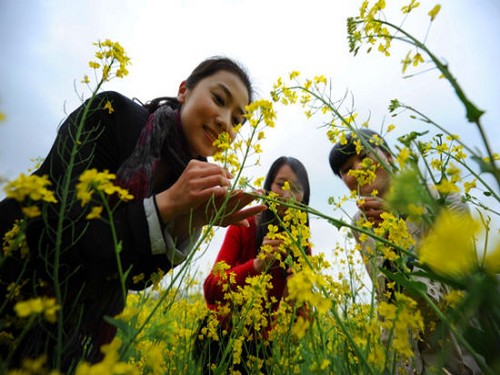
Rapeseed flowers originated in Europe and Central Asia, and botanically belong to the annual herbaceous plants of the cruciferous family (Brassicaceae). They are widely cultivated in our country, most abundantly in the Yangtze River basin and areas to the south. They bloom from winter to spring. They are related to wood sorrel. The colors are vivid and they carry a fragrance. Rapeseed has excellent ecological benefits and has added a new summer cover crop for the Ili region. In the Ili region it blooms in mid-July, with a full blooming period lasting more than 20 days.
[Variety Selection]
For open-field direct sowing, choose the dryland overwintering rapeseed varieties introduced by the Beijing Agricultural Technology Extension Station, mainly: Tianyou No. 5 and Tianyou No. 6; other varieties that can be selected: Tianyou No. 8, Longyou No. 6 and No. 9.
The purchased seeds should be plump and pure, with a purity of over 95%, a varietal purity of over 99%, and a germination rate of over 85%.
[Sowing Time]
- The suitable sowing period for spring rapeseed in Zhaosu County, Ili region, is: April 25 —— May 15.
[Planting Methods]
1. Preparation before sowing
Rapeseed is highly adaptable and not strict about soil requirements, but soil with a thicker layer that is fertile and loose is preferable. Rapeseed seeds are small and the young sprouts have weak soil-piercing ability, so fine land preparation is required to achieve good seedling emergence.
For base fertilizer, apply 500—1000 kg of farmyard manure per mu, 8—10 kg of urea, 20—25 kg of ordinary superphosphate, 5—7 kg of potash fertilizer, or 20—30 kg of rapeseed-specific fertilizer, and 1—1.5 kg of borax, mixed and applied as furrow fertilizer.
7—10 days before sowing, irrigate thoroughly to build up subsoil moisture, so as to achieve full, uniform and strong seedlings and lay the foundation for growth and development throughout the entire growing period.
2. Sowing
The suitable sowing temperature for winter rapeseed is 18°C—20°C, with a sowing rate of about 0.5—0.75 kg per mu (40,000—60,000 plants/mu), broadcast evenly, and covered with 1 cm of soil. If machine sowing is used, mix in fine sand or cooked millet at sowing, with a row spacing of about 20 cm and a sowing depth of 2-4 cm, then cover with soil and firm it down after sowing. Sowing requires straight, correct rows, accurate row joining, uniform seed drop and consistent depth.
3. Field management
Seedling stage: Rapeseed should retain 12,000-15,000 plants per mu (generally about 20-25 plants/㎡), while the number of emerged seedlings far exceeds this range. Therefore, after the rapeseed emerges, thinning should be done promptly. To ensure safe overwintering, in mid-to-late November, 10—15 days before the soil freezes, when the average daily temperature is around 5°C and the soil freezes in the morning and thaws by noon, irrigate with overwintering water. Frost-protection measures such as hilling soil, covering with soil and covering with dry manure can also be used.
Green-up stage: After green-up, irrigate with green-up water, generally in mid-to-late June, and it may be appropriately delayed. Combined with irrigation, apply 15 kg of urea per mu or an equivalent amount of ammonium nitrate or ammonium bicarbonate (growth is rapid after green-up, so quick-acting fertilizer should be applied as much as possible during the green-up stage).
Bolt and flowering stages: Around bolting, combined with pest control, spray 0.10-0.15 kg of monopotassium phosphate per mu. The flowering stage of rapeseed is the critical period for water demand; during flowering, irrigate frequently and lightly to keep the soil moist. From bolting to flowering, apply timely topdressing combined with watering; when the bolt is 8-12 cm high, apply 10 kg of urea per mu or an equivalent amount of ammonium nitrate or ammonium bicarbonate combined with irrigation.
4. Pest and disease control
Winter rapeseed rarely suffers from diseases. Only in years with more rainfall is it prone to powdery mildew. It can be controlled by spraying lime-sulfur mixture at 0.3—0.5 degrees Baume, or with a 600-800 times dilution of 40% folpet wettable powder, a 1000 times dilution of 15% triadimefon, etc., all of which can control powdery mildew.
5. Overwintering protection
When rapeseed enters the overwintering period, if field cultivation and management are improper at this stage, it is prone to freeze damage. Therefore, before the severe cold arrives, field management must be carried out well, and frost protection and warmth preservation must be done well, to promote normal growth of rapeseed, accumulate and store more nutrients, and ensure as much as possible full stands, strong seedlings and safe overwintering. (However, under extreme low-temperature conditions, it cannot be ruled out that rapeseed flowers may still suffer freeze damage and affect the landscape effect.)
Intertillage and hilling: Intertillage and hilling before the soil freezes can loosen the soil and thicken the root-zone soil layer, which has a certain effect on blocking cold wind invasion and improving heat absorption, warmth preservation and cold resistance. Especially for tall-stemmed seedlings, after hilling soil around the base, the root crown becomes shorter, which helps keep it warm. Hilling to a depth of 8—10 cm is appropriate.
Heavy application of winter fertilizer: Before the severe cold arrives, apply winter fertilizer and increase the application of phosphorus and potassium fertilizers. On the one hand, this can enhance the cold resistance of rapeseed; on the other hand, it can supply nutrition for the overwintering period and the bolting and flowering stages, ensuring balanced growth in the later period. Generally, apply 1200—1500 kg of farmyard manure per mu, or 1000—1200 kg of semi-decomposed barnyard manure, together with 10—15 kg of phosphate fertilizer and 5—8 kg of potash fertilizer, which can significantly improve the cold resistance of rapeseed.
Irrigation for frost protection: Before freezing or severe cold arrives, irrigate the rapeseed field promptly, which can avoid a large drop in ground temperature and ease the degree of freeze damage, and is especially better for preventing dry freezing. At the same time, after irrigation, the root system and soil bind closely together, which is beneficial for the absorption of water and nutrients by rapeseed. After freezing, trenches should be cleared and drained promptly to avoid root damage from waterlogging. Overwintering water should be irrigated when the average daily temperature remains around 5°C for 5 consecutive days. Watering too early can easily cause excessive growth of rapeseed, while watering too late, when encountering a sudden drop in temperature, will aggravate freeze damage to rapeseed. Winter irrigation should generally be carried out before the soil freezes at the end of December.
Mulching for cold protection: Use soil, rice straw or other crop stalks spread between the rapeseed rows to keep warm and reduce direct invasion by cold wind. Before a cold wave arrives, a layer of rice-husk ash, plant ash, burnt soil ash, etc. can also be scattered on the rapeseed leaves to prevent the leaves from freezing. Soil covering should be carried out after the Winter Solstice when the average daily temperature is stable at 3°C—5°C. Rapeseed seedlings with thick root crowns should be hilled with soil around the roots; small and medium seedlings should be covered with soil or an appropriate amount of grass, covering 120 kg of rice straw per mu between the rapeseed rows. When covering with soil, the edges of large leaves should be left exposed; the soil cover must not be too thick or too tight, to prevent leaf rot. It is best to cover with a mixture of grass and soil.
Removing early bolts: If rapeseed produces early bolts and early flowers, it will consume a large amount of nutrients, reduce the cell concentration of the plant and weaken its cold resistance, so the bolts should be removed promptly, which can reduce the degree of freeze damage. Remove bolts at noon on a sunny day, and after removal, promptly apply an appropriate amount of quick-acting nitrogen fertilizer to promote rapeseed growth and prevent freeze damage.
Precautions for growing rapeseed flowers:
1. Irrigate promptly
Irrigation is a practical and effective method to increase soil water content, raise ground temperature and prevent continued freeze damage and drought damage to rapeseed. Places with irrigation conditions should carry out spring irrigation promptly to ease continued seedling death caused by water loss from freeze damage. In addition, rapeseed begins to shift from the green-up stage to a period of concurrent vegetative and reproductive growth, and then enters a period dominated by reproductive growth; water and fertilizer are essential conditions for rapeseed.
2. Apply spring fertilizer early
The application of spring fertilizer should be determined in conjunction with irrigation; in places without irrigation conditions, fertilizer must absolutely not be applied, and it should be determined according to the seedlings after snowfall or rain. Large seedlings and vigorous seedlings can be given less or no fertilizer, while small seedlings and weak seedlings should be given more. Also spray new high-lipid film on the surface of the seedlings, which can prevent pathogen infection, improve resistance to natural disasters, increase photosynthetic intensity, and protect the seedlings so they grow strong. Under normal circumstances, 5-7.5 kg of urea can be applied per mu, either by trenching and dribbling or by scattering before irrigation.
3. Intertillage and weeding
Especially in the Weibei dry plateau area, deep intertillage must be carried out to conserve soil moisture, so that rapeseed can use deep-layer water to ease the drought.
How to prevent rapeseed from producing “flowers but no seeds”?
Rapeseed flowers are very beautiful, but the ultimate purpose of growing rapeseed is not to admire the flowers. How to prevent rapeseed from producing “flowers but no seeds”? Practice has proved that the most effective measure is foliar spraying of boron fertilizer.
For foliar spraying of boron fertilizer, the concentration (based on the weight of boron fertilizer) should preferably be 0.1%——0.3%, that is, use 0.1——0.3 kg of borax added to 100 kg of water to prepare a boron-containing aqueous solution, and spray it evenly on the leaves. Spraying should be done on a sunny evening or morning, because at this time the relative humidity is high and the plant stomata are open, which is conducive to absorption by rapeseed; spraying is not suitable in dry and windy conditions. If rain occurs within 36 hours after spraying, it should be sprayed again. The most critical stages for spraying boron fertilizer on winter rapeseed are the seedling stage and the bud-bolt stage; spraying boron fertilizer at the flowering stage and pod development stage has a poorer effect. This is because spraying boron fertilizer at the seedling stage can promote root growth and is conducive to the normal progress of flower bud differentiation; spraying boron at the bud-bolt stage promotes elongation of the bolt stem, prevents the leaves from turning from green to red due to boron deficiency and weakening photosynthesis, and especially ensures the normal development of reproductive organs such as flower buds, avoiding the occurrence of “flowers but no seeds”. Spraying boron fertilizer once each at the seedling stage and bud-bolt stage has a remarkable yield-increasing effect. In addition, 1——3 days before transplanting rapeseed, spraying boron fertilizer in the seedbed is not only beneficial for rooting and green-up after transplanting, but also economical and labor-saving.
Although foliar spraying of boron fertilizer has a remarkable yield-increasing effect, if the soil is severely boron-deficient, only one or two sprayings cannot meet the boron requirement of rapeseed, and the effect is inferior to basal application. Before sowing or transplanting rapeseed, 0.5——1 kg of borax per mu can be mixed evenly with other fertilizers and applied directly to the soil as base fertilizer. Because boron inhibits seed germination and young root growth, direct contact between boron fertilizer and seeds should be avoided. In addition, the margin between the appropriate amount and the excessive amount of boron required by rapeseed is very small, and excess often causes toxicity, such as reducing the emergence rate, causing seedling death, slow growth after emergence, fewer pods in the later stage, and decreased yield.