A Detailed Guide to Growing Hibiscus: Even Beginners Can Learn with Ease
Hibiscus is a traditional famous flower of China, with a recorded cultivation history of nearly 3,000 years. Hibiscus is a common deciduous shrub or small tree with strong adaptability, suitable for planting in both north and south China. It prefers sunlight and tolerates partial shade, tolerates cold and partial drought, and tolerates poor soil, though it generally grows better in moist soil. It has strong sprouting ability, tolerates pruning, and has strong resistance to smoke dust, sulfur dioxide, chlorine gas and other pollutants, and also has a dust-retaining function. At the same time, hibiscus flowers have the effects of clearing heat and detoxifying, cooling blood and reducing swelling.
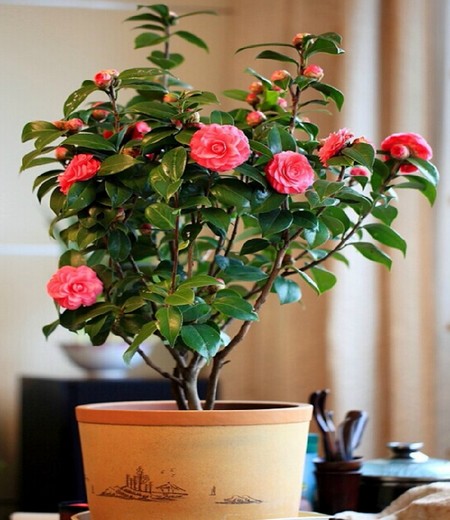
Hibiscus is commonly propagated by cuttings. The cutting time is mostly in early spring before new leaves sprout, though in some areas it is done during the plum rain season or in late autumn and early winter. Fertilize before cutting. Generally, use perennial branches as cuttings, with a length of generally 10-12cm. Insert the cuttings with about 2/3 of their height above the soil, with a plant spacing of 10-15cm. After inserting, firm the soil, water promptly, and fertilize once every 3 months. The survival rate of cuttings is generally above 85%.
Growth Characteristics
It prefers light and a warm, humid climate, tolerates partial shade, tolerates dry and poor soil, tolerates pruning, and has strong resistance to smoke dust and harmful gases.
Cultivation Techniques
1. Propagation Methods
(1) In spring, branches of about 15 cm can be taken for cutting propagation, with a relatively high survival rate. Layering propagation can also be done in March.
(2) In autumn, suitable plants can be selected for division propagation.
Hibiscus is generally propagated by cuttings. The specific cutting method is as follows: in March of spring, before the hibiscus branches begin to sprout, select robust 1-year to 2-year-old branches as cuttings while pruning, cut them into small sections of 15-17 cm, and insert them into the seedbed at a depth of 10-12 cm, with a plant-row spacing of 20 cm × 50 cm. The seedbed should be plowed, finely harrowed and leveled in advance. After cutting, irrigate thoroughly immediately, and insert an arched moso bamboo strip every 50 cm on the seedbed, then cover it with plastic film to achieve heat preservation and moisture retention. Roots and sprouts can appear in about a month, and the general survival rate reaches above 90%. Summer and autumn cuttings do not need plastic film covering; just pay attention to watering, moisture retention and shading.
2. Cultivation Management
Hibiscus management is relatively extensive. Pay attention to watering in spring, summer and dry seasons. During the growing period, apply additional fertilizer as appropriate. Hibiscus blooms profusely. Old plants can be cut off 15~20 cm above the ground, which can sprout new branches and continue to bloom. Plants that grow too densely should be pruned appropriately to achieve ventilation and light penetration.
Hibiscus prefers light, water, and a warm, humid climate, and also slightly tolerates partial shade. It is not particular about soil and is easy to manage. From before hibiscus sprouts in spring to the flowering period in summer, it can be irrigated 1 to 2 times to promote vigorous growth. Hibiscus tolerates pruning. After leaf fall in autumn or before sprouting in spring, dry branches and diseased, weak and insect-damaged branches should be cut off to facilitate branch renewal.
3. Pest and Disease Control
The main pests and diseases of hibiscus include aphids, inchworms and leaf-rolling moths, and timely control should be noted. Hibiscus does not have many pests and diseases. The main diseases include anthracnose, leaf blight and powdery mildew. For such fungal diseases, spray fungicidal pesticides such as chlorothalonil and mancozeb; the main pests include red spiders, aphids, bagworms, noctuid moths and longhorn beetles. Generally, first prune the diseased and pest-infested branches, then spray pesticides for control, commonly trichlorfon and omethoate.