A Detailed Guide to Growing Verbena: Even Beginners Can Master It Easily
Verbena (Verbena spp.) is a perennial herbaceous flowering plant in the family Verbenaceae, often grown as an annual or biennial. The plant grows about 20 cm tall, with branches leaning outward in a trailing habit, dense stems and abundant flowers, and terminal spicate inflorescences, though the flowering portion is corymb-like; flower colors include white, red, blue, lilac, and pink, with a blooming period from May to November, and it is very robust, suitable for potted display or for arranging flower beds and flower borders.
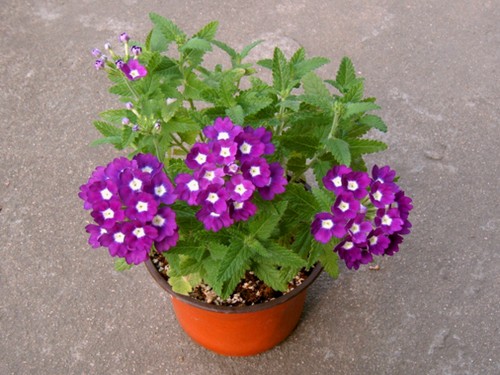
Sowing time: Because the outer seed coat of verbena seeds contains inhibitory substances, the germination rate is not high, so soak the seeds in water for one day first. The optimum germination temperature is 15-20 degrees.
Growing location: It likes ample sunlight; if sunlight is insufficient, the plant tends to grow leggy, and flowering is more sparse and not lush enough, so only under ample sunlight can it produce large, elegant flowers. Verbena can tolerate high temperatures; when grown in South China, the optimum growing temperature is about 20-28 degrees.
Flowering period care: During the flowering period, water once every 2-3 days and remove spent flowers. After flowering, prune moderately at 5 cm above the ground, and combine this with watering and fertilizing to encourage new shoots to sprout and bloom again.
Watering: Although it can tolerate drought, keeping the potting soil evenly moist can make the plant grow more luxuriantly. In spring, autumn, and winter, water about once every 2-3 days; in summer, water once a day or once each in the morning and evening.
Fertilizing: If there is too much nitrogen fertilizer, there will be fewer flowers, so apply the three major nutrients in balance.
Pruning: Because it grows vigorously, you must often pinch the tips and prune back to control the plant's growth, promote new branches, renew old branches, extend the flowering period, and produce more inflorescences. After pruning, apply 1-2 additional rounds of manure fertilizer. After a year of growth, the mother plant's stems become semi-lignified, its growth weakens and is no longer vigorous, and it blooms poorly, so in spring you should take new cuttings to renew it and discard the old plants.
To keep potted verbena with green branches and leaves, blooming continuously, and with abundant, brightly colored flowers, pay attention to the following during care:
① Potting soil selection. For the potting medium, choose a loose, fertile, well-draining growing mix; before planting, apply fully decomposed organic fertilizer and some superphosphate at the bottom of the pot as a base fertilizer.
② Watering and fertilizing. Because verbena likes fertilizer and moisture, in addition to base fertilizer, during the growing period it needs a dilute liquid fertilizer topdressing every month. The potting soil should remain moist, but do not water too frequently, otherwise the basal leaves will grow leggy or wither, affecting bud formation and flowering. In winter, the potting soil should preferably be on the drier side.
③ Pinching and pruning. When the seedlings grow to 10 cm tall, pinch them to encourage side branches to sprout and keep the plant compact. At the same time, to keep it blooming continuously, promptly cut off spent flowers after each bloom and strengthen water and fertilizer management so it can send out new branches and bloom again.
④ Light and renewal. Verbena is a light-loving plant, so during the growing period place it in a sunny spot, and before Frost's Descent move it indoors to a sunny place. The mother plant ages easily and needs to be renewed once every 2 years.