Larkspur planting methods and precautions
Larkspur is a taprooted flower that is best sown directly in place and does not transplant well. To grow larkspur, you can first sow the seeds in a seeding tray, then move them into 10cm pots. During the larkspur growing period, fertilize once every half month, and apply 2-3 additional applications of phosphorus and potassium fertilizer before flowering. Keeping the soil moist during the larkspur flowering period can extend the bloom-viewing period. After the larkspur fruit ripens, it splits open on its own and scatters the seeds, so seeds should be collected in time.
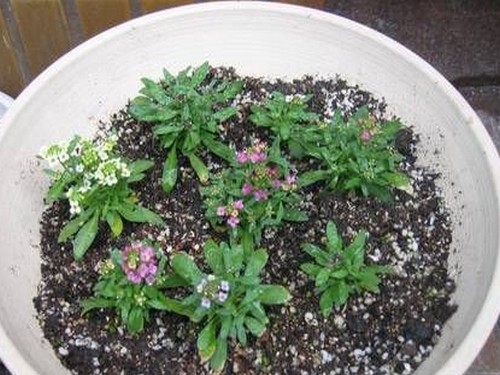
The larkspur fruit contains many seeds, and the seeds are rather small. After collection, dry them and store them indoors in a cool, dry place. To make larkspur bloom in multiple seasons, you can sow in stages, but in southern cultivation the flowering period should be staggered to avoid the heat of midsummer.
Perennial larkspur of other species in the same genus can also be propagated by cuttings and division. Larkspur cutting propagation is done in spring, with cuttings taken and inserted into a wet sand bed or sand tray. Division can be done in both spring and autumn. Dig up the small shoots sprouting around the old plant together with their roots, divide them into small plants and plant them. If divided in spring, they can bloom in the same year.
[Larkspur planting methods]
1. Sowing: Larkspur can be sown in both spring and autumn. If sowing in autumn, it must be done in mid-September.
2. Care: After sowing larkspur, the soil must be kept moist. The simplest method is to cover it with some grass, then gradually remove the covering after the seedlings emerge.
3. Repotting: When the larkspur has grown 2 true leaves, it needs to be transplanted with soil into a small pot, and repotted once more after the seedlings grow larger.
4. Watering: When repotting larkspur, apply dry manure as a base fertilizer. To prevent the plants from growing too tall, you can apply 5000PPM paclobutrazol, or 1500PPM daminozide, once every half month until buds appear. Watering larkspur should follow the principle of alternating dry and wet; during the flowering period, water appropriately more so the soil does not become too dry.
5. Fertilizing: During the larkspur growing period, fertilize once every half month, and apply 2-3 additional applications of phosphorus and potassium fertilizer before flowering. Keeping the soil moist during the larkspur flowering period can extend the bloom-viewing period. According to the larkspur's growth condition, apply cake fertilizer water 1-3 times per month.
6. Height control: After repotting larkspur, paclobutrazol can be used to control plant height. The specific method is: apply 0.5% paclobutrazol once every 2 weeks.
7. Seed collection: Larkspur seeds mature in August-September. Because the seeds of the earliest flowers mature first and the fruit splits open naturally after ripening, they should be harvested in time to avoid scattering.
8. Pests and diseases: Common larkspur problems include black spot, crown and root rot, and chrysanthemum foliar nematode, which damages leaves, flower buds and stems. When disease occurs in larkspur, promptly remove the diseased plants, burn them in a centralized manner, and spray with 50% thiophanate-methyl wettable powder diluted 500 times for control. Common larkspur pests include aphids and noctuid moths, which can be killed by spraying with 10% permethrin EC diluted 2000 times.
Larkspur needs a sunny and cool growing environment. It is both cold-tolerant and drought-tolerant, but not tolerant of high temperatures or waterlogged conditions, and it is not very demanding about soil. However, when planting, pay attention to the following issues:
① Sowing time. It can be sown in both spring and autumn. If sowing in autumn, it must be done in mid-September.
② Care. After sowing, the soil must be kept moist. The simplest method is to cover it with some grass, then gradually remove the covering after the seedlings emerge.
③ Transplanting. When the larkspur has grown 2 true leaves, transplant it with soil into a small pot, and repot once more after the seedlings grow larger.
④ Watering. Watering should follow the principle of watering when dry and stopping when wet; during the flowering period, water appropriately more to avoid the soil becoming too dry.
⑤ Fertilizing. When repotting, apply dry manure as a base fertilizer. Afterward, according to the growth condition, apply thoroughly decomposed cake fertilizer water 1~3 times per month.
⑥ Height control. After repotting, use paclobutrazol to control plant height. The specific method is: apply 0.5% paclobutrazol once every 2 weeks.
⑦ Seed collection. Collect seeds in time to prevent the fruit from splitting open after ripening.