Black Locust Planting and Cultivation Techniques and Management Key Points
Black locust wood is hard and resistant to water and moisture. It can be used for mine props, sleepers, vehicles, and agricultural timber. The leaves contain crude protein and are good feed for many livestock. The flowers are an excellent nectar source plant; black locust honey is white and transparent and is well received by consumers. The tender leaves and flowers are edible and have now become a green vegetable for urban residents. The seeds are pressed for oil used as a raw material for soap and paint.
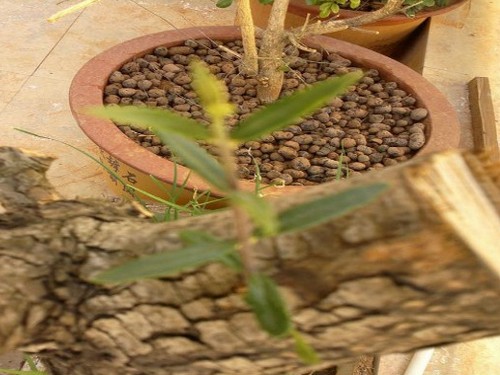
Black locust can be used as a street tree, a greening tree species for residential areas, a soil and water conservation tree species, and a pioneer tree species for afforestation on barren hills. Among ornamental black locust species abroad, the countries with the richest selection and breeding of ornamental varieties are the European Community countries. These varieties (clones) can be seen on many streets, in courtyards, parks, and botanical gardens. So, how is black locust planted and cultivated?
[Seed Treatment]
When black locust pods change from green to reddish brown and the pod skin becomes hard and dry, they are mature, and the seeds should be collected in good time,
and after sun-drying, removing the fruit skin, shriveled seeds, and impurities, pure seeds are obtained. The seed extraction rate of pods is 10-20%, the 1000-seed weight is about 20 g, and the germination rate is 80-90%.
Black locust seeds have a thick and hard seed coat, so germination must be promoted before sowing. That is, pour the seeds into hot water at 60-80°C, stir thoroughly with a wooden stick, and after 5-10 min add cold water until the water temperature drops to 30-40°C. Then remove the impurities and bad seeds floating on the surface. After the good seeds have been soaked for 24 h, remove them. When they are slightly dry, sift out the hard seeds that have not swelled with a fine-mesh iron sieve, and then carry out hot-water soaking again. Put the seeds that have absorbed water and swelled into a shallow basket, cover with a wet gunny sack, and place in a sunny, warm spot. Wash them with warm water twice a day. After 4-5 d, when the seeds begin to sprout, they can be sown.
[Site Selection, Land Preparation, and Fertilization]
Black locust seedlings are afraid of cold, waterlogging, and alkali, so the seedling-raising land should be fertile sandy loam with relatively high terrain and convenient drainage and irrigation. The soil salt content should be below 0.2%, and the groundwater level should be greater than 1 m. Use irrigated land, or flat cultivated land with deep soil. Do not raise seedlings in waterlogged low-lying land or thin mountainous soil. Black locust is not suitable for continuous cropping and can be rotated with poplar, pine, and other trees to prevent damping-off disease. Absolutely avoid raising seedlings on heavy clay soil. Land preparation requires intensive cultivation. Prepare the land and apply fertilizer in autumn, harrow and level in spring to preserve soil moisture, and sow after irrigation in early May.
[Sowing]
Sowing black locust too early makes it vulnerable to late frost damage, so sowing should be late rather than early, with the period around "Grain Rain" being the most suitable. Both drill sowing in beds and field-style sowing are acceptable. Generally, field-style seedling raising is used. First level the seedling land with a harrow, then open furrows for drilling, with a row spacing of 30-40 cm and a furrow depth of 1.0-1.5 cm. The furrow bottom should be flat and the depth consistent. Scatter the seeds evenly in the furrows, then promptly cover with soil 1-2 cm thick and press lightly. From sowing to emergence takes 6-8 d, and the sowing rate is 60-90 kg/hm^2.
[Field Management]
In black locust seedling cultivation, grasping the seedlings' characteristics of drought tolerance, light preference, and intolerance of waterlogging is the key to ensuring seedling survival.
1. Irrigation. Do not irrigate after sowing until the seedlings have all emerged. After emergence, when soil moisture is moderate, loosen the soil and cultivate in time to raise soil temperature, which is beneficial for germination. Irrigating too early makes soil moisture too high and soil temperature low, making it easy for seedlings to stall or develop yellow-leaf disease. On the basis of repeated cultivation and soil loosening, the first irrigation can be done in early June, and afterward under normal conditions irrigate once every 20 d. After irrigation in early July, pause for a period to promote increased lignification of the seedlings and enhance their overwintering ability. In late November, carry out the final winter irrigation.
2. Topdressing. After black locust seedlings are thinned to a stand, carry out the first topdressing together with the first irrigation, applying urea at 45-75 kg/hm^2. At the end of June, together with irrigation, apply a compound fertilizer mainly of nitrogen and phosphorus 2 times, with a fertilization rate of 75-195 kg/hm^2. Stop fertilizing in early August. It is best to plow in winter and harrow in early spring, applying 3000 jin to 5000 jin of decomposed base fertilizer per mu. Spring land preparation should be done early, with deep plowing (more than 25 cm), fine harrowing, and leveling. While preparing the land, mix 15 jin of black alum (ferrous sulfate) powder per mu with 1 jin of 5% phoxim, then mix in 40 times fine soil, and spread it into the ground for soil disinfection.
3. Loosening soil and weeding. The seedling land should be cultivated in time after irrigation or rain, always keeping it loose and free of weeds.
4. Cold protection and overwintering. One- to two-year-old black locust seedlings are vulnerable to autumn frost and dry spring wind, causing the aboveground part of the seedlings to dry up. Therefore, one-year-old seedlings should be dug out after autumn for autumn planting or overwintering heel-in, and provided for afforestation in the spring of the 2nd year.
5. Transplanting to cultivate large seedlings. To cultivate large seedlings needed for roads, courtyards, urban greening, and so on, Yuanzhou District generally transplants from late April to early May. Transplanting density mainly depends on the seedling cultivation specifications and number of years. Generally, for four-year-old transplanted seedlings, a plant spacing and row spacing of 50 cm x 100 cm is suitable. The longer the seedling cultivation period, the greater the transplanting plant and row spacing. Black locust transplanting mostly uses hole planting. Before transplanting, the aboveground part should be cut off, and split and damaged roots should be cut away. The root length should be kept at 20-30 cm. Dip the seedling roots in slurry before planting, and the planting depth should make the top of the root collar level with the ground surface. After transplanting, the seedlings should promptly receive tending work such as watering, topdressing, soil loosening and weeding, and cold protection for overwintering. In particular, for stumping seedlings, work such as removing the tip, removing buds, and pruning should be done well. Select and retain strong, upright branches as the main trunk.
[Pest and Disease Control]
Black locust is harmed by many pests, including termites, leafhoppers, scale insects, black locust aphids, scarab beetles, longhorn beetles, black locust geometers, mulberry wing-marked geometers, and small globular stink bugs. The black locust seed chalcid is the main pest of the seeds, and the damage rate can reach more than 80%. Pests and diseases of black locust seedlings include root maggots, weevils, aphids, and damping-off disease. When insect pests are found, 40% omethoate emulsifiable concentrate at 1500 times dilution can be sprayed for control. For damping-off disease, at the early stage of onset, spray 50% amobam at 300 to 400 times dilution to sterilize and protect the seedlings.