How to Grow Potted Daisies? Detailed Guide to Planting Methods and Precautions
It's spring, and many people are wondering whether they should plant some flowers and greenery to decorate their rooms. The editor received a message from a reader saying they really like the old Korean film "Daisy" and want to try growing some themselves, so they asked me how to grow them well. Today I'll give everyone a brief introduction to some tips for growing daisies.
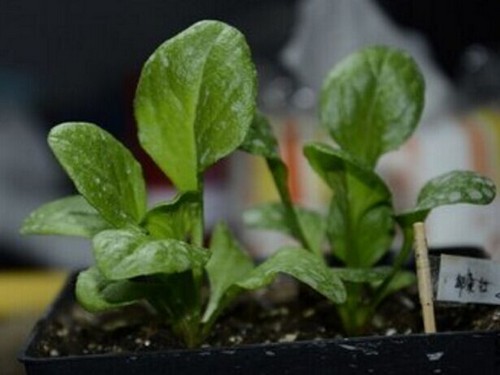
The daisy's ecological habits are cold-tolerant; it prefers sunny, cool climates. It is not shade-tolerant and cannot tolerate high temperatures or severe frost. Under hot conditions, flowering is poor and the plant easily withers and dies.
I. Planting Methods
1. Plug tray seedling stage
The radicle germination stage begins when the radicle breaks through the seed coat, the young root contacts the soil, and continues until the cotyledons emerge as the first stage. The temperature should be maintained at 18°C. Daisy seeds germinate with a light requirement, so no soil covering is needed when sowing, but the growing medium must be kept moist - never allow the medium to dry out during this stage. During this stage, the pH should be kept between 5.5 and 6.2, and the relative humidity at 100%. Direct sunlight should be avoided, and the seeds should be shaded after sowing.
2. Cotyledon emergence and growth stage
This is the second stage, from the emergence of the cotyledons until the true leaves appear. The temperature is still maintained at 18°C. The moisture of the growing medium should be appropriately reduced, but it must not become too dry; humidity should be around 70% to 80%, allowing the root system to penetrate the medium and absorb nutrients to support cotyledon expansion. The first and second stages require 14-21 days.
3. True leaf growth and development stage
This is the third stage, from the emergence of true leaves until 80% of the seedlings are ready for sale. The temperature is lowered to around 15°C. Air humidity should also be gradually reduced, and between two waterings the medium can be allowed to dry out completely, thus creating a wet-dry cycle that promotes root development.
4. Hardening-off stage In this stage
the root system has already formed well, the seedlings are basically ready for sale, and they have become cold-tolerant through hardening off. This stage lasts about 7 days. Temperature, humidity and fertilizer concentration are basically the same as in the third stage. Care should be taken to transplant into pots in a timely manner. The third and fourth stages require 7-14 days.
II. Cultivation Management
1. Soil
Use a loose growing medium with good drainage and aeration. The clay content of the medium should be 15%-30%, and about 15% organic fertilizer (such as compost) can be added. Apply 1 kg of complete balanced fertilizer and 2 kg of slow-release fertilizer per cubic meter of medium.
2. Transplanting into pots
After hardening off, the seedlings can be transplanted. They can be transplanted into 12 cm caliber nursery pots or flower pots. After potting, water thoroughly immediately to settle the roots. For products intended for pot cultivation, transplanting in early October is better than transplanting at the end of October, because if transplanted in early October, the plant's root system can grow firmly in the container before the frost arrives.
3. Watering
Water thoroughly once after potting. Between two waterings, the medium can be allowed to dry slightly, then watered thoroughly again. Follow the principle of alternating dry and wet periods, which is beneficial for root growth and development. Keep the medium moist but not saturated. When buds are forming, watering should be controlled to prevent the flower stems from growing too long.
4. Temperature
The optimum growing temperature is 10°C-12°C. When grown outdoors, covering is required. To obtain good plant quality, place daisies under cool conditions as much as possible, but avoid frost to prevent the plants from freezing. Daisies can overwinter safely above 5°C. Below 6°C, growth is relatively slow and flower bud formation is delayed; above 12°C, the plant's leaves become larger, flower stems become thin and weak, the number of flowers decreases, and growth vigor declines. As outdoor temperatures gradually warm, pay attention to timely ventilation.
Precautions:
1. Keep the plants growing in a cool cultivation environment as much as possible, to promote a compact plant shape.
2. Excessive relative humidity in winter and overly wet leaves easily trigger gray mold. During cultivation, a slightly humid environment can be chosen, but it must not be too wet.
3. Daisies have basal leaves growing in clusters; without enhanced ventilation, the base easily rots and becomes infected with pathogens.
Planting Precautions:
[Daisy Sowing Stage]
Special attention must be paid to light control, even in summer.
When sowing daisies, no soil covering is needed, but the light must not be too strong - appropriate shading is required, and a thin layer of vermiculite can be used to cover them; the germination temperature should be maintained at 18°C; the medium humidity should be kept between 80% and 90%, and the relative air humidity should be 100%; the pH should be between 5.5 and 6.2, and no fertilization is needed during this period.
In July and August, the greenhouse environment is often in a state of high temperature and high humidity, so shade nets, fans, wet curtains and other facilities should be used to ventilate and cool down.
[True Leaf Stage of the Plant]
Air humidity should be reduced to prevent the medium from becoming overly wet; between waterings, the medium should be allowed to dry out completely. When the seedlings have 2 to 3 pairs of true leaves and the root system has finished developing, hardening off can begin.
[Hardening-off Stage]
Water control is especially important, otherwise seedlings will very easily become leggy. To avoid leggy growth, first ensure sufficient light - provided it does not exceed 50,000 lux, the stronger the better, and make sure it is not less than 10,000 lux. At the same time, enhance ventilation, control temperature and humidity, and use growth regulators to inhibit leggy growth.
[Transplanting into Pots]
For pots, 12 cm caliber nursery pots or flower pots are mostly used. The medium should be loose, with good drainage and aeration, containing iron chelate and trace nutrient elements. The clay content should be between 15% and 30%, the pH should be 5.5 to 6.2, and the EC value should be 0.5 to 0.75. After potting daisies, light should be even more sufficient - in winter, ensure at least 50,000 to 100,000 lux. During the production of finished flowers, fertilizing once a week is sufficient.
Daisy seedling and bud growth
[Pay Attention to Pest and Disease Control]
Daisies are prone to infection by pathogens, so avoid dense planting when planting and keep the environment well ventilated. If pests such as aphids appear, promptly remove the infected plants or diseased leaves.