How to grow canna lilies in pots? Detailed planting methods
Canna lilies are robust and highly adaptable, preferring sunny, warm to even hot environmental conditions, and are also fairly cold-tolerant. They are not demanding about soil and can grow in all kinds of soil, but grow best in deep, fertile soil. Their optimum growing temperature is higher than that of most flowers, at 25-30°C. Below, the editors of Qiannong Network will introduce the cultivation methods for potted canna lilies!
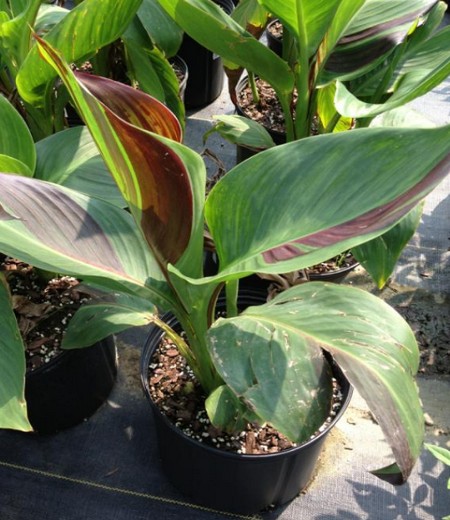
1. For potted canna lilies, dwarf varieties should be chosen. The soil is generally best as a mix of leaf mold, vegetable garden soil and rice husk ash in a ratio of 1:1.5:0.5, with a small amount of soybean cake, bone meal and other fertilizers added. In spring, from March to April, take out the tubers, remove the rotten parts, select stem tubers with two or three vigorous buds and bury them in the potting soil, preferably with the bud tips exposed above the soil surface.
Since canna lilies greatly love fertilizer and tolerate moisture, the pot should be watered thoroughly. When the 5th leaf has grown, apply a decomposed topdressing once every 7-10 days, and water after fertilizing. Generally, apply a 1% ferrous sulfate fertilizer solution once a month, or add a small amount of plant ash, to promote straight, sturdy stems, lush green and thick leaves, and bright flower colors. Stop fertilizing once the flowering stage begins. If placed in a relatively cool spot while flowering, the flowering period can be extended. When the flowers at the stem tips fade, the stems and branches should be cut off from the base at any time to encourage new shoots to sprout.
2. When potting canna lilies, using greenhouse germination treatment can make them bloom earlier. To do this, in February to March, cover the old roots shallowly with moist sand or loose peat soil, just enough to cover the rhizomes, and keep them at 16°C to germinate. After the buds on the rhizomes sprout, cut the old stems into several pieces, each with more than 1 bud, and plant them separately in flower pots with a diameter of 10-12 cm. In April, repot them once, using pots with a diameter of 15-20 cm depending on the actual situation. In mid-May, move them outdoors for care or take them out of the pots and plant them in open ground, and they will bloom in July to August.
3. Potted canna lilies sometimes develop symptoms of scorched and yellowing leaf edges, mainly caused by applying too much ferrous sulfate or by suffering drought or exposure to blazing sun. In hot summer, watering with water that is too cold can also cause scorched leaf edges. If fertilizer is applied too concentratedly during the height of summer, it can even burn the rhizomes and "burn them to death." Therefore, when the temperature is as high as above 40°C, the canna lilies can be moved to a ventilated, cool place. Around the time of Frost's Descent, potted canna lilies can be moved to a place at 5-10°C to overwinter safely. During overwintering, stop fertilizing.
4. For potted canna lilies, from May to August each year, attention should be paid to leaf-roller pests to avoid damage to their tender leaves and flower spikes. They can be controlled by spraying with 50% dichlorvos 800-fold solution or 50% fenitrothion emulsifiable concentrate 1000-fold solution. Ground-planted canna lilies occasionally suffer from cutworms, which can be caught by hand, or controlled by drenching the root soil with trichlorfon 600-800-fold solution.
[Canna Lily Planting Methods]
1. Seed propagation.
In April to May, cut a notch in the hard seed coat of the seeds with a sharp tool, soak the seeds in warm water for a day and night, then sow them in open ground. They sprout 2-3 weeks after sowing. When 2-3 leaves have grown, transplant once, and they can bloom in the same year or the next year. They are commonly used material for shrub borders, flower paths and flower borders in gardens.
For potted plants, dwarf varieties should be chosen. Use loam rich in organic matter for the potting soil, mixed with a small amount of river sand. Plant after the late spring frost, with 1-2 plants per pot. After planting, water thoroughly and keep the potting soil moist, otherwise the leaf edges may become scorched and even flowering may be sparse. After the plant grows 3-4 leaves, apply liquid fertilizer once every 10 days until it blooms. After flowering, promptly cut off the spent flowers to encourage continuous sprouting of new flowering branches. Before autumn frost, promptly move them indoors to overwinter.
2. Propagation by tubers.
Tuber propagation is carried out in March to April. Dig out the old rhizomes, divide them into blocks, keeping 2-3 buds on each rhizome block along with root fibers, and plant them into the soil at a depth of about 10 cm, keeping a plant spacing of 40-50 cm, then water thoroughly. When the new shoots grow to 5-6 leaves, apply decomposed fertilizer once, and they can bloom in the same year
Planting: Plant in early to mid-April in spring (in the Zhengzhou area). For ground planting, use hole planting, with 2-3 buds per rhizome in each hole, a hole spacing of 80 cm, and a hole depth of about 20 cm. After planting, cover with soil about 10 cm thick.
For potted planting, low-growing varieties are mostly chosen, keeping 3 buds per pot. After planting, cover with soil 8-10 cm thick.
Light and temperature: During the growing period, sufficient light is required, ensuring at least 5 hours of direct sunlight every day. If the environment is too shady and light is insufficient, the flowering period will be delayed. They like warmth and fear severe cold, with a suitable growing temperature of 16-30°C. When flowering, to extend the flowering period, they can be placed in a low-temperature place without sunlight exposure, and the ambient temperature should not be lower than 10°C.
Watering and fertilizing: After planting, before the rhizomes have grown new roots, water less. The potting soil should preferably be moist. Soil that is too wet easily causes root rot. After the flower scapes grow, water frequently to keep the potting soil moist. If water is lacking, the phenomenon of "flowers hidden among leaves" easily appears after flowering. In winter, watering should be reduced, following the principle of "water when dry, stop when wet." In addition to applying sufficient base fertilizer before planting, during the peak growing season, apply a thin cake liquid fertilizer 3-4 times a month as topdressing. If 20-30 days before the scheduled flowering date the flower scapes have not yet emerged, spray the leaves once with a 0.2% potassium dihydrogen phosphate aqueous solution to force flowering.
Flowering control: If you want them to bloom for the "May Day" holiday, in January cover the stored rhizomes with soil mixed with a small amount of fertilizer, requiring an ambient temperature of 30°C during the day and about 15°C at night, and they will sprout after 10 days. After sprouting, plant the rhizomes with 2-3 buds kept on them into pots, keep the potting soil moist, and apply topdressing in appropriate amounts. In early April, flower buds appear; pay attention to ventilation, and they can bloom by "May Day."
Rhizome harvesting: In cold regions, in autumn after 1-2 frosts and when most of the stems and leaves have withered and yellowed, cut off the aboveground parts, dig out the rhizomes, dry them appropriately, and pile them indoors, where they can overwinter safely at a temperature of 5-7°C. In warm regions, they can overwinter in open ground in winter without needing to be harvested, but after 2-3 years they must be dug out and replanted, and at the same time the planting scale can also be expanded.