Snapdragon Planting Methods and Care Tips Explained in Detail
Snapdragon is a flower that blooms in summer and autumn, widely cultivated in Chinese gardens, suitable for mass planting in flower beds and flower borders, and its combination with zinnias, petunias, marigolds, scarlet sage and others is especially effective. Tall varieties can be used as background plantings, while dwarf varieties are suitable for rock gardens or windowsill flower boxes, or for edging. This flower can also be used as a cut flower. A couple of days ago, the editor went out for an outing and saw a beautifully blooming plant, took a photo of it and asked a relevant professional to find out it was snapdragon. Today the editor will share it with everyone.
Growth characteristics:
Annual herbaceous plant, with flower colors in red, yellow, pink, purple, white and intermediate shades, and a long flowering period. Not heat-tolerant, likes sunlight, and also tolerates partial shade. The potting soil for snapdragon must be kept moist, and potted seedlings must be watered thoroughly. But the potting soil must have good drainage and must not become waterlogged, otherwise the roots will rot.
Cultivation and propagation:
In areas south of the Yangtze River, autumn sowing can be done, with September to October being the best. Use peat soil or a mixed soil of leaf mold, culture soil and fine sand for sowing. Generally, a shallow pot with a 30 cm diameter is used. Sowing in both spring and autumn is possible. In the Yangtze River basin, autumn sowing is mostly used, and in northern regions pot sowing is also mostly done in autumn. Autumn-sown seedlings grow more robustly and bloom more profusely than spring-sown seedlings. After autumn sowing, seedlings emerge in 7~10 days. Soaking the seeds in a 50~400 mg/L gibberellin solution can increase the seed germination rate. Spring sowing should be carried out in March to April, and cutting propagation can also be used.
Sowing method:
Before sowing, fill the pot with soil, leaving 1~2 cm at the rim. Then gently press the potting soil level and sow. After sowing, cover with a thin layer of fine soil, then gently press firm with a wooden board so that the seeds and soil are in close contact. After sowing, place the pot in a basin of water so that moisture seeps upward from the bottom until the entire soil surface is moist, then cover the pot surface with glass to reduce water evaporation, and finally place the pot in a shady spot. After that, routine management can begin.
1. Temperature: germination takes about 7 days, and exposure to direct sunlight must be avoided. After germination, the seedling growth temperature is 10°C, and transplanting can be done 6 weeks after emergence. During this period, watering should be even, and the pot surface must not become too dry or too wet. Remove the glass at night to allow ventilation, and cover it again during the day to prevent water evaporation. After germination, light can be provided.
1. Temperature and humidity: Snapdragon is relatively cold-tolerant and also tolerates partial shade. It can withstand low temperatures above -5°C, and below -5°C it is prone to freezing to death. Snapdragon is moisture-tolerant and afraid of drought. During care and management, watering must follow the principle of "water when dry, stop when wet", spraying water once about every 2 days.
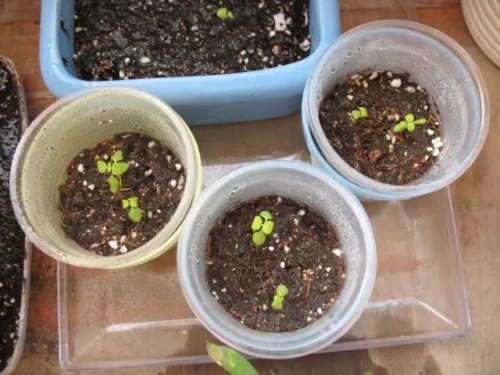
2. Transplanting: When the seedlings grow 4~5 true leaves, they can be moved into flower pots with a diameter of 8~12 cm. For the potting soil, it is best to use a mix of 7 parts humus soil plus 3 parts garden soil. Water the seedlings with a watering can, watering until thoroughly soaked. As the seedlings gradually grow, repot once more, planting them in flower pots with a diameter of 20~24 cm.
3. Flowering period: Usually sown in late August or September, they bloom from April to May the following year; when raised as seedlings in a cold frame in early spring or sown in spring and summer, they can bloom from June to July or from September to October, but they do not grow as well as autumn-sown plants and the flowering period is shorter. When sown in autumn, they bloom the following year, and after light pruning, they can continue blooming until late autumn. For those used as cut flowers in winter, they are often sown in late summer, cultivated in the open ground, moved into a greenhouse when autumn turns cool, and kept at 22°C during the day and above 10°C at night in both autumn and winter, and they can bloom successively in December.
4. Watering: Usually loosen the potting soil frequently and water moderately. Controlling watering in winter can keep the plants growing healthily, with more flowers and brighter colors.
5. Fertilizing: Fertilization should pay attention to the balance of nitrogen, phosphorus and potassium. Snapdragon has root nodule bacteria and can fix nitrogen itself, so under normal circumstances there is no need to apply nitrogen fertilizer; appropriately increasing phosphorus and potassium fertilizer is enough. During the growth period, apply fermented oil residue water once every half month together with watering. When flower buds appear, spraying with a 0.1%~0.2% potassium dihydrogen phosphate solution is even better. Before each fertilization, loosen the soil and remove weeds.
6. Pruning: When snapdragon seedlings grow to about 10 cm, pinching can be done to reduce plant height, increase the number of side branches and produce more flowers. When pruning, cut off diseased and weak branches, dead old branches and excessively dense branches. After each flowering, cut off the branches that have already bloomed to encourage new branches to sprout and continue blooming.