A Detailed Guide to Growing Petunias as Household Potted Plants
When it comes to “petunias,” many flower lovers certainly know them. They have many names, such as Bidens petunia, hybrid petunia, lingzhi peony, shuttlecock flower, dwarf trumpet, sweet potato flower, and morning glory petunia. It is a perennial herb, often grown as an annual or biennial. But flower lovers may not all be clear on how to grow petunias. The petunia can be called the king of herbaceous flowers; petunias are almost a must-grow variety for flower lovers. Indeed, petunias are a plant that is easy to grow and easy to get results from. Not only do they come in a full range of flower colors, but they also have a large flower volume and bloom continuously, fearing neither cold nor heat. The growing method for petunias is actually very simple. Please read on:
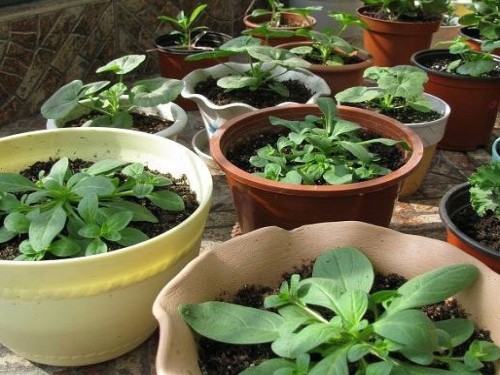
They prefer a warm environment with plenty of sunlight, are not tolerant of frost, and fear waterlogging. Their suitable growing temperature is 13-18°C. In winter, the temperature should be 4-10°C; if below 4°C, plant growth stops. In summer, they can withstand high temperatures above 35°C. During the peak growth period in summer, they need sufficient water. Especially in the high-temperature summer season, they should be watered in the morning and evening to keep the potting soil moist.
Sowing: In this autumn sowing, I sowed Easy Wave mixed colors, with 4 out of 5 germinating, and Soprano Ice Lavender, with 4 out of 5 germinating. The soil used was Fafard peat sowing soil. A little perlite and vermiculite can be added appropriately to increase air permeability; otherwise, the peat's water retention is too good and can easily smother the seedlings yellow. Petunias need light to germinate. Just place them on a south-facing windowsill where they will not be exposed to direct scorching sun at noon. Remember that the water in the seedling tray must be sufficient, maintaining 100% humidity.
Light and watering: Petunias love to drink water, and once they have had enough water, they are not afraid of sun exposure! But do remember to give them sun! If they do not get enough sun, wanting to form a flower ball will test your pinching technique. When sowing in autumn, once petunias have four true leaves, they can be given full sun, provided there is still enough water. My approach was to put them directly on the terrace from the moment they germinated. After all, autumn temperatures are not high, and I always kept enough water in the bottom tray of the seedling box.
Fertilizing: Petunias like fertilizer, and whether or not fertilizer is used makes a huge difference. My experience is: after 4 true leaves appear until the temporary planting stage (when the roots have filled the small cells of the seedling box), use Pettersson's fertilizer at 2000 times dilution once a week. From temporary planting to final planting, use it at 1500 times dilution once a week, and a little slow-release fertilizer can be added appropriately during temporary planting. From final planting to the stage when the plant is full, use it at 1000 to 1500 times dilution twice a week (the concentration increases with the size of the plant). Add sufficient base fertilizer when final planting. From bud formation to full bloom, mix Pettersson's fertilizer and blooming fertilizer at 1000 times dilution and fertilize twice a week. Sometimes petunias lack iron, so a little ferrous sulfate can be added.
Pinching and pot selection: To form a flower ball, you must pinch!! As for how to pinch, in Maomao's words: cut evenly along the edge of the pot! Do not be soft-hearted, do not feel sorry for it, decisively snip!! You cannot catch the wolf without risking the child. For the specific implementation of pinching, you still need to refer to Maomao's divine post. I feel I have not fully graduated yet…… As for pots, one plant per 20cm-25cm pot is always right.
For daily management, we should do the following:
The pot should be breathable and slightly larger, and the soil should be loose and slightly acidic. Petunias are suitable for growing in clay pots with good breathability and an inner diameter of 20 cm to 30 cm, with two or three plants per pot. If using purple sand pots, plastic pots, or porcelain pots with poorer breathability, place a layer of crushed charcoal pieces or crushed hard plastic foam blocks at the bottom of the pot to enhance air and water drainage and prevent root rot.
They can also be grown in plastic hanging pots (1 plant per pot), hung on a balcony or window. The best choice is loose, fertile, slightly acidic sandy loam. You can make a growing medium with leaf mold, vegetable garden topsoil, and sand or perlite in a 5:4:1 ratio. A pH value between 5.8 and 6.2 is best. If the pH value exceeds 6.6, it will inhibit the roots' absorption of iron, causing leaf yellowing. Avoid heavy clay and saline-acid soil.
Water moderately to prevent drought and waterlogging; use more phosphorus and potassium and less nitrogen in fertilizer. Petunias like moisture and fear both drought and waterlogging. In spring, summer, and autumn, water frequently. Water as soon as the potting soil is dry, and keep the soil slightly moist, but never waterlogged. Too wet easily causes root rot, while too dry easily yellows the leaves. In winter, as long as the potting soil is not dry and is slightly moist, that is enough. When watering in the north, it is advisable to often add a little ferrous sulfate to the water (500:1), to prevent the potting soil from becoming alkaline after long-term watering with alkaline water, which causes leaf yellowing and poor growth.
Petunias like fertilizer and are also tolerant of poor soil. If too much fertilizer is applied too frequently, they easily grow leggy and produce fewer flowers. When final planting or repotting and changing soil, add a little bone meal or nitrogen-phosphorus-potassium compound fertilizer to the growing medium as base fertilizer. During the seedling stage, apply a thin nitrogen fertilizer about once every 10 days. During the bud stage and flowering stage, do not apply nitrogen fertilizer again, otherwise they easily grow leggy and lodge, with many leaves and few flowers. It is better to apply nitrogen-phosphorus-potassium compound fertilizer about once every 15 days. Spray the leaves once a month with a 0.2% potassium dihydrogen phosphate solution to encourage more buds and more colorful flowers. Do not fertilize after bringing them indoors in winter.
With sufficient sunshine, the flowers are abundant; when brought indoors in winter, let them see more light. Petunias like light and warmth and are not cold-tolerant. The most suitable growing temperature is 15°C to 25°C. Except for needing appropriate shade at noon during the high heat of midsummer (above 34°C), they should receive more sunlight in all other seasons, and the more sufficient the sunlight, the more luxuriant the growth and the more flowers. They are suitable for placement in a sunny courtyard, rooftop garden, south-facing or west-facing balcony, or windowsill.