Detailed Guide to Planting and Growing Magnolia grandiflora (Southern Magnolia)
Southern magnolia, also known as Magnolia grandiflora, is native to the southeastern United States. It is now widely cultivated; in China it is grown in the warm temperate zone, the Yangtze River basin and cities further south. Its tree form is simple and elegant, its large leaves are dense, glossy and green all year round, and its large flowers are fragrant, giving it high ornamental value. Southern magnolia can be used as a landscape feature, street tree or shade tree. The southern magnolia has a majestic and magnificent tree form, large leaves and dense shade, and flowers like lotus blossoms with a rich fragrance. It is a beautiful ornamental tree for landscaping. It is suitable for planting as a specimen, in groups or in rows. Below, we introduce the planting techniques for the southern magnolia tree.
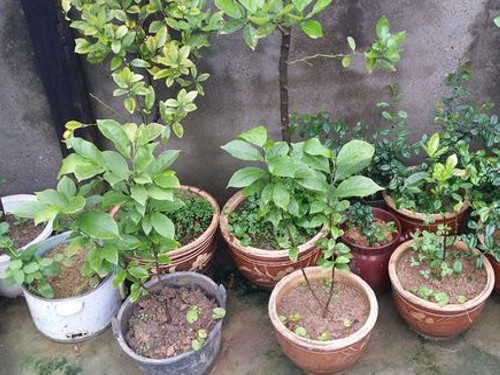
1. Season: For transplanting large southern magnolia trees, early spring is suitable, but the plum rain season is best. About half a month after Spring Festival, the southern magnolia is still in its dormant period, sap flow is slow and metabolism is slow, so it can be transplanted at this time. After transplanting, when temperatures rise in late spring, the root system first begins to grow and repair; with careful management, the tree's growth that year is basically unaffected. In addition, the plum rain season has abundant rainfall and high air humidity, so the survival rate of southern magnolias transplanted at this time is very high. However, when transplanting, note that it is best to choose an overcast or cloudy day and try to avoid rainstorms or high temperatures.
2. Root ball: The size of the root ball is the key to successful southern magnolia transplanting. In East China, the root ball diameter is generally 8 to 10 times the tree's diameter at breast height; this ensures less damage to the root system and makes it easier for the tree to recover its vigor. If the root ball is too small, the root system is severely damaged, making water uptake difficult and affecting the tree's survival. The root ball should be dug in a spinning-top shape, not a plate shape or a conical shape, and the root ball should be tightly bound with straw rope to prevent it from loosening during transport.
3. Water: The southern magnolia has fleshy roots, which lose water very easily, so during digging, transport and planting, it must be done quickly and promptly to avoid excessive water loss that would affect survival. After transplanting the southern magnolia, the first watering to settle the roots must be done promptly and must be thorough and deep, so that the root system makes full contact with the soil, which helps the tree survive. If there is excessive rainfall after transplanting, drainage channels should also be opened to prevent water accumulating around the roots, which would cause root rot and death of the southern magnolia.
4. Pruning: Leaf removal. By pruning branches and removing leaves, water evaporation can be reduced and the water-supply pressure on the injured root system eased. Pruning should remove inner-canopy branches, overlapping branches and diseased or pest-infested branches, while striving to maintain the integrity of the tree form; leaf removal should preferably remove 1/3 of the leaves on the branches, otherwise the transpiration pull will be reduced, making water uptake by the roots difficult.
[Cultivation Methods]
1. Digging the hole: Southern magnolia prefers a soil environment with deep soil layers and slight acidity, so the method of planting in a large hole with replaced soil should be adopted. Method: For a southern magnolia 1 to 2 m tall, a tree hole 1 m long, 1 m wide and 1 m deep is suitable.
2. Planting: For initial cultivation of southern magnolia, pay attention to isolating salt and alkali; the planting hole can be lined at the bottom with materials such as cinders and coarse sand as an alkali-isolating layer, and the prepared planting soil can be used above. The method is:
After digging the hole, fill it with 30 cm of cinders to make a drainage layer, and spread a layer of straw matting on top of the cinders to prevent the soil above from washing into the gaps in the cinders when watered. Use prepared planting soil mixed with some humic acid fertilizer, decomposed organic fertilizer and saline-alkali soil improvement fertilizer, fill it into the tree hole, and tamp it down to a depth of 50 cm from the ground surface. After that, fill the tree hole with planting soil again, tamp it down to 45 cm from the ground surface, and firm it; in this way, the cut roots will not directly contact the fertilized soil, making root rot less likely.
3. Gently place the southern magnolia into the tree hole, turn it to orient it so that its sunny side faces south. Cut and pull out the straw rope to ensure that after the southern magnolia grows new roots they will directly contact the soil.
4. Finally, fill in the mixed soil and firm it.
Notes:
1. When young, promptly remove flower buds so that the strong buds below the cut quickly gain dominance and grow upward, and promptly remove the terminal buds of side branches to ensure the dominance of the central main branch. After planting, cut back overly horizontal or drooping main branches to maintain a balanced relationship among branches, so that each whorl of main branches is staggered and avoids overlapping growth from top to bottom, making full use of space. In summer, remove root suckers at any time. Thin out overly dense branches and diseased or pest-infested branches within the crown. For the first whorl of main branches on the trunk, cut off the upward-facing branches. For new branches near the tips of the main branches, pinch them to reduce the competitiveness of that whorl of main branches and nearby branches relative to the central main branch.
2. Transplanting period: Spring transplanting should be in mid-March before the roots begin to grow; autumn planting should be no later than October. When transplanting, a soil ball is required; the survival rate of southern magnolia planted with a soil ball is higher than that of bare-root planting, and seedling age is negatively correlated with survival rate, which is even more pronounced in bare-root planting. For greening with large trees, in order to increase the survival rate, branches and leaves should be appropriately thinned without destroying the crown shape, and after planting, support stakes should be set up promptly and tending should be strengthened.