A Detailed Guide to Growing Dahlias as Houseplants
Dahlia, also known as pasiflora and Tianzhu peony, has full blooms, an elegant and noble appearance, vivid colors, and a peaceful demeanor. Mexicans regard it as a symbol of generosity and magnificence, and therefore honor it as the national flower. According to statistics, there are already more than 30,000 varieties worldwide, making it one of the world's famous flowers. No wonder dahlias have developed so quickly; if you have seen how colorful and passionately fiery dahlias are, you will also fall in love with them irresistibly.
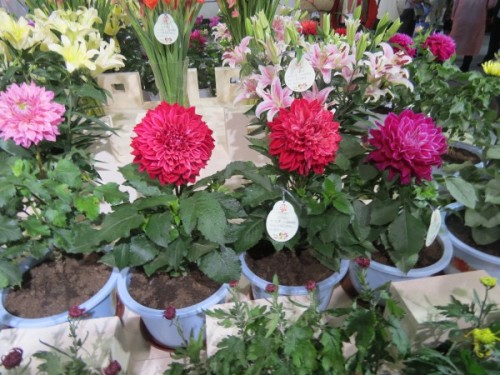
Cultivation techniques:
The stems of dahlias are crisp and tender, unable to withstand strong winds, and they also fear waterlogging. When planting in the ground, choose a location with high, dry terrain, good drainage, ample sunlight, and shelter from the wind, and make raised beds. The plant and row spacing is generally about 1 m for standard varieties and 40 cm to 50 cm for dwarf varieties. Dahlia stems are tall, juicy, and tender, so supports should be set up to prevent wind breakage. Watering should follow the principle of watering only after the soil has dried out completely. After consecutive cloudy days in summer followed by sudden bright sunshine, spray clear water on the ground and leaves in time to cool them down; otherwise the leaf edges will scorch and turn yellow and wither. During the dog days when there is no rain, besides watering every day, also spray water to cool the plants. After buds appear, apply liquid fertilizer once every 10 days until the buds show color. Before frost, leave 10 cm to 15 cm of root crown, cut off the branches and leaves, dig up the tubers, dry them in place for 1 to 2 days, then pile them indoors and store them in dry sand. The storage room temperature should be about 5°C.
For potted dahlias, it is best to repot them several times. Choose a shallow pot with a wide opening, and at the same time make the drainage hole at the bottom of the pot as large as possible, with a layer of broken tiles placed underneath as a drainage layer. The growing medium must contain half sandy soil. The final repotting needs enough base fertilizer to provide sufficient nutrients; other management is the same as for ground planting.
For dahlias used as cut flowers, the key cultivation points are the same as for ground planting, with plant and row spacing of 50 cm to 100 cm. During the peak growing season, apply liquid fertilizer once every half month, pinch appropriately, and retain more side branches.
1. Soil: Dahlias grow best in loose, fertile, well-drained sandy loam. Crop rotation is needed. They have moderate fertility requirements, and can grow well at pH 6.7-7.8.
2. Sunlight: Dahlias love light and cannot tolerate shade. If placed in a shaded place for a long time, they will grow poorly, with weak roots, thin leaves and slender stems, small and pale flowers, and some may even fail to bloom. Therefore, potted dahlias should be placed in a sunny place. During the leaf-growing period, sufficient light is needed, with daily light exposure of more than 6 hours, so that the plants are robust and the flowers are large and full. If daily sunshine is less than 4 hours, then stem and leaf branching and flower bud formation will be affected to some extent; especially under cloudy and rainless light conditions, flowering will be poor, stems and leaves will grow poorly, and they will be prone to disease.
3. Temperature: They prefer a cool climate and are not strict about ecological factors, so they are highly adaptable. During the growing period, they are not strict about temperature and can grow normally between 5-35°C, but 10-25°C is most suitable.
4. Propagation: Use root division propagation, which is the most commonly used method. Because dahlias can sprout only at the root crown, when dividing, part of the root crown must be included, otherwise new plants cannot sprout. To make identification easier, the pre-buried root method is often used to promote sprouting, and after adventitious buds on the root crown sprout, they are divided and planted. The root division method is simple and easy to carry out, with a high survival rate and strong seedlings, but the number of propagated plants is limited.
5. Watering: The amount of watering can control the height of dahlia plants. During the seedling stage, moisture should be controlled to promote dwarfing. In summer, to lower the temperature, increase air humidity, and reduce water evaporation from dahlia stems and leaves, spray water 1~2 times a day. Water once at 3~4 p.m., and the amount of water should not be too large.
6. Fertilizing: Dahlias love fertilizer. During the growing period, apply a top dressing once every 7~10 days, or apply thin liquid fertilizer 2-3 times. However, because dahlias fear heat, they are often in a semi-dormant state in summer; at this stage, they may not be fertilized or may be given extremely thin fertilizer. After the plants bud, the amount of phosphorus fertilizer applied can be increased to make the flowers bloom better. The root system of dahlias is rather delicate, and concentrated fertilizer should be avoided throughout the entire growth process.
7. When cultivating dahlias for medium and small flowers, only remove the side buds on several lower nodes of the stem so that they bloom successively. If you want to cultivate large single blooms, retain only the terminal bud and remove all other side buds. At the end of June and the beginning of July, after the first flowering, as the weather gradually becomes hotter and plant growth slows down, pruning can be carried out. When pruning, first twist the stem at the middle of the branch between two leaves and bend it downward, leaving a height of 20~30 cm. After a few days, when the wound area has dried and shrunk, cut it again. This can prevent rainwater from pouring into the hollow stem and causing rot. If grown until October, it can bloom again.
8. Pruning: Pests and diseases: Dahlias generally mainly suffer from problems such as powdery mildew, gray mold, bacterial wilt, viral disease, and pests such as snout moths. Pesticides should be sprayed regularly for treatment.