Planting Methods and Care Tips for Blanket Flower
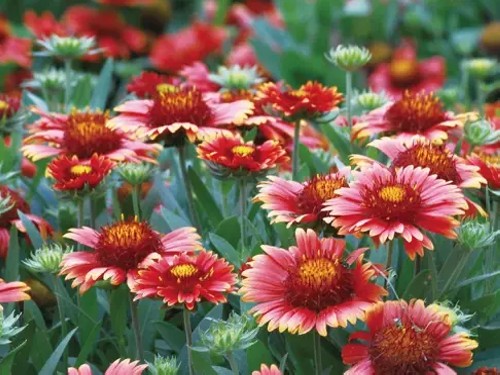
Blanket flower (Gaillardia) is a herbaceous plant, also known as tiger-stripe chrysanthemum or June chrysanthemum. Its flowers are brilliantly colored with alluring form, and it is easy to manage, making it suitable for potted cultivation and ornamental viewing. In recent years, new varieties of perennial blanket flower have gradually increased; Maysa Yellow, Arizona Sun, Arizona Red and others produce abundant blooms with vivid colors. During peak bloom, the flowers can completely cover the plant clump, blooming continuously from May to October. Once planted, it can be used for many years with low maintenance costs, making it very suitable for widespread planting in gardens. It is a flower with high ornamental value, strong adaptability and excellent application prospects.
When potting seedlings, first place a 2-3 cm thick layer of coarse-grained substrate or ceramsite at the bottom of the pot as a drainage layer. On top of that, spread a layer of fully decomposed organic fertilizer as base fertilizer, about 1-2 cm thick, then cover with another layer of substrate about 1-2 cm thick before placing the plant in, so as to separate the fertilizer from the roots and avoid burning them.
The substrate used for potting can be one of the following. Vegetable garden soil : cinder = 3:1; or garden soil : medium-coarse river sand : sawdust (mushroom residue) = 4:1:2; or one of paddy soil, pond mud, or leaf mold. Or peat + perlite + ceramsite = 2 parts + 2 parts + 1 part; vegetable garden soil + cinder = 3 parts + 1 part; peat + cinder + ceramsite = 2 parts + 2 parts + 1 part; sawdust + vermiculite + medium-coarse river sand = 2 parts + 2 parts + 1 part.
After potting, water thoroughly once and keep in a slightly shaded environment for one week of care. When transplanting seedlings, first dig the planting hole, spread a layer of organic fertilizer at the bottom of the hole as base fertilizer, about 4-6 cm thick, then cover with a layer of soil and place the seedling in, so as to separate the fertilizer from the roots and avoid burning them.
After placing the seedling, backfill the soil to cover the roots, firm the soil with your foot, and water thoroughly once. Before flowering, generally pinch back twice to encourage more flowering branches to sprout; one to two weeks after potting, or when the seedling reaches 6-10 cm tall and has more than six leaves, remove the growing tip, keeping the lower 3-4 leaves to encourage branching. Three to five weeks after the first pinching, or when the side branches grow to 6-8 cm long, perform the second pinching, removing the growing tips of the side branches while keeping the lower 4 leaves on each side branch. After two pinchings, the plant shape will be more ideal and the number of flowers will increase.
[Light and Temperature]
Blanket flower prefers a growing environment with high temperatures and abundant sunlight. It tolerates heat but is slightly intolerant of cold. The suitable growing temperature is between 15°C and 35°C. It requires plenty of sunlight but can tolerate partial shade.
[Soil]
To grow blanket flower, suitable soil must be chosen. Generally, well-drained, loose soil should be selected, but avoid choosing acidic soil, as it will cause poor plant growth.
[Propagation Methods]
The propagation methods for growing blanket flower are usually seed sowing and cuttings. Sowing is done in summer; the soil needs to be sterilized before sowing, and care management should be noted after sowing. Cuttings can be done in conjunction with pinching, using the pinched branches directly for cuttings. After cutting, attention should be paid to the management of light, temperature and humidity.
[Watering and Fertilizing]
Blanket flower has a relatively high demand for fertilizer. It is fairly drought-tolerant and dislikes rain exposure, but also needs a certain level of air humidity. Generally, watering and fertilizing blanket flower should be done in small amounts and frequently. During the growing period, fertilize early, applying more phosphorus and potassium fertilizer. After fertilizing, keep the plant dry. During the flowering period, appropriately control water and fertilizer.
[Potting]
When potting blanket flower seedlings, first place broken tile pieces or coarse sand grains at the bottom of the flower pot as a drainage layer, then sprinkle some decomposed fertilizer as base fertilizer. Place a layer of prepared soil on top of the base fertilizer, and finally position the plant. After potting, water the pot thoroughly once and keep it in a shaded environment for a period of care.
[Pinching and Pruning]
Pinching and pruning are very important for the growth of blanket flower. When the seedlings grow to more than 6 leaves, pinch off the growing tips to promote branching. After that, pinch once more during the growing process to shape an ideal plant form and encourage more blooms.