Anthurium Hydroponic Growing Methods and Care Tips
Anthurium is a plant with a relatively strong affinity for water. But growing it hydroponically is somewhat difficult. It is a flowering plant from South America, fond of warm, humid, semi-shaded environments. Among all hydroponic plants, anthurium is the darling; today most wealthy households have hydroponic plants. Because they are not very skilled in hydroponic plant techniques, the survival rate is low. Whether judged by appearance or by hydroponic plant technique, it is more attractive and harder to master than other hydroponic plants, which is why it is the darling of hydroponics. Below, a hydroponic technique expert explains the secrets of how this darling is successfully grown using hydroponic plant techniques.
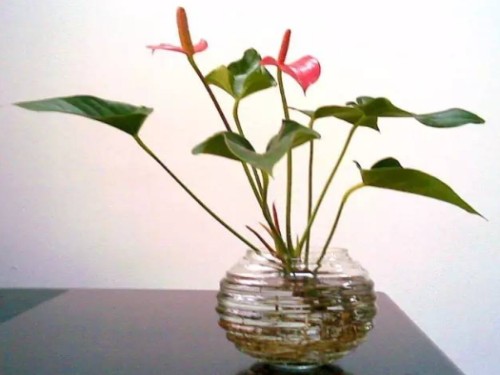
Anthurium, because of its meaning of "realizing grand ambitions," is also a frequent guest in many flower lovers' homes. Everyone must be very familiar with soil culture methods for anthurium, but do you know about hydroponic anthurium? Speaking of it, this hydroponic method is a bit difficult; flower lovers who want a challenge can give it a try!
Step 1:
Dig the potted anthurium out of the soil, place the roots together with the soil in water to soak for a period of time, then rinse the anthurium roots clean.
Step 2:
Cut off the anthurium's rotten roots, fibrous roots and old leaves, place it in potassium permanganate solution to disinfect, then rinse the anthurium again with clean water.
Step 3:
Pot the anthurium for hydroponics. If the hydroponic pot is semi-transparent, it will be somewhat better. Carefully put the anthurium roots into the hydroponic basket; river stones or expanded clay pebbles can be placed in the basket to fix the plant's position. Dilute rooting powder according to the proportion, spray the expanded clay pebbles moist to promote the anthurium to take root. Add water to half or 2/3, so that roots not submerged in water can still breathe from the air.
Step 4:
If using a transparent glass container for hydroponics, it is best to cover the outside of the glass with a black plastic bag to prevent strong light. Cover the top with a transparent convenience bag (to keep warm and moist). Place it in a spot with scattered light, and keep the temperature above 10 degrees.
Step 5:
From soil culture to hydroponics, the anthurium must go through an adaptation process in between, called acclimation. During acclimation, change the water frequently: for the first half month, once every 3 days; for the latter half month, once a week. Every time the water is changed, add nutrient solution once; the nutrient solution must be the kind specially for hydroponic flowers.
Step 6:
After one month, the anthurium will grow new roots; the newly grown roots will be relatively adapted to the aquatic environment, and the leaves will also begin to sprout new buds.
Step 7:
For acclimated hydroponic anthurium, water can be changed according to the actual situation. When there are many impurities in the water, it should be changed. After a period of time, the hydroponic pot should also be cleaned. Nutrient solution must not be added too frequently, because it will cause eutrophication of the water; microorganisms in the water will reproduce faster, and the oxygen content of the water will drop sharply, which is not conducive to plant growth.
Step 8:
If a larger pot is used to grow anthurium hydroponically, small fish can also be kept in the water. Plants and fish benefit each other, and together they form a corresponding landscape. It can be said to serve two purposes at once.
Step 9:
1. Temperature & humidity
When growing anthurium hydroponically in summer, note that the surrounding environment's temperature must not be higher than 28 degrees. The relative air humidity should be kept at 80%. When the weather is relatively dry, sprinkle an appropriate amount of water on the anthurium leaves. In winter, the temperature for hydroponic anthurium must not be lower than 14 degrees; below this temperature, the anthurium is prone to cold damage. Be sure to keep it warm and increase the temperature. Also control the air humidity at around 80%, and be sure to remember that the anthurium must not be placed outdoors, otherwise it is very easy to cause frostbite to the anthurium.
2. Dissolved oxygen
The difficult problem faced by hydroponic anthurium is that if the dissolved oxygen in the water is low, it will cause root rot in the anthurium. Therefore, hydroponic growing must promptly increase the oxygen content in the water. Among these, the simplest method is vibration: fix the flower plant with one hand, and with the other hand hold the container and gently shake it more than 10 times. After shaking, the dissolved oxygen content of the nutrient solution can increase by about 30%. Or add 1% hydrogen peroxide (3% hydrogen peroxide solution) to the nutrient solution. If conditions permit, a miniature submersible pump or an oxygen pump can also be used to oxygenate the nutrient solution.
3. Nutrient solution & water changes
It is recommended to choose nutrient solution for foliage plants. It must be replaced once every 7-10 days. Regularly changing the water for the anthurium can remove the mucus secreted on the anthurium roots and some algae plants. In summer, because the temperature is high, water should be changed more frequently than in winter. It is recommended to change the water for the anthurium once every 2-3 days. Water must not be added too full, to prevent root rot in the anthurium. It is best to keep about half of the anthurium's root system exposed above the water surface. This can ensure the roots' absorption of oxygen.
Before growing soil-cultured anthurium hydroponically, it must first be acclimated so that it grows new roots in water, and then it is placed in water for hydroponic anthurium development. The following are the hydroponic planting methods and steps for anthurium:
1. Dig the potted anthurium out of the soil, cut off rotten roots, fibrous roots and old leaves, wash it clean with clean water, place it in potassium permanganate solution to disinfect, then rinse the anthurium again with clean water. If using a transparent glass container for hydroponics, it is best to cover the outside of the glass with a black plastic bag to prevent strong light. Cover the top with a transparent convenience bag (to keep warm and moist). Place it in a spot with scattered light, and keep the temperature above 10 degrees.
2. During acclimation, change the water frequently: for the first half month, once every 3 days; for the latter half month, once a week. Every time the water is changed, add nutrient solution once; the nutrient solution must be the kind specially for hydroponic flowers. After one month, the anthurium will grow new roots, and the newly grown roots will be relatively adapted to the aquatic environment. The leaves will begin to sprout new buds.
3. Pot the anthurium for hydroponics. If the hydroponic pot is semi-transparent, it will be somewhat better. Carefully put the anthurium roots into the hydroponic basket; river stones or expanded clay pebbles can be placed in the basket to fix the plant's position. Add water to half or 2/3, so that roots not submerged in water can still breathe from the air.
4. For acclimated hydroponic anthurium, water can be changed according to the actual situation. When there are many impurities in the water, it should be changed. After a period of time, the hydroponic pot should also be cleaned. Nutrient solution must not be added too frequently, because it will cause eutrophication of the water; microorganisms in the water will reproduce faster, and the oxygen content of the water will drop sharply, which is not conducive to plant growth.
5. If a larger pot is used to grow anthurium hydroponically, small fish can also be kept in the water. Plants and fish benefit each other, and together they form a corresponding landscape. It can be said to serve two purposes at once.