How to grow bleeding heart (Dicentra spectabilis) from seed? A detailed guide to the planting method
Bleeding heart is native to China. Because its leaves resemble those of the peony and its flower stalks bear a string of small pouch-shaped flowers, it is called "bleeding heart." It is a highly ornamental flowering plant. It is suitable for flower borders and flower beds, and can also be grown in pots, forced for early bloom, or used as a cut flower. It can also embellish rock gardens or be planted over large areas under trees. The bleeding heart has beautiful foliage and delicate blooms shaped like little pouches in brilliant colors. It is an excellent choice for potted plants and cut flowers, and is also suitable for flower paths and for mass planting in moist spots at the edges of groves and lawns, where it creates a superb landscape effect. So how should bleeding heart be planted?
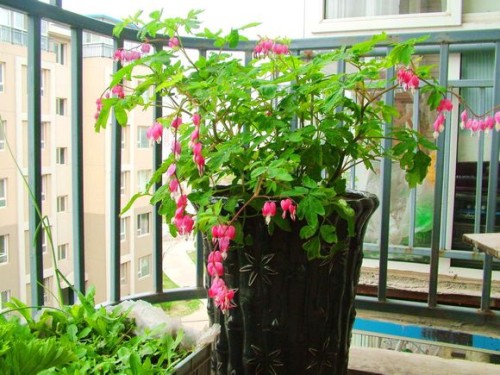
Bleeding heart sets seed after flowering and can be propagated by sowing seed to raise seedlings. Once the seeds are ripe, collect them and sow directly in the open ground; transplant the seedlings in the following spring to their permanent position, but seedlings grown from seed take 3 years to flower. Home gardeners generally do not use this method; it is used by landscaping departments for mass propagation or for breeding new hybrid varieties.
Before sowing for seedlings, first choose a loose, fertile plot, apply plenty of base fertilizer, and plow deeply and harrow finely to level the ground ready for sowing. When raising seedlings, if the soil is dry, first remove a layer of dry surface soil and use the moist soil to form a seedbed 5-7 cm high and 70 cm wide, with about 35 cm between beds. Within the bed surface, 6 cm from the bed edge, sow in rows at a plant and row spacing of 3×10 cm, or broadcast within the bed surface at a plant spacing of about 3 cm.
After sowing, cover with 3 cm of soil. To preserve soil moisture and prevent drought, and to keep warm in winter, a layer of plastic film can be spread over the bed surface. If the soil is dry, water thoroughly from the furrows between beds immediately after sowing to keep the soil moist; roots will form in 20 days, but no seedlings will emerge before the end of the year. If sowing is late or the soil moisture is insufficient, roots will not form before the end of the year and no seedlings will emerge after the turn of the year either.
Bleeding heart is cold-hardy and does not tolerate high temperatures; it prefers moist, well-drained, fertile sandy soil. It can be grown in pots or in the ground. For potting, use a mix of 7 parts leaf mold, 2 parts sandy soil and 1 part cake fertilizer, and pot up and divide the plants around the Spring Equinox. After dividing and potting, water thoroughly. Place in a sunny spot. When the shoots reach 6-7 cm, apply decomposed dilute fertilizer once every half month until flowering. After fertilizing, loosen the soil promptly to improve aeration.
If alum fertilizer water is applied once a month, the plant will grow luxuriantly. During bud formation, apply 1-2 times a 0.2% solution of potassium dihydrogen phosphate or superphosphate, which will make the flowers larger and more brilliantly colored. Do not save seed after flowering; the spent flowers can be cut off promptly. In summer, take care to provide shade, and in the rainy season guard against waterlogging. In the north, move the plant indoors after Frost's Descent, keep the room temperature at about 5 degrees, control watering, and keep the potting soil half-moist to overwinter.