How to Grow Globe Amaranth? A Detailed Guide to Cultivation Techniques and Management Key Points
The flower heads of globe amaranth are used in medicine, with effects of relieving cough and phlegm, calming asthma, and soothing the liver and brightening the eyes. They mainly treat bronchial asthma, acute and chronic bronchitis, whooping cough, pulmonary tuberculosis with hemoptysis, and other conditions. In addition, globe amaranth has a long flowering period and bright colors, making it an excellent ornamental garden flower and a common material for flower beds and flower borders, and the flowers do not fall after blooming, the color does not fade, and they remain bright. The flower heads last a long time and, besides being used in flower beds and bonsai, can also be made into flower baskets and other decorations. They can also be used as edging material for lawn edges and flower bed and flower border edges, can be potted for scenic spots or courtyard arrangements, and are also a good material for cut flowers.
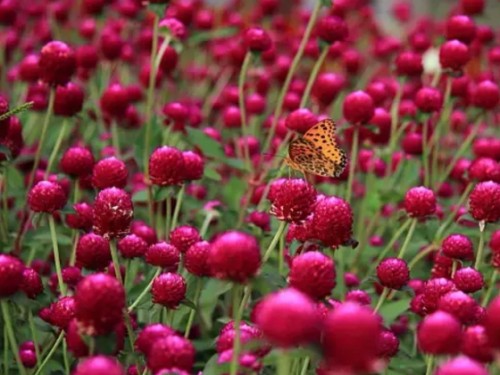
So, how do you grow globe amaranth? Below is an introduction to the cultivation techniques for globe amaranth.
Propagation:
Globe amaranth is mostly propagated by sowing. The suitable germination temperature is 16-23°C, and germination takes 7-10 days. Sow in open-ground seedbeds in spring from March to April. Because the seeds are densely covered with fuzz and stick to each other, they should be inserted into sandy soil and sown with care. You can also cut healthy branch tips of 10CM in June to July and insert them into sandy soil, keeping them moist, and they will root in about a week. Before sowing, soak the seeds in warm water to promote germination. The method is to wrap the seeds in gauze, place them in a shallow basin, spray and wash them with clean water 1-2 times a day, and keep them at around 20°C. After the seeds begin to sprout, mix them with fine soil and sow them in a seedbed or pot, and strengthen fertilizer and water management. Transplant when six leaves appear, or sow directly.
Transplanting:
When the root system of cutting seedlings grows to 0.5~1.0 cm, they can be transplanted into pots. If potted too late, the seedlings will grow weakly in sand without nutrients, affecting later growth and development. When sown seedlings grow 3~4 true leaves, they can be transplanted into pots. For pot selection, clay pots should be chosen, as clay pots drain better than plastic pots. Generally, 6~7 inch clay pots are used, with 3 plants per pot. Although globe amaranth is not strict about the environment, it likes sunlight, hot and dry climates, and is relatively sensitive to water and fertilizer. Therefore, in cultivation and management, watering, fertilizing, pinching, light, temperature, and other technical work should be done well according to its growth characteristics.
Watering:
Water at the right time, in the right amount, and reasonably, according to weather changes. Generally, water less or not at all on cloudy and rainy days, water more when the temperature is high and evaporation is large, and water less otherwise. When watering, water thoroughly. Usually pay attention to whether there is water accumulation in the pot. If water accumulation is found in the pot, deal with it promptly, otherwise it will cause root rot, yellowing leaves, and plant death.
Fertilizing:
About 7~10 days after planting, apply the first fertilizer with 0.5% urea solution. After that, apply once a week, and the concentration can gradually increase or add 0.6%~1.0% compound fertilizer. After fertilizing, immediately sprinkle a little water on the leaf surface to avoid fertilizer damage to the leaves. During the growing period, apply less nitrogen fertilizer and more fertilizer based mainly on phosphorus and potassium, such as chicken manure, peanut bran, and other fertilizers. When fertilizing, be careful not to apply too much, as too much can burn the roots and cause plant death. At the same time, each fertilization should wait until the potting soil is dry or after loosening the soil, and after application, spray water promptly to prevent fertilizer from scorching the leaves and causing yellowing and rot.
Shaping:
When globe amaranth seedlings grow to 10~12 cm tall, the first pinching can be carried out. For the first pinching, leave 1~2 nodes on the main stem. After three pairs of true leaves grow, the second pinching can be done. The purpose of pinching is to promote more branching, effectively control plant height and shape, and make the plants grow short and sturdy. When shaping and pruning, attention should be paid to rounding the plant into shape so that globe amaranth has higher ornamental value. After the plant takes shape, pinching the branches can effectively control the flowering period.