A Detailed Guide to Growing Ranunculus: The Complete Process from Sowing to Care
Ranunculus, also known as Persian buttercup or celery-leaved peony, is a perennial bulbous flower of the Ranunculaceae family. Ranunculus flowers are large and beautiful, often planted under trees, in clumps in lawns, and on the shady side of buildings; they are also suitable for cut flowers or potted cultivation. The growing method for ranunculus is as follows:
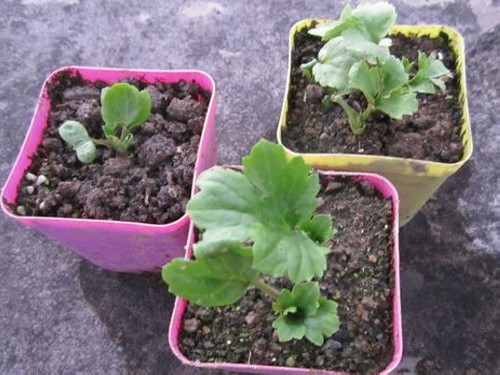
[Seed Propagation]
Ranunculus can be propagated from seed. When the flowers bloom, select early and large flower heads to save seed; after they mature, harvest and dry them in the shade, wrap them in clean waste paper, and store them in a ventilated, dry place. Sow in autumn or winter; by the following spring most plants will be able to bloom, while those that do not bloom need another year of growing and will bloom by the third year. In addition, corm division can also be used for propagation. When the stems and leaves have completely withered and yellowed and the underground stems have matured, dig them up, dry them and store them, then plant again in autumn or winter; ranunculus grown from corms can bloom the following year.
[Sprouting and Seedling Raising]
Before planting, artificial sprouting should be carried out first. In areas south of the Yangtze River, the best time for sprouting is from mid-to-late October to early November. The method is:
First choose a large wide-mouthed pot or select an empty corner indoors as a sprouting bed, spread a layer of coarse sand about 3 cm thick, lay the corms flat on the sand one by one, then cover with a layer of fine sand 2 cm or more thick, and spray with water to moisten. After that, turn over and check every 2 to 3 days, and keep the seedbed moist but not waterlogged. If any rotten corms are found, remove them promptly. After about a week the corms will successively take root and sprout, and once they have sprouted they can be planted in pots. Generally, for a flower pot with a 12 cm diameter, plant 1-2 corms per pot; it is best to choose varieties with different flower colors and plant them in the same pot. The planting depth should be such that the sprout tip is slightly exposed above the soil surface. After planting, place in a spot with ample sunlight for care.
[Water and Fertilizer Management]
Ranunculus prefers cool conditions, dislikes damp heat, and is relatively cold-tolerant. It grows well in well-drained, loose, fertile, slightly alkaline soil. The potting soil can be prepared with 50% garden soil, 20% coal ash, 20% plant ash and 10% organic fertilizer. In the early planting stage, growth is relatively slow; when the weather warms up in spring, it begins to enter a stage of rapid growth. At this time, apply a balanced dilute liquid fertilizer based mainly on phosphorus and potassium every 10-15 days. With sufficient fertilizer, the flowers will be large, brightly colored and abundant. During the flowering period, manage carefully, provide ample light, keep the potting soil moist, and promptly cut off spent flowers. From May to June, as the temperature rises, the stems and leaves gradually wither and enter dormancy; at this time stop watering and move the pot to a cool, dry, ventilated place.
Whether planted in the ground or in pots, a semi-shady environment with good ventilation should be chosen. During the vigorous growth period, take care to water frequently and keep the soil moist. Before flowering, apply 1-2 times a dilute liquid fertilizer as a top dressing, and the flowers will bloom profusely. After summer arrives, the branches and leaves dry up and the plant goes dormant; at this time the tuberous roots should be dug out, dried, and placed indoors in a ventilated, dry place to let them rest. If it is too humid, or if they are left in the pot, they are prone to rot.
For autumn planting, the time is after the Start of Autumn, and the earlier the better, as this allows the plant clump to grow fully and bloom well the following spring. However, pot cultivation is best, and try to avoid high temperatures and direct sunlight, otherwise the tuberous roots are prone to rot.