A detailed guide to growing Moluccella laevis, taking you step by step from sowing to care
Moluccella laevis, also known as shellflower or bells of Ireland, is an annual or biennial herbaceous plant in the genus Moluccella of the Lamiaceae family. It is native to western Asia. The plant grows 35—100cm tall, with four-angled stems that do not branch. The leaves are opposite, heart-shaped to round, with sparsely toothed margins; the petioles are nearly as long as the leaves. The flowers are white with a lipped corolla; the nutlets are smooth. The flowering period is July—August. Moluccella laevis has an unusual flower shape and is simple, elegant and beautiful; it is an important and popular filler material for flower arranging worldwide, and can also be used as a dried flower or grown as a potted ornamental.
The calyx of Moluccella laevis is mostly green, and can also be white or yellow. The calyx is shaped like a small trumpet, and the flower shape is unusual, fresh and elegant, with high ornamental value. Moluccella laevis is a very popular and important material for flower arranging, and can also be used as a dried flower or grown as a potted ornamental. Keeping a potted Moluccella laevis at home can create a simple, elegant and pure atmosphere for the whole home.
Method/Steps:
1. Moluccella laevis is propagated by sowing, which can be done in spring, summer or autumn. The suitable sowing temperature is 15-25°C, and germination takes about one week. It can be transplanted once it has 5-6 true leaves. The growing medium is best a fertile, loose, well-drained loam; the soil should not be too clayey, otherwise the plant will not grow vigorously and will grow slowly. Start fertilizing after the transplants have established, once every half month, and stop fertilizing after flowering. To encourage branching, the growing tips can be pinched out.
2. It grows vigorously and is rarely affected by pests or diseases, but watch out for damage from leaf miners. For ornamental purposes, it can be sown in batches at different times.
3. Moluccella laevis has an unusual flower shape and is simple, elegant and beautiful; it is an important and popular filler material for flower arranging worldwide, and can also be used as a dried flower or grown as a potted ornamental.
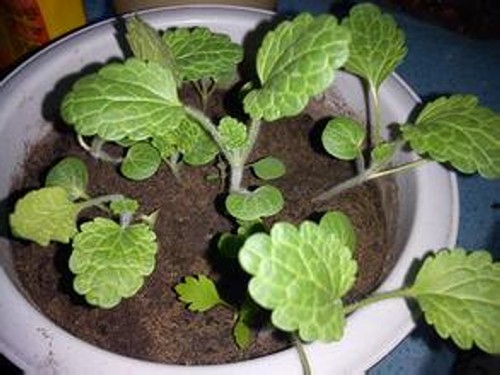
4. The seeds of Moluccella laevis are triangular. After sowing, seedlings emerge in about 1 week. The seedlings grow very slowly, only producing true leaves after 20 days, and after more than 1 month they are still small seedlings. It takes about 2 months or more before they start to look like anything, and after about 3 months the flowers can be seen. The small trumpet-like parts are its sepals; the small flowers are white, borne in whorls of six, resembling a collar, which is why it is also called collar flower.
5. Form: the plant grows 40-70 cm tall, with opposite, nearly round or ovate leaves and serrated margins. The small flowers are white, borne in the leaf axils, and the calyx is very large, emerald green and shell-shaped.
Flowering period: flowers from spring to autumn.
Sunlight: requires good sunlight.
Temperature: the suitable sowing temperature for Moluccella laevis is 15-25°C; generally the seeds will germinate in about one week to half a month.
Management: use a fertile loam as the growing medium, and drainage must be good. When the seedlings are 10-15 cm tall, pinch out the growing tips once to encourage branching. It likes warmth, and the suitable growing temperature is 15-25°C.
Fertilizing: apply a top dressing once a month. Moluccella laevis can be transplanted once it has grown 5-6 true leaves. Start fertilizing after the transplants have established, once every half month, and stop fertilizing after Moluccella laevis flowers.
Propagation: by sowing, which can be done in autumn, winter or early spring.
Soil: Moluccella laevis likes well-drained soil. Generally, first place small stones at the very bottom, then spread sandy soil on top. Then scatter the seeds in the potting soil, cover with a thin layer of sandy soil, and keep the soil moist.
Watering: during the seed germination stage, Moluccella laevis can be watered once a day to ensure the seeds absorb water; at this time the pot should be placed in a cool place, out of the light. After the seeds germinate, adjust the watering schedule according to the soil moisture: do not water if the soil is not dry, and water thoroughly when you do.
Pests and diseases: Moluccella laevis grows vigorously and is rarely affected by pests or diseases, but watch out for damage from leaf miners.