How to grow potted night-blooming jasmine? These methods you need to master
Night-blooming jasmine, also called night-fragrant flower, night-fragrant tree, night lilac, tuberose, night orchid fragrance and so on, is a flowering ornamental plant native to the tropical regions of the Americas. Its branchlets are slender and weak, hairy, with milky sap. Its flowers are mostly yellow-green, with a fresh fragrance that becomes even stronger at night. It is mostly grown as a potted ornamental plant, but it is not suitable for placing indoors, as its floral fragrance makes breathing difficult. Night-blooming jasmine has slender branches and blooms in summer and autumn. Its yellow-green flowers open in the evening, giving off bursts of strong, pungent fragrance. In the south it is often used to decorate courtyards, areas in front of windows, pond edges and pavilion sides.
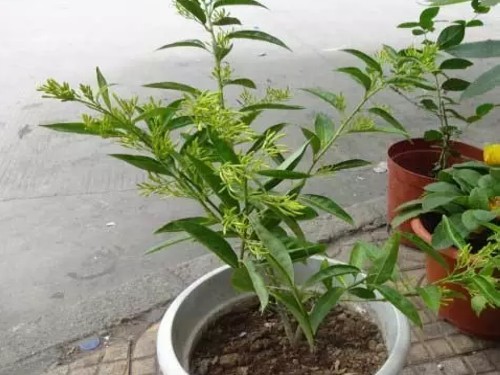
The flowers of night-blooming jasmine are also more fragrant at night and on cloudy and rainy days than on sunny days, which is caused by the high air humidity on cloudy and rainy days. There are also many issues to pay attention to when growing night-blooming jasmine. Come and learn with the editor.
1. Choosing cuttings
Choose branches that grow robustly and are free of pests and diseases. On the same plant, choose sunny branches from the middle and upper parts of the current year's growth. The branches should have shorter internodes, thick and strong stems and leaves, and plump bud tips. Do not use branches that are about to bloom or leggy branches.
2. Choosing the substrate
Mix peat soil, leaf mold and sand at a ratio of 3:3:4 respectively. Bed soil mixed this way has the characteristics of raising bed temperature, retaining water, allowing aeration, being fertile and being slightly acidic, and is suitable for branches to take root and sprout.
3. Treating the cuttings
Before cutting, treat the cuttings with pesticides such as ABT rooting powder, which has the effect of promoting rooting. Cut the cuttings into sections 8 cm to 12 cm long, with 2 to 3 buds on each. The cut at the lower part of the cutting should be 0.5 cm below a node. The cut should be smooth. Remove the lower leaves, leaving only 2 to 3 leaves at the top. The insertion depth is generally about 3 cm.
4. Creating rooting conditions
The suitable rooting temperature is 20°C to 24°C. Generally, soil temperature 3°C to 5°C higher than air temperature is favorable for rooting. The relative air humidity of the cutting bed should be 80% to 90%, which is favorable for rooting, and the light level should be about 30%. Moisture should be appropriate: slightly more water in the early cutting stage and slightly drier later. The suitable period for open-field cutting locally is from early May to mid-June. At this time the climate is relatively good and can better meet the temperature and humidity conditions required for cuttings to root.
5. Post-cutting management
After cutting, water thoroughly, cover with plastic film, and place in a relatively shady spot, or scatter straw on the film to prevent direct sunlight, and increase light at night to help the cuttings survive. Ventilate 1 to 2 times a day to replenish the needed oxygen and prevent disease. Spray water frequently to keep the cutting bed moderately moist, but do not spray too much, otherwise the cutting bed will be too wet, which often affects callusing and rooting of the cuttings. The editor suggests that when the new roots of the cuttings grow to 2 cm to 3 cm, they can be transplanted into pots at the appropriate time.
6. Shaping and pruning
In cultivation and management, a trellis needs to be set up. After the plant climbs onto the trellis, pinch the tips in time to encourage more branching. After flowering, cut off the spent flower stalks in time and apply additional fertilizer. After the flowers fade, cut off dead and dry branches and leaves and overly dense branches, and shorten leggy growth. Pruning: night-blooming jasmine branches grow relatively fast. If allowed to grow naturally, they can grow about 1 m in 1 year, so pruning is needed every year to sprout more side branches and bloom more. Pruning is generally carried out in autumn, keeping each side branch 10-12 cm long. After the flowers fade, cut off dead and dry branches and overly dense branches.
7. Harvesting and picking flowers
When 40%-50% of the small flowers are in bud and a few flowers are open, pick the entire inflorescence. Generally pick once a day. Open flowers should be removed so as not to affect the other buds and lose commercial value.