A Detailed Guide to the Cultivation Techniques and Care Methods for Florist's Cineraria
Florist's cineraria (Pericallis hybrida) is a perennial herbaceous plant in the Asteraceae family. Its flowering period runs from November to May of the following year. The flower heads are capitula, mostly clustered, with colors including red, pink, white-blue, and purple, as well as various ring patterns or spots, and there are both single-petaled and double-petaled varieties. The leaves of florist's cineraria are thick and bright green, setting off the colorful blossoms, making it appear magnificent and radiant. It is usually grown as a potted flower, and can also be used for planting in flower beds in early spring and for cut flowers.
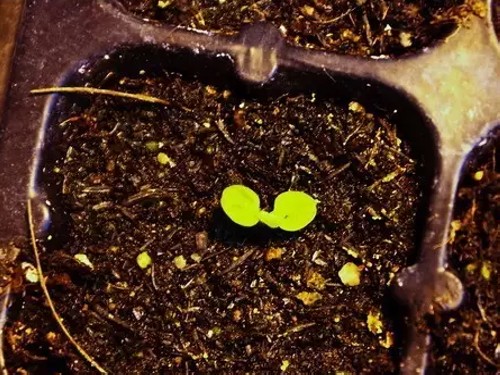
1. Pre-sowing Preparation
First, crush the soil used for sowing (using peat soil as an example), prepare the seedling trays, fill the trays evenly with peat, level the surface with a wooden stick, and spray with water using a spray bottle before setting aside for use.
2. Sowing and Seedling Separation
The sowing seedbed must first be set up with shade, rain protection, and cooling measures. Sow each gram of seeds on the soil surface, then cover lightly with a thin layer of soil about 0.5 cm. Before and after germination, keep the soil surface moist, with the temperature controlled at around 25°C and the humidity controlled at around 60%. About 40 days after germination, the seedlings need to be separated, with a planting density of 12×12 cm spacing between plants and rows. During the separation period, shade is needed for about 10 days, and water thoroughly once.
3. Potting
One month after seedling separation, pot the plants. Use plastic pots or clay pots with a diameter of 18 cm. The nutrient soil formula is 6 parts sandy loam, 3 parts sawdust or rice husk ash, and 1 part cake fertilizer, which needs to be prepared one month before potting and set aside. After potting, the lateral buds appearing at the 3-4 basal nodes of florist's cineraria should be removed at any time to reduce nutrient consumption and avoid overly crowded branches and leaves, thereby concentrating more nutrients for the growth of the upper flower branches, which helps produce more flowers, larger flowers, and more vivid colors.
If sowing is done by broadcasting in open seedling trays, it is best to transplant once into 72-cell or 128-cell trays when 2-3 true leaves have formed. When 6-7 true leaves have grown, transplant into pots, which can be directly planted into pots with a diameter of 13-15 cm. Potted flowers used for supplying the market before the Spring Festival are mostly placed indoors, so red or white plastic pots are mostly used.
After sowing florist's cineraria, place the sowing pot in a cool and ventilated environment. After about 20 days, the seedlings will grow 2-3 true leaves. At this point, the first transplanting should be carried out, that is, temporary planting. Wide-mouthed clay pots can be chosen for transplanting. The potting soil is made by mixing 3 parts leaf mold, 2 parts loam, and 1 part sandy soil. Move the seedlings from the shallow sowing pot into this pot, with a spacing of 3cm×3cm between plants and rows, keeping more of the original soil around the roots to help survival.
After transplanting florist's cineraria, water thoroughly with a fine-holed watering can. When watering, do not knock over the seedlings or wash away the soil around the seedling roots. Spray with new high-fat film to shorten the recovery period. After watering, place the seedlings in a shady place and keep the soil moist. After a week of recovery, place them in sunlight to continue growing. After florist's cineraria recovers, apply bean cake liquid or cow dung liquid once every 1-2 weeks, with the concentration gradually increasing. During the seedling stage, keep cool conditions, with a room temperature of 7-8°C being ideal to promote sturdy seedlings. If the room temperature exceeds 15°C, the plants will grow leggy and flowering will be affected.
When the true leaves of the seedlings grow to 5-7, final planting should be carried out. Florist's cineraria loves fertilizer, so sufficient base fertilizer should be applied at planting time. The best potting soil is a mix of leaf mold and garden soil with added cake fertilizer crumbs. According to relevant reports: some people have used a potting soil mixed in a ratio of 60 parts leaf mold, 30 parts garden soil, 6 parts cake fertilizer powder, and 4 parts bone meal, with very good results. Choose pots with a diameter of 12-17 cm. The potting soil is made by mixing 2 parts leaf mold, 3 parts loam, and 1 part sandy soil, and appropriately apply bean cake, bone meal, or superphosphate as base fertilizer. When planting, make sure to plant the plant in the very center of the pot to keep it upright, water thoroughly, and place in a shady place. After it survives, give it full sunlight.
During the growing period, florist's cineraria likes sunlight and should not be shaded. Rotate the pot regularly so that the branches and leaves receive light evenly and the plant shape stays upright without leaning. Apply liquid fertilizer once every half month. Two weeks before flower bud differentiation, stop fertilizing and reduce watering. Under slightly dry conditions, the flowering rate is higher. The most suitable temperature during the flowering period is 10-15°C, and the overwintering temperature should be above 8°C. After the flowers fade, the plant still needs moderate light to adapt to seed development.
The seeds of florist's cineraria tend to mature between March and April, and generally the seeds of each flower head mature in batches from the outside inward. Plants kept for seed collection should be moderately shaded around hot midday, otherwise seed setting will be poor. After the seeds mature, harvest them on a sunny day, dry them, and store them for later use. When storing seeds, label the varieties well to avoid mixing. Early-flowering varieties of florist's cineraria take 3-4 months from sowing and seedling raising to flowering; spraying flower-strengthening agent during the bud stage makes the flower colors more vivid and extends the flowering period. Mid-flowering varieties take 6-7 months, while late-flowering varieties can take more than 8 months.
How to avoid florist's cineraria having few flowers and excessive foliage?
① Suitable temperature. In winter, florist's cineraria needs to be cultivated in a greenhouse, with the nighttime temperature kept at 10°C and the daytime temperature preferably at 15°C. Exceeding 15°C easily causes the plant to grow leggy, with abundant foliage and few flowers.
② Sufficient light and good ventilation. Florist's cineraria likes light, so it should be placed in a place with sufficient light and good ventilation to benefit its growth and bud formation.
③ Fertilizing and watering. During flower bud differentiation and the bud stage, fertilizer mainly based on phosphorus and potassium should be applied, and fertilizing should stop after the flower buds appear. Florist's cineraria should not be watered too much, otherwise higher temperatures will cause the branches and leaves to grow leggy.