Detailed Explanation of Key Planting Techniques for Large-flowered Tickseed
Planting large-flowered tickseed has a very good protective effect on the environment. It can not only reduce soil erosion, but also increase green space coverage. At the same time, it can purify the local air, improve the quality of people's living environment, greatly benefit environmental protection and the maintenance of ecological balance, and is an important material for beautifying the environment, with extremely high ornamental value.
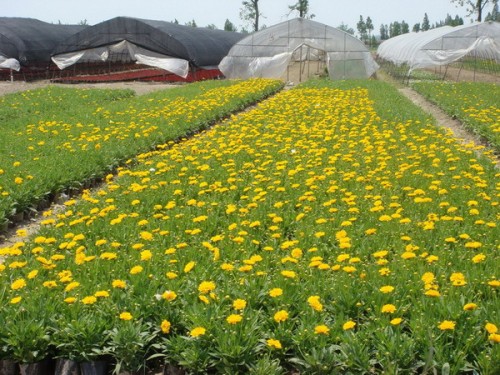
Sowing is generally carried out in spring, and flowers can bloom 4 months after sowing. When planted in the open ground, it often self-sows and reproduces. In addition, division propagation can also be carried out in autumn. Select relatively vigorous clumps, dig them up, cut the perennial roots apart with a sharp blade, trim off the withered and yellow leaves, and replant them separately. Cultivation and management are relatively simple, and appropriate fertilizer and water are required; otherwise, it is easy to affect bud formation and flowering. Therefore, fertilization should be stopped during the flowering period to prevent excessive vegetative growth of branches and leaves. After flowering, the flower stems should be cut off in time to promote the sprouting of new shoots at the base. Generally, plants are renewed after 5-6 years of planting.
[Tickseed Seedling Raising]
Tickseed direct sowing should be done in autumn or spring. The optimum humidity for seed germination is about 21°C, but sowing too early or too late will make the seedlings too large or too small, reduce cold resistance, and make them prone to freezing to death; those that cannot overwinter safely should be moved into a cold frame to overwinter. The soil covering the seeds should be about 2 times the seed size, and seedlings emerge in about 10-12 days. Seedling raising is generally carried out from March to May. It is not strict about the seedbed soil, but medium-fertility loose seedbed soil is most suitable. The sowing rate per square meter of seedbed is about 2 grams. To sow evenly, mix evenly with fine sand before sowing, cover with about 0.5 cm of soil, and control the ground temperature at 18-21°C; seedlings emerge quickly and uniformly.
After emergence, promptly move them into containers to grow into seedlings. When they have 6-8 true leaves, transplant them with a soil ball. In warm areas of the north, seedlings can overwinter in the open ground; in cold areas, seedlings cannot overwinter in the open ground and need spring seedling raising and transplanting. When seeds are sufficient, direct sowing can be used without seedling raising and transplanting. In Beijing, sowing can be done in late September. In cold areas, sow from March to April for flowering in May to June, and sow in June for flowering in August to September. In warm areas, autumn sowing results in flowering from March to April. It is cold-tolerant, dislikes heat, prefers sufficient sunlight and dry air, and dislikes seedbed soil that is too wet.
[Light and Ventilation]
1. Light: Large-flowered tickseed prefers strong direct light; too much shade easily causes excessive growth. It is a short-day plant, and short-day conditions ensure cut flower quality. For off-season cultivation, sodium lamps are used for supplementary lighting to delay flower bud differentiation (electric lighting for about 40 days; after stopping lighting when the plant height is 40-50 cm, it flowers in 70-80 days).
2. Ventilation: Air circulation makes full use of carbon dioxide.
[Fertilizer and Water Management]
1. Water: After planting large-flowered tickseed, water thoroughly once, then control watering, otherwise it is prone to excessive growth.
2. Fertilizer: Before planting, use leaf mold as base fertilizer (1 kg/sq m); stop fertilizing during the transition from vegetative growth to reproductive growth; apply topdressing after flower buds appear.
[Cultivation and Pruning]
1. Cultivation: After small large-flowered tickseed seedlings are planted and before new branches grow, loosen the soil; loosening the soil after rain helps respiration; weed once a week during the rainy season.
2. Pruning: For large-flowered tickseed, pinch once when the plant height is 6 cm, pinch a second time when branches are 10 cm, and remove willow buds in time.
[Pest and Disease Control]
1. Diseases: Powdery mildew and black spot, caused by rain and miscellaneous bacteria in the soil. Use chlorothalonil and thiophanate-methyl alternately, once every 10 days.
2. Pests: Aphids, cutworms, and grubs. Use omethoate and fenvalerate alternately, once every 10 days.