How to grow Alocasia macrorrhizos hydroponically? Detailed hydroponic method
The scientific name of Alocasia macrorrhizos is Alocasia macrorrhizos, also called Guanyin lotus, wild taro, etc. It belongs to the Araceae family, Alocasia genus. It is native to southern and southwestern China. Hydroponically grown Alocasia macrorrhizos has leaves as large as canopies, is evergreen all year round, and the plant can reach more than 1 m in height, with high ornamental value.
When Alocasia macrorrhizos blooms, viewed from afar, beneath the cover of large green leaves, a yellow-and-white Guanyin sits quietly within, silent and elegantly noble. No wonder flower lovers affectionately call it "Guanyin." When air humidity is high, the leaves drip water, and "Dishuiguanyin" (Water-Dripping Guanyin) comes from this.
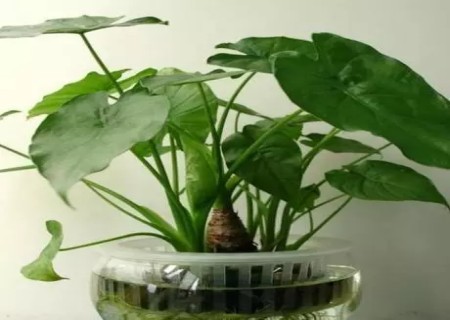
Alocasia macrorrhizos can be grown not only in soil but also hydroponically. So, how do you grow Alocasia macrorrhizos hydroponically? Below is an introduction to the hydroponic method for Alocasia macrorrhizos.
Key technical points for hydroponic Alocasia macrorrhizos:
1. Choose well-grown Alocasia macrorrhizos free of pests and diseases as the mother material for hydroponics. Clear away old leaves and dead leaves on the stem, keeping only two or three new leaves; if none of the leaves are attractive, you may keep only the topmost petiole. Loosen the pot soil, remove the plant from the pot, then rinse the entire plant clean. It must not carry soil, because soil easily pollutes the water quality and may carry pathogens that cause root rot.
2. After rinsing the mother plant clean, cut off all soil-grown roots from the base, then carefully check the stem for rot and pest damage; you can use a small knife to carve out softened or rotted parts of the stem until you reach woody tissue, removing the rot or pests. After pruning, secure the plant according to its size and shape with a planting basket of appropriate size. Immerse the entire planting basket in a 3%-5% thiophanate-methyl solution or carbendazim solution to disinfect for 5-10 minutes; then place it in a cool place to dry.
3. Place the dried mother plant together with the planting basket into a perlite rooting bed. By controlling the water, nutrients, temperature, and light of the bed, initial roots (primitive water roots) can grow in about 10-15 days.
4. When the initial roots grow to 2-3 cm long, they can be moved to an induction pond for inducing water roots. At this stage, adjusting the dissolved oxygen content and EC value in the water is very important and relates to the success or failure of induction; the nutrient solution ratio must also be adjusted appropriately. When the water roots have grown to a certain number and length, it means the plant has adapted to growing in water, and it can be placed in a bottle for static hydroponics.
Alocasia macrorrhizos grows very spectacularly and has a tropical look. It is a relatively large shade-tolerant foliage plant. Alocasia macrorrhizos easily immerses people in a tender dream. Many people like its thick, emerald-green leaves and enjoy watching water droplets roll on the leaves. Therefore, after growing it in a large container with water, it is suitable for placing in a corner of the living room; small Alocasia macrorrhizos can accent a corner of a desk.
Hydroponic steps for Alocasia macrorrhizos:
1. Directly take a potted plant and wash it clean. For hydroponics, choose an Alocasia macrorrhizos with an attractive plant shape and many branches.
2. From the base of the plant, cut it short about 5 cm above the soil surface to promote rooting by stem cuttings.
3. Take small leaf-bearing Alocasia macrorrhizos plants sprouting around the tuber.
4. When the fruit matures after autumn, harvest the orange-red seeds and sow them immediately after collecting to form small plants.