How to grow pothos in water? Method and step-by-step guide
Water culture is both clean and hygienic, and it offers greater ornamental appeal, so water-cultured flowers are the first choice for many plant lovers. Pothos (Epipremnum aureum) is a beloved foliage plant that can absorb formaldehyde, purify the air, and is also very easy to keep alive. It can be placed on a windowsill or balcony, and can also be used to decorate a corner, a bookshelf, or the corner of a coffee table. Pothos can be grown in soil or in water; today we will introduce the water culture method for pothos that you can easily learn on your own.
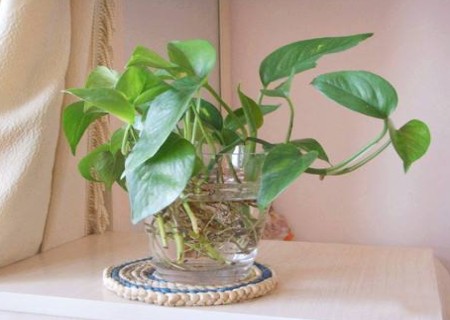
Water culture steps/methods:
1. Choose the containers
According to the variety and form of the pothos, choose substitute bottles, pots, vats and other containers that can complement it and bring out the best in each other. Following the principles for choosing water culture containers mentioned above, buy or make your own so that they are appropriate to use and elegant to look at. Never just grab whatever container is at hand and use it carelessly, as this would affect the image of the water-cultured pothos and the beauty of the indoor decor. Achieve unity and harmony between the container, the plant and the room environment, so as to achieve a fairly ideal ornamental effect.
2. Remove soil and wash the roots
Soil cultivation is organic nutrition, but after switching to water culture it changes completely to inorganic nutrition cultivation. The organic matter in the soil and attached to the root system must be strictly washed clean, so as not to affect the normal growth of the water-cultured plant and to avoid infection by pests and diseases.
The method for washing the roots is: take the selected plant, dig it out of the soil or gently tip it out of the flower pot. First use your right hand to lightly lift the stems, and your left hand to gently support the root system; then switch to your right hand and gently shake, slowly patting so that the soil around the roots falls away and all the roots are exposed. Then soak in clean water for 15-20 minutes, and use your hands to gently massage and wash the roots. After 2-3 changes of water and rinsing, until the roots are completely free of soil and the washing water is clear and transparent without mud or sand, it is considered washed clean. But pay close attention: some plants have hard root systems that are twisted and tangled, with a lot of soil in the gaps. When necessary, you can use a bamboo skewer or wooden stick, or a screwdriver, to dig it out. You must make sure not a bit of soil remains; this is one of the important steps for successful water culture, and you must not be careless.
After washing off the soil, according to the root growth of the plant, appropriately trim off old roots, diseased roots, and old or yellow leaves. Because the roots of water-cultured pothos are also an important ornamental part, when tidying the root system you should also consider the beauty of its form. After trimming the roots and leaves, rinse once more in clean water to wash away the residual root hairs left by trimming, so as not to bring them into the water culture container and cause contamination.
3. Disinfect the roots
After the plant roots are washed clean, prepare a 0.1% potassium permanganate aqueous solution and place it in a plastic or enamel basin. The amount of solution can be determined by how many plants you need to soak; you can soak several plants or many plants at one time, with the standard being that all the roots are submerged. After soaking for 10-15 minutes, take the plants out of the solution, rinse them again in clean water, and they can be planted. Note that the root disinfection time must not be too long or too short, and the potassium permanganate solution must not be too concentrated or too dilute. Apart from measuring with a balance, the appropriate ratio mainly depends on experience and on observing the color of the solution (a light purplish red).
4. Choose the water quality
The water used for growing pothos is also very important. You can choose clean tap water or purified water to grow pothos. The correct choice of water quality is very important for the cultivation of water-cultured pothos.
Pothos water culture tips:
1. A whole pot or small sections with aerial roots can all be water-cultured, and new roots can sprout in 15-20 days.
2. Spraying the leaves and applying foliar fertilizer during the growing season can make the leaf color even more beautiful.
3. Because its branches and leaves hang down, you can set up a support, a wooden stand, or a wall-mounted vessel for water culture.
4. When the climate is dry, you can spray water on the leaves to raise the air humidity, which helps the aerial roots grow.
5. Regularly trim overly long stems and tangled branches, and cut off the aged leaves at the base, to maintain a beautiful shape.
Care tips:
1. Water quality: The water used for growing pothos is also very important. You can choose clean tap water or purified water to grow pothos.
2. Root trimming: For the roots of pothos, we need to clean them at intervals. After the roots grow long, the roots need to be trimmed. If there are rotten roots, cut them off, so that the pothos can absorb nutrients better.
3. Spraying water: Pothos likes a warm and humid environment, so pay attention: regularly spray water on the leaves of the pothos to increase humidity. This is very beneficial to the growth of the pothos, and at the same time it can also clean the leaves.
4. Changing the water: When growing pothos in water, be sure to change the water frequently. Remember to change the water once every two to three days, because pothos has very high requirements for water quality. After the pothos grows new roots, remember to add nutrient solution to the pothos, so that the leaves of the pothos can be more glossy.