How to grow a Chinese arborvitae (Thuja sutchuenensis) bonsai? A detailed explanation of the key cultivation techniques
Chinese arborvitae is a very attractive ornamental plant. Chinese arborvitae is a sun-loving plant, and this tree is fairly shade-tolerant; when growing Chinese arborvitae, be sure to choose relatively dry soil. It does not grow easily in acidic soil or saline soil, and Chinese arborvitae also has fairly high temperature requirements: when the temperature reaches 32 degrees, the Chinese arborvitae tree stops growing, and at minus 10°C it will die within ten days.
Many people not only love Chinese arborvitae bead bracelets, but also want to obtain a Chinese arborvitae bonsai. Chinese arborvitae is a prehistoric plant, originating more than 300 million years ago; it is a relict plant from the Cretaceous period of the dinosaur era, known as the rarest and oldest gymnosperm in the world, and an extremely rare surviving plant living fossil in the world. In the process of digging up Chinese arborvitae, the brothers in the mountains often dig up some live material, and some specifically dig live material to make Chinese arborvitae bonsai. To successfully grow live Chinese arborvitae trees, you must master the following steps.
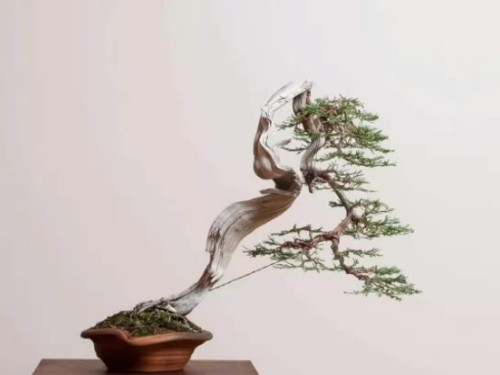
1. Collecting material
When searching the mountains for landscape specimens, you must have poetic and artistic feeling in your heart, with many beautiful artistic images, artistic postures, artistic combinations, and exaggerated and frozen artistic lines dancing in your eyes. Chinese arborvitae sprouts multiple times a year, and can be collected in spring, summer, autumn, and winter. But it is best after winter dormancy; March and April each year can be regarded as the golden period. The roots are least suitable for digging, but as long as there are two or three small red roots, there is still hope of survival; the more leaves carried, the better. Having both roots and leaves is the first fundamental requirement for Chinese arborvitae to survive. Without roots and leaves, no matter how much effort is made later, it is futile.
2. Processing
The operation must be slow and careful. Determine the size of the soil ball according to the thickness of the base. Dig trenches and grooves, and cut as soon as roots are seen; the cuts on thick roots must be flat, and do not let them break the bark or become damaged and rotted. The dug soil ball must be strictly protected from air-drying; it should first be wrapped with wet grass or fresh cypress leaves, and only after being tightly bound and wrapped can it be transported. The collected Chinese arborvitae plants are best first placed in clay pots; large ones should be planted in a soil bed raised above the ground, with river sand spread at the bottom, and slightly alkaline loess on top; sandy loess from a sunny earth cliff that has been irrigated and enriched with fertilizer is best.
3. Soil
The soil used for cultivation must be a mixed soil that is permeable, breathable, and loose; never use pure soil. Generally, adding 80% river sand is sufficient. In the Taihang Mountains area, it is best to use coal briquettes that have been burned and then discarded for a period of time until they have no fire energy left; discarded coal briquette ash is a sterile growing medium with very good water permeability, breathability, and moisture retention, and is very suitable for cultivating Chinese arborvitae. When watering, the water must seep into the soil within 2 or 3 seconds and then flow out of the bottom of the pot, which is ideal.
4. Watering
After Chinese arborvitae plants are potted, water must be strictly controlled. Cypress belongs to yin, pine belongs to yang. The so-called "dry pine, wet cypress" generally means that newly planted Chinese arborvitae are especially afraid of waterlogging; waterlogging causes root rot and death. Controlling water means watering less and spraying more, with no standing water on the pot surface, and it is best to see moisture and dryness every day. Newly planted Chinese arborvitae are best cultivated in a greenhouse, which is the best way to increase the survival rate, as it can retain moisture and control temperature. During the growing period, the potting soil must not be allowed to dry out, and the ambient humidity is best kept above 70%. The main purpose of retaining moisture and controlling temperature is to keep the trunk and leaves from losing water inside their bodies, maintain life, and then create the key conditions for rooting and sprouting.
5. Light
New Chinese arborvitae trees have only very few roots, and their function of absorbing water is already very weak. At this time, the leaves can breathe and absorb water through the leaf surface, maintain life, and carry out photosynthesis, which in turn promotes the flow of tree sap, promotes root survival, and triggers new root growth, so it is very useful for new trees to carry many leaves. During the growing period, with suitable temperature and humidity and sufficient light, the photosynthesis of the leaves is strong, which is more conducive to survival. But in midsummer, if the light is too strong, the growing environment humidity cannot be maintained, and the original water inside the new tree will also evaporate, drying out the tree body, so appropriate shading is needed; a shade net with a low shading rate is sufficient, but do not shade for a long time.
6. Planting and fixing
The shorter the time from digging down from the cliff to planting in soil, the better; after a live tree comes down from the mountain, it is best to plant and fix it that same evening. If it is not planted at that time, it can be placed in a warm, humid, dark place, with sprinkling and misting to keep it moist; do not soak the roots in water. After planting and fixing, it is best not to transplant again within three years, and never carry out a second transplant within one year. Chinese arborvitae root with difficulty; even for a tree that has survived for two years, the roots are not necessarily well grown, so once planted it must be planted into a container, and after planting, use rope to fix the trunk to the container so that the tree cannot sway.
7. Pest prevention
Newly planted Chinese arborvitae trees will almost 100% have pest damage. Trees that died on the cliff will not be infested by insects, but once they come down the mountain, dead trees and live trees alike are all infested by insects; this insect is called the bark beetle. It has a very strong reproductive capacity, and it only lives in the white bark layer of Chinese arborvitae and does not enter the heartwood (this is so for Taihang material; Sichuan material will enter the red heartwood part). When insect holes are found on the tree, the tree is actually already beyond saving. This is because only when the tree sap is not flowing and the hydraulic pressure is low can the bark beetle bore in and chew the trunk. Therefore, as soon as the tree is planted and fixed, pesticide must immediately be sprayed or brushed on the trunk part for defense. Using 100-fold dichlorvos is sufficient; dichlorvos easily damages leaves, so do not spray it on small branches and leaves. During the first year of cultivation, spray the trunk several more times, especially during the growing period when temperatures are high.
After Chinese arborvitae landscape specimens survive, they must undergo at least one to two years or even longer of careful maintenance, nurturing the top branches to be vigorous, the side branches to be strong, the leaves to be plump, and accumulating branches and nurturing roots to make them lush, before they can be wired and bent. When creating a landscape with Chinese arborvitae, you must respect the tree's nature; most have twisted and powerful trunks, are ancient, clumsy, and peculiar, with roots spreading out in four directions, entering the ground with vitality, leaves in clusters, and crowns either like clouds gathering rain or like layered green peaks, mostly triangular and scalene triangular.