How to grow bowl lotus hydroponically? Complete method and step-by-step guide
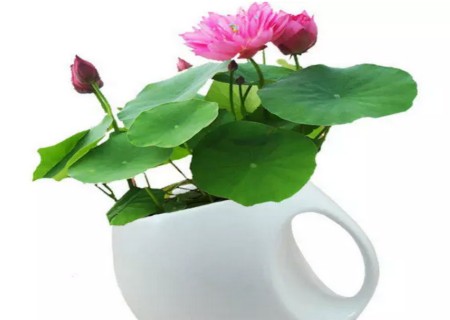
Bowl lotus, also known as bowl lotus or pot lotus, as the name suggests, is a lotus grown in a bowl. It is a lotus planted in a bowl, specially placed on indoor tables to beautify the living environment. Bowl lotus originated in Jiangsu, with Suzhou's being the most famous, and it is recorded in many ancient Chinese texts. Nowadays it is mostly used as an ornamental plant for office desks, which can beautify the work environment.
The growing method for bowl lotus is different from that of ordinary flowers, because the seeds of bowl lotus are quite hard and need shell-breaking treatment. I remember an article that said ancient lotus seeds were found in a pond, and they could still sprout, which shows how strong the seed shell's protective ability is! Let us analyze the hydroponic method for bowl lotus step by step.
Step 1:
For the growing method of bowl lotus, the first step is to treat the seeds by breaking the shell. The seed coat of the lotus seed has a hard and thick special structure. After the seed is fully mature and dried and shrunk, water and air are not easily able to penetrate, respiration is very slow, and it is in a state of forced dormancy. Therefore, lotus seeds can be buried in soil for hundreds or even thousands of years without sprouting or rotting. This is the reason for the longevity of lotus seeds. In order for lotus seeds to absorb water and oxygen after sowing, break the forced dormancy state, and enter germination and growth, shell-breaking treatment must be carried out before seed germination is promoted.
Bowl lotus has an anatropous ovule, and the embryo bud is borne at the top of the seed. When breaking the shell, the basal end of the seed should be broken, that is, the end where the seed is attached to the receptacle, which is also the sunken end of the lotus seed. It can be cracked open with scissors or pliers. Before sowing, generally it is enough to grind through the fruit coat (that is, the hard shell of the lotus seed) until the brown seed coat is visible; when cracking the shell, just make a 2-3 mm crack at the base, and do not crack too deep, so as not to damage the embryo. After soaking the seed for one day, when the embryo absorbs water and swells and the fruit coat softens after absorbing water, you can peel off 1/3 of the fruit coat by hand along the broken shell area, exposing the embryo, so as to facilitate the extension of the embryo bud. It must be noted that the broken shell area must not be too large or too numerous. If the entire hard shell of the lotus seed is removed, the embryo bud loses protection and is very likely to rot and die. This is the first step of the bowl lotus growing method.
Step 2
Soak the seeds to promote germination. Soak the seeds whose shells have been broken in water at about 50 degrees. The water used for soaking should be clean, free of grease and dirt, and water higher than 50 degrees should not be used, otherwise germination will be affected. The water temperature will naturally drop, and in the end it should be kept at about 30 degrees; it should not be higher than 40 degrees or lower than 20 degrees. If the water temperature is higher than 40 degrees, although the seeds germinate rapidly on the first day, later growth will be inhibited; if the water temperature is lower than 20 degrees, the seeds will germinate and grow too slowly. When soaking a small amount of seeds at home, they can be placed in a thermos to maintain the temperature. Under the condition of a temperature of 30 degrees, generally soaking for 3 days is enough for germination, and the embryo bud extends from the opening.
During this period, the water needs to be changed 1-3 times a day, and seeds that cannot germinate should be removed in time. Under normal circumstances, seeds that still have not germinated after 7 days will no longer germinate. Seeds without germination ability often float on the water surface, with yellow embryo buds and moldy, foul-smelling cotyledons. (You can also directly soak the seeds in tap water, without needing warm water or heating; germination can occur after about two days of soaking.) This is the second step of the bowl lotus growing method.
Step 3
Begin water-culturing the seeds to raise seedlings. After the seeds sprout, water-culture the seedlings for 5-7 days at about 25°C. During the water-culture seedling period, the root absorption capacity of the lotus seedlings is weak, and growth mainly depends on nutrients provided by the seed embryo, so generally no fertilization is needed. During the water-culture seedling process, the water layer should be kept at a depth of about 10 cm, and sufficient light should be given; it is not suitable to change the water or turn the plants frequently, so as to avoid excessive elongation of the leaves caused by frequently changing their growth direction; the leaf stalks should be kept in the water, and the leaves should lie freely and flat on the water surface. When the first leaf opens, the second leaf is about to open, and white roots have grown, they can be planted in a fixed place.
Step 4
It is planting in a fixed place. When the buds grow to about 10 cm, they can be transplanted. According to the needs of bowl lotus growing, choose soil and put it into a flower pot, then add clean water and mix the soil and fertilizer evenly. After the muddy water clears, plant the water-cultured seedlings in the center of the flower pot, with the seeds fully entering the mud as the standard, so that the leaves can spread freely on the water surface. When transplanting, note that the leaf stalks must not be broken, so as not to affect growth.
After planting, maintain a water layer of 3-5 cm, but the leaves must absolutely not be submerged in the water. Bowl lotus likes light, and the flower pot should be placed in a sunny place. The seedlings are delicate, and some may scorch when exposed to sunlight, but generally they will still sprout and survive. Do not water too much either, so as to raise the water temperature and promote growth. After growing 7-13 floating leaves, upright leaves can appear. Generally speaking, for multi-flower varieties, flower buds can begin to appear after growing 5-17 upright leaves. The time of bud appearance varies by variety; some varieties show buds and bloom even before upright leaves grow.
The graceful bowl lotus is small and unique, with elegant flower colors, and one or two small fish swimming among them are full of interest. Key points for hydroponics:
1. Add half a pot of garden soil or river pond mud to the pot, add water two weeks in advance to soak, and do not fertilize.
2. Press the fine roots of the young seedlings into the mud, and add water to a depth that does not submerge the lotus leaves.
3. Sprinkle sand evenly in several batches, which can make the water clear.
4. Keeping small fish in the water can remove insects, and their droppings can also serve as fertilizer.
The flowering period of bowl lotus is precisely midsummer, during the off-season for flowers, so it fills the gap in flowers very well. Keeping a pot of bowl lotus on a desk or shelf has a special charm. In recent years, bowl lotus has sold very well on the market, so fashion lovers should not miss it.