How to water-culture hyacinth bulbs? Detailed methods and steps
Hyacinth is one of the famous flower varieties, and also a flower variety quite suitable for water culture. Hyacinths give people a light and fresh feeling, and using them to decorate the home makes it even cozier. Water-cultured hyacinth is one of the easiest flowering varieties to grow among water-cultured flowers. Because the main source of nutrients for hyacinth blooming is the bulb, water-cultured hyacinths can also produce very full blooms. So what exactly is the method for water-culturing hyacinths? This article summarizes it based on experience from the past two years as well as feedback from flower lovers.
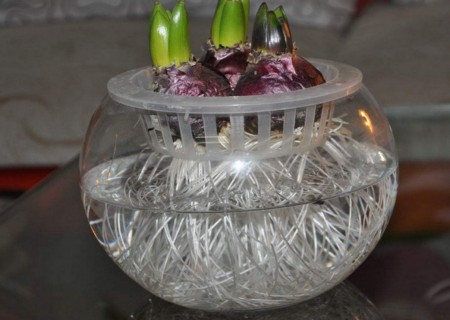
Step 1: In December, place the bulb in a wide-mouthed glass bottle with a grid, and add a little charcoal to help with disinfection and preservation. The water level should be limited so that it does not touch the bottom of the bulb. Then place it in a dark place and cover the bottle with black cloth. Room temperature 5-10°C. This is because darkness helps the hyacinth develop roots. After more than 20 days this way, the roots will sprout in a completely dark environment. At this point, it can be taken outside to receive sunlight, starting with 1-2 hours per day and gradually increasing to 7-8 hours.
Step 2: After the root system has grown sufficiently, move it to a bright place without direct sunlight, keep the temperature above 10°C, change the water once every 2-3 days, and keep the water clean. Let the water reach the roots; there is no need to water or fertilize.
Step 3: After the leaves grow out, gradually increase the light. After buds appear, it can receive direct sunlight, but be careful to frequently change the direction of light exposure so that the leaves and flower stems grow robustly and upright, preventing them from leaning to one side. Gradually raise the temperature to around 20°C, and change the water once every 3-4 days until the flowers fade.
Step 4: After the hyacinth flowers fade, the flower stem should be cut off, and the bulb taken out and planted in a pot so the bulb can plump up. When the leaves wither, dig out the bulb and store it well. In autumn, it can be planted again in a pot to restore its vigor. If the bulb is stored well, it can still bloom the next year, but the flowers will be smaller and the flower scape will also shrink; this is mainly because the bulb has degenerated. Therefore, for hyacinth cultivation, it is better to buy new bulbs after growing them for one year.
Key points for water culture:
1. The water level for water culture is high. The best water level should be in the early stage of water culture, with the water level just reaching the root plate; after the roots grow out, the water level should be lower than the root plate.
2. Poor water quality leads to root rot. Regarding the water issue in water-cultured hyacinths, there are currently two common practices: one is to change the water regularly to keep the water clean, and the other is to only add water without changing it. Both have advantages and disadvantages. Changing the water easily damages the roots, while adding water without changing it may cause the water quality to deteriorate.
3. Using too much nutrient solution. Actually, water-cultured hyacinths do not need nutrient solution.
4. The water culture bottle has no air hole. Water culture is different from soil cultivation; water culture must give the roots room to breathe. So in addition to keeping the water level low, attention should also be paid to maintaining proper air circulation so the roots can breathe.
Precautions:
1. Many hyacinth bulbs people buy have already grown roots at the flower shop, so the step of sealing the bulb in darkness to sprout can be skipped.
2. There should be a 1cm-2cm gap between the water surface and the bottom of the bulb. Never let the water submerge the bottom of the bulb.
3. During the shading period, the temperature is best kept at 9-10°C, so the roots will grow very quickly.
4. If the phenomenon of shrunken neck appears, you can appropriately mist the leaves with water.
5. When flowering, the temperature is best kept above 17°C.