Detailed Guide to Growing Dragon Bone Flower as a Household Potted Plant
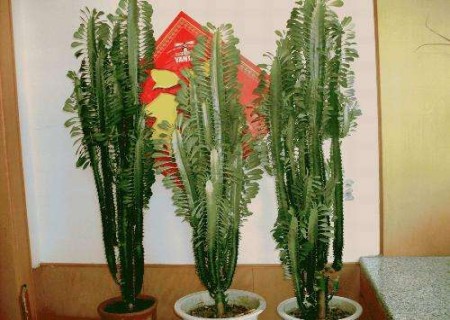
Everyone who loves their home will more or less buy some flowers, plants, or green potted plants to decorate their home. In many households, dragon bone is commonly used as a potted plant and can serve as a rootstock for grafting other cacti. Dragon bone can also be used as a hedge plant; its plants can often reach 8 m or even longer, and the leaves on the stems have degenerated into spines. During the flowering period, it also bears huge and imposing flowers, and the flowers can also be used as medicine, so using it as a hedge plant is both safe and beautiful.
Dragon bone flower is tall, upright, and imposing. Growing it at home not only adds a sense of boldness to the household, but also adds a lot of vitality. It is also suitable for placement in unfavorable directions to ward off evil and block bad energy. For newly renovated homes and buildings between offices, dragon bone is also very good at purifying the air. So it is very worth choosing for friends who want to try growing flowers.
1. Propagation
Night-blooming cereus (Hylocereus undatus) is mostly propagated by cuttings. During the growing season, cut off plump or relatively old stem segments, air-dry them in the shade for 2 to 3 days, then insert them into a sand bed or soil, and they will root in about 1 month. When the roots are 3 to 4 cm long, they can be transplanted into small pots or planted directly in the open ground. This can be done from spring to autumn, but spring and summer are most suitable. Choose thick, plump stem segments 20-30 cm long, cut them off, and place them in a cool, dry place for several days. After drying, insert them into the substrate. Afterward, keep the substrate moist; they will root after 20-40 days, with an extremely high survival rate. Cuttings are not suitable when the temperature is below 15°C. High temperature and high humidity can easily cause the cut surface to rot, while low temperature makes rooting difficult.
2. Planting
Night-blooming cereus can be planted in the ground in areas with an annual average temperature above 20°C, with a plant spacing of 2.5 m x 3 m. A post should be set up at the planting site, and 3-4 seedlings can be planted beside each post. In other areas, it can be potted. The pot should be large, preferably 25-35 cm in diameter, with 1-2 seedlings per pot. Night-blooming cereus prefers fertile, loose, well-drained acidic sandy loam. For potting soil, a culture soil made by mixing 1 part leaf mold and 1 part coarse sand with a small amount of decomposed chicken manure or cow manure can be used.
3. Watering
Night-blooming cereus is drought-tolerant and afraid of waterlogging. During the growing period, the potting soil should be kept moist, but not waterlogged, otherwise root rot is likely to occur. If root rot is found, immediately remove the plant from the pot and use a sharp knife to cut off the rotten parts until healthy tissue is reached. Place the night-blooming cereus in a dry, cool place for several days, and replant after the wound has dried. In winter, watering should be controlled, and the potting soil only needs to be slightly moist.
4. Fertilizing
Before the growth of night-blooming cereus, sufficient base fertilizer should be applied, and during the growing period, fertilizer should be applied once every half month. In the early growth stage, fertilization should mainly be nitrogen-based, while during flowering and fruiting, fertilization should mainly be phosphorus and potassium-based. For potted plants grown for fruit viewing, organic fertilizer is best, as this can improve fruit quality. In winter, stop fertilizing.
5. Repotting
Night-blooming cereus should be repotted once every 1-2 years, and the old roots should be shortened when repotting. If the roots have tumor-like growths of varying sizes and rough surfaces, it indicates damage by nematodes, and the affected parts should be cut off. After cutting the roots of night-blooming cereus, place it in a cool place, and after the wound dries, proceed with planting and watering. The growing medium should be sterilized.
6. Pruning
When night-blooming cereus is planted for fruit viewing, the plant should be shaped and pruned, generally leaving 3 branches per plant. If there are 2 plants in one pot, then 5 branches should be retained, and excess branches should be cut off. During the peak flowering and fruiting period, excess flower buds should be thinned, with only 1-2 retained per branch. Flower thinning should be completed within 8 days after bud appearance. After the production season of night-blooming cereus ends, cut off branches drooping to the ground, overly dense branches, and old fruiting branches to facilitate branch renewal and ventilation and light penetration.
7. Artificial Pollination
The self-pollination rate of white-fleshed varieties can be as high as over 98%, so artificial pollination may not be needed. However, some red-fleshed varieties have poor self-pollination rates, with some as low as only 10%, and need to be pollinated with white-fleshed varieties to increase the fruit-setting rate. Therefore, when planting night-blooming cereus, it is best to mix red-fleshed and white-fleshed varieties alternately by plant or by row.
8. Harvesting
Dragon bone flower blooms from May to November, in about 7-8 cycles, with each cycle spaced about 20 days apart. The flower reaches full size 25-30 days after budding. This is also the best harvest period. The best harvest time is the morning or afternoon of the day after the flower blooms. The flowers for market and export are processed into dried flowers.