How to collect perilla seeds? A step-by-step guide to growing it in pots
Perilla, also known as red perilla and fragrant perilla, has the effects of dispelling cold and releasing the exterior, regulating qi and easing the chest, and soothing the lungs and moistening the intestines. It is one of the first 60 substances listed by the Ministry of Health of China that are used both as food and medicine. In Europe, America, Southeast Asia and the Hong Kong, China, Macao, China and Taiwan, China regions, perilla leaves have now been used as a trendy vegetable and as a raw material for medical and health products. Its roots, stems, leaves and seeds can all be used as medicine. The young branches and leaves have a distinctive aroma and can be used as a seasoning and eaten as a vegetable. It is an excellent vegetable for export earnings. With the improvement of people's living standards and the widespread development and use of various specialty vegetables, the value of perilla is receiving more and more attention.
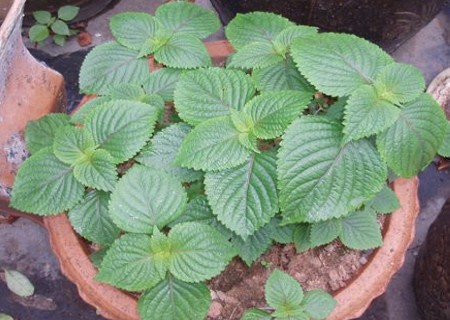
Perilla flowers grow in clusters, and after they finish blooming, the seeds inside slowly mature over time. Now the editor will use pictures to show you what perilla seeds look like, how to get perilla to set seed, when the seeds can be harvested after they form, and how to harvest and collect perilla seeds.
1. If you grow perilla at home and have eaten the leaves, or once the leaves are all used up and it looks old, do not rush to pull it out. After a while, it will put out small flower buds.
2. After the buds appear, a small cluster of purple flowers will bloom. What should you do when perilla blooms? Just leave it alone. After a while, it does not need pollination, and if placed on a balcony, it will grow small seeds on its own.
3. By late autumn, the whole branch, flowers and leaves alike, looks withered and has turned this color. At this point, you can be sure that the seeds inside are fully mature.
4. In fact, if you leave it alone, it will fall into the flower pot by itself, and next year many small perilla seedlings will grow in the pot on their own. But you can also collect them to sow next year.
5. Because the seeds are very small, you do not need to remove the outer layer around the seeds; just pull all of it off the branches directly.
6. Then collect them, put them in a plastic bag or a kraft paper bag, and place them in a dry, ventilated spot until spring next year to sow.
Perilla has been cultivated in China for about 2000 years. Li Shizhen of the Ming Dynasty once recorded: "When perilla is young it has leaves, which can be eaten with vegetables, or pickled with salt and plum brine to make a very fragrant pickle, and in summer it can be made into a cooked soup to drink." This shows that perilla is very common in Chinese people's diet. Dishes such as perilla stir-fried river snails, perilla scrambled eggs, perilla dry-braised fish, and perilla duck all taste very good. So how do you grow perilla?
1. Timing
The sowing time in the south and north differs by basically one month: March in the south and mid-to-late April in the north. If the purpose is to eat the leaves, the sowing time can be appropriately moved earlier. Because sowing early means low temperatures, slow germination, vigorous vegetative growth, and a higher yield of stems and leaves.
2. Method
You can sow in rows. This saves a lot of labor, grows quickly, allows early harvest, and gives high yields. You can also raise seedlings and transplant them. Of course, you can also dig up wild plants from the edges of village fields in rural areas and transplant them.
3. Watering
Perilla plants are tall and have high water requirements. Especially when grown mainly for eating the leaves, the soil should be kept moist at all times to promote stem and leaf growth and increase yield.
4. Fertilizer
Perilla grows vigorously and needs a lot of fertilizer, so sufficient base fertilizer should be applied. Organic fertilizer is best, and plant ash, superphosphate, etc. can be added. During the growing period, topdressing can be done several times according to growth conditions, and compound fertilizer can be used.
5. Pest and disease control
Perilla has a peculiar smell and few pests and diseases. Occasionally aphids, leaf-roller moths, etc. may occur. They can be caught by hand, or controlled with tobacco leaf water or chili water.